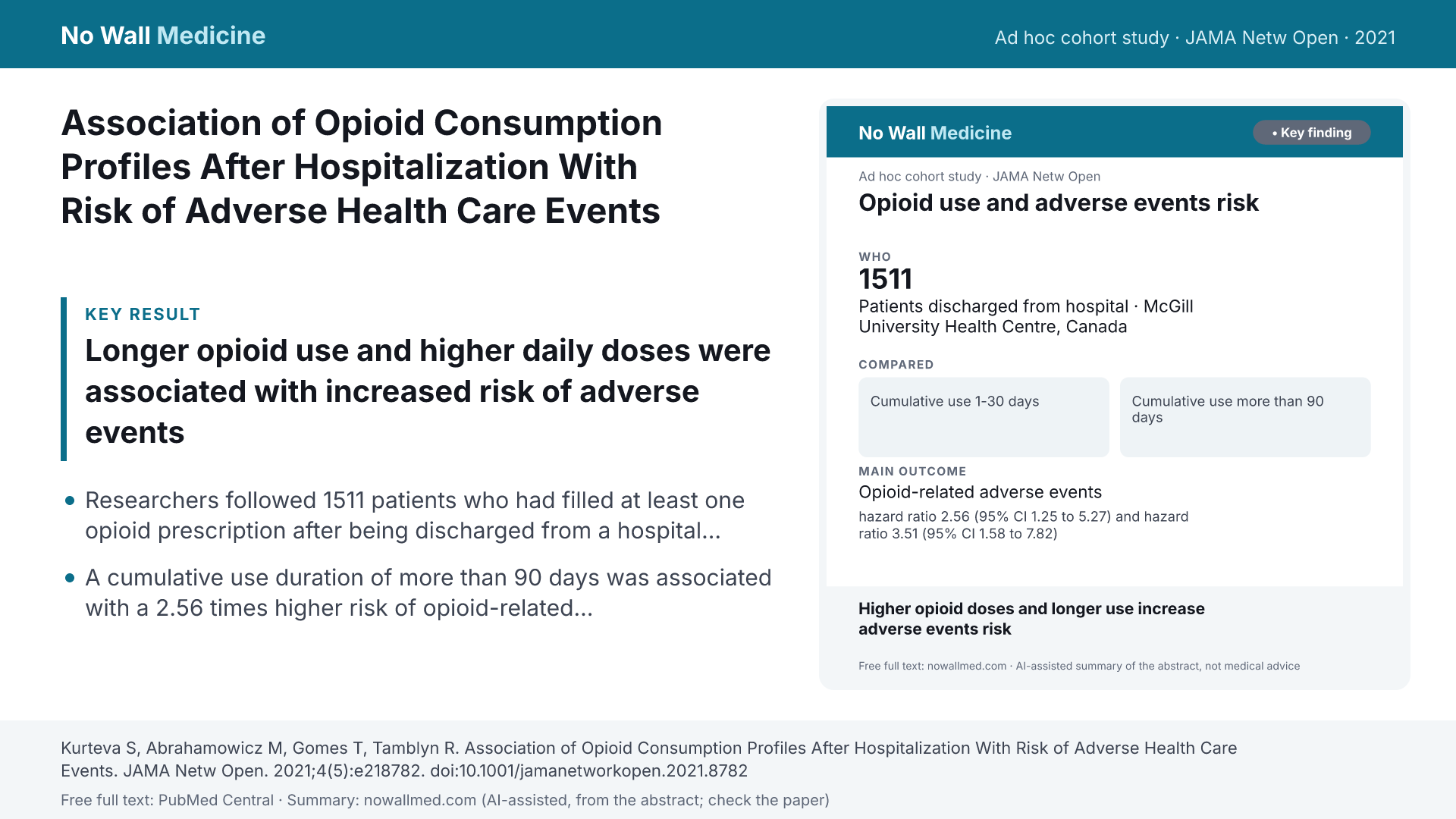
Longer opioid use and higher daily doses were associated with increased risk of adverse events
Association of Opioid Consumption Profiles After Hospitalization With Risk of Adverse Health Care Events
Ad hoc cohort studyKey finding
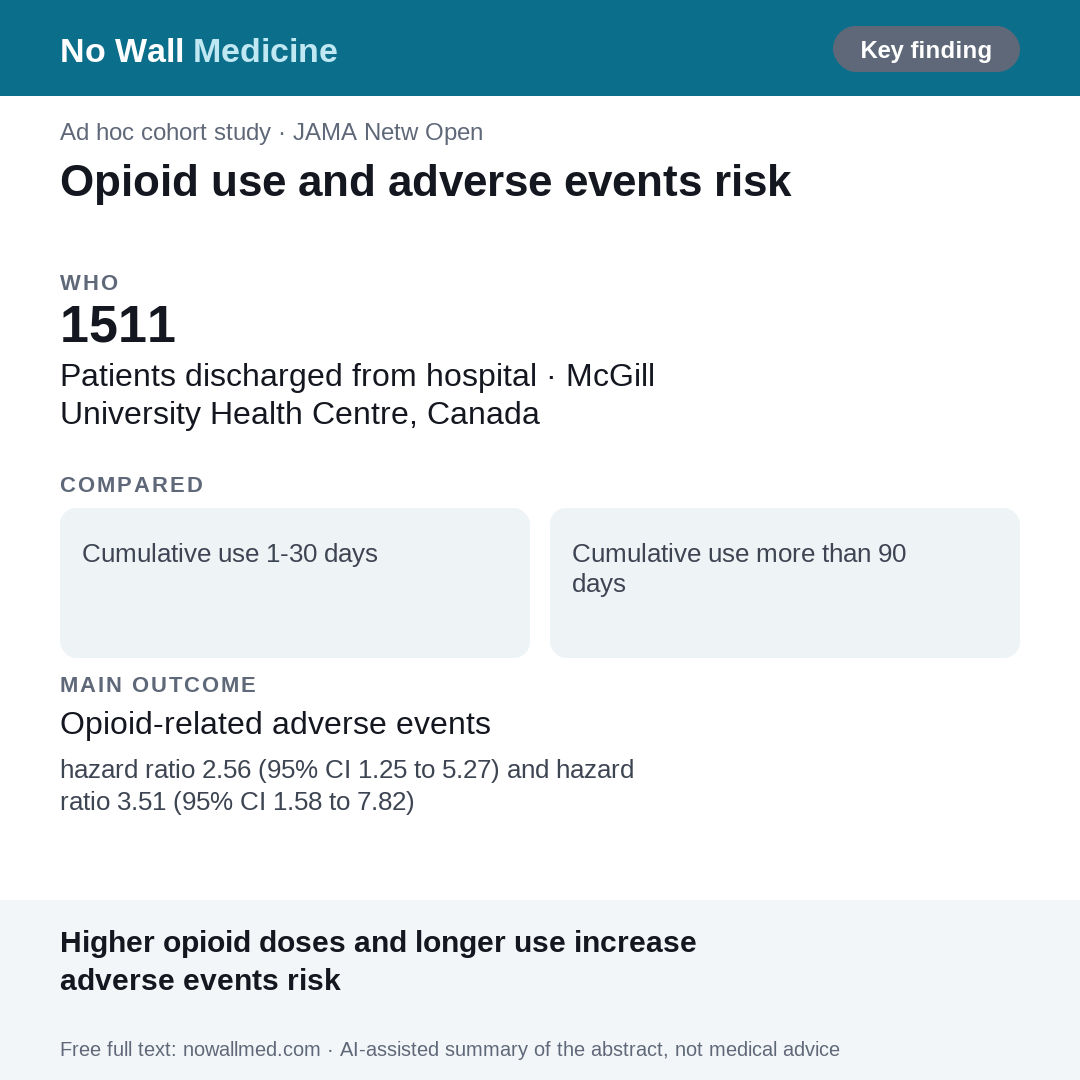
Opioid use and adverse events risk
Who
1511
Patients discharged from hospital · McGill University Health Centre, Canada
Compared
Cumulative use 1-30 days
Cumulative use more than 90 days
Main outcome
Opioid-related adverse events
Result: hazard ratio 2.56 (95% CI 1.25 to 5.27) and hazard ratio 3.51 (95% CI 1.58 to 7.82)
Bottom line: Higher opioid doses and longer use increase adverse events risk
JAMA Netw Open · 2021-05-03Download image
Key points
- Researchers followed 1511 patients who had filled at least one opioid prescription after being discharged from a hospital in Montreal.
- A cumulative use duration of more than 90 days was associated with a 2.56 times higher risk of opioid-related emergency visits, hospital readmissions, or death compared to 1 to 30 days.
- A mean daily dose higher than 90 morphine milligram equivalents was associated with a 3.51 times higher risk of these adverse events compared to 90 morphine milligram equivalents or lower.
Headline and key points written with AI from the paper’s abstract, with every number checked against it. Read the paper before relying on them.
Was this summary helpful?
Subject terms
Cite this article
Kurteva S, Abrahamowicz M, Gomes T, Tamblyn R. Association of Opioid Consumption Profiles After Hospitalization With Risk of Adverse Health Care Events. JAMA Netw Open. 2021. doi:10.1001/jamanetworkopen.2021.8782
Spotted a mistake? Suggest a correction