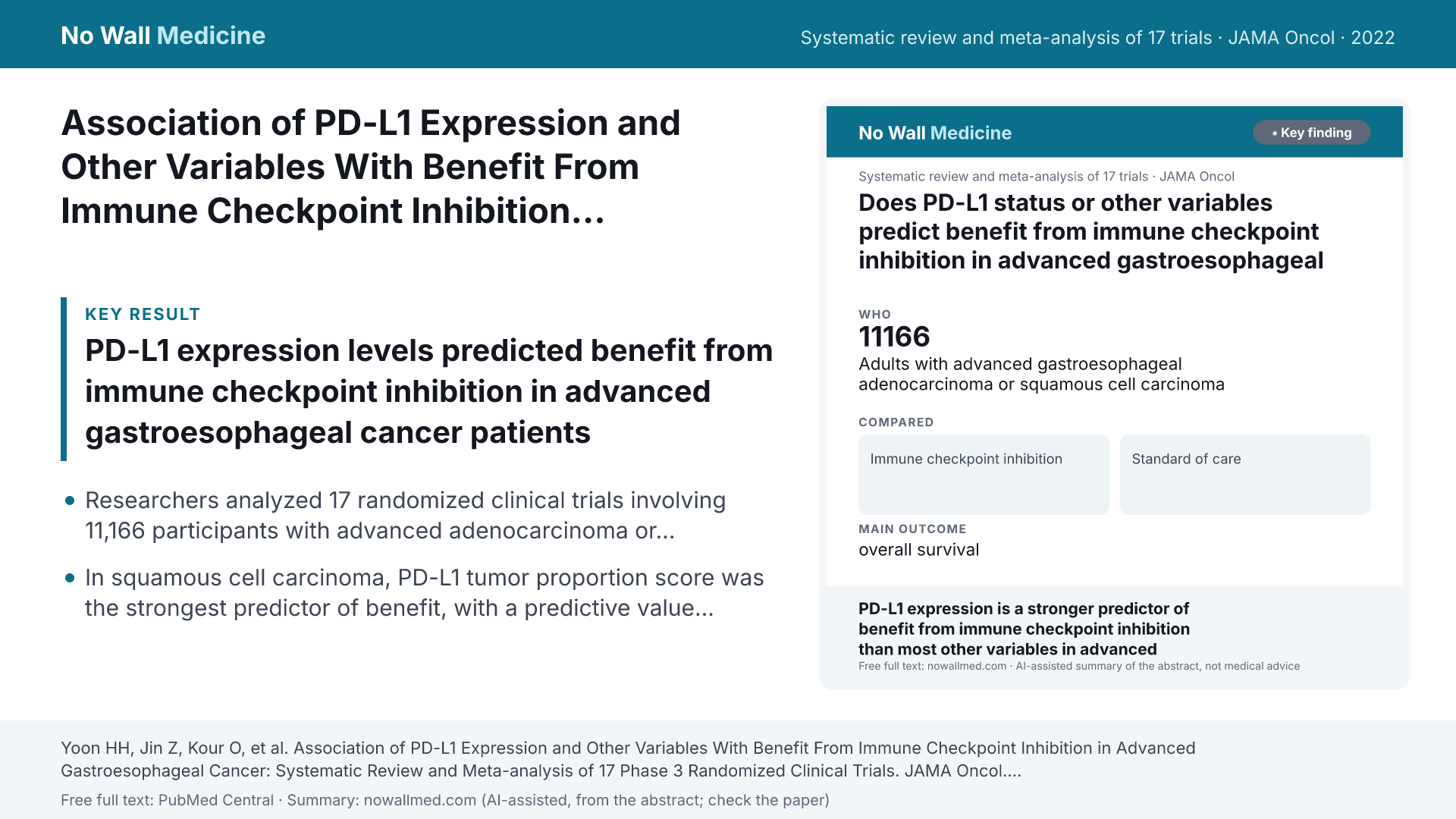
Association of PD-L1 Expression and Other Variables With Benefit From Immune Checkpoint Inhibition in Advanced Gastroesophageal Cancer: Systematic Review and Meta-analysis of 17 Phase 3 Randomized Clinical Trials
Key result: PD-L1 expression levels predicted benefit from immune checkpoint inhibition in advanced gastroesophageal cancer patients
Key points
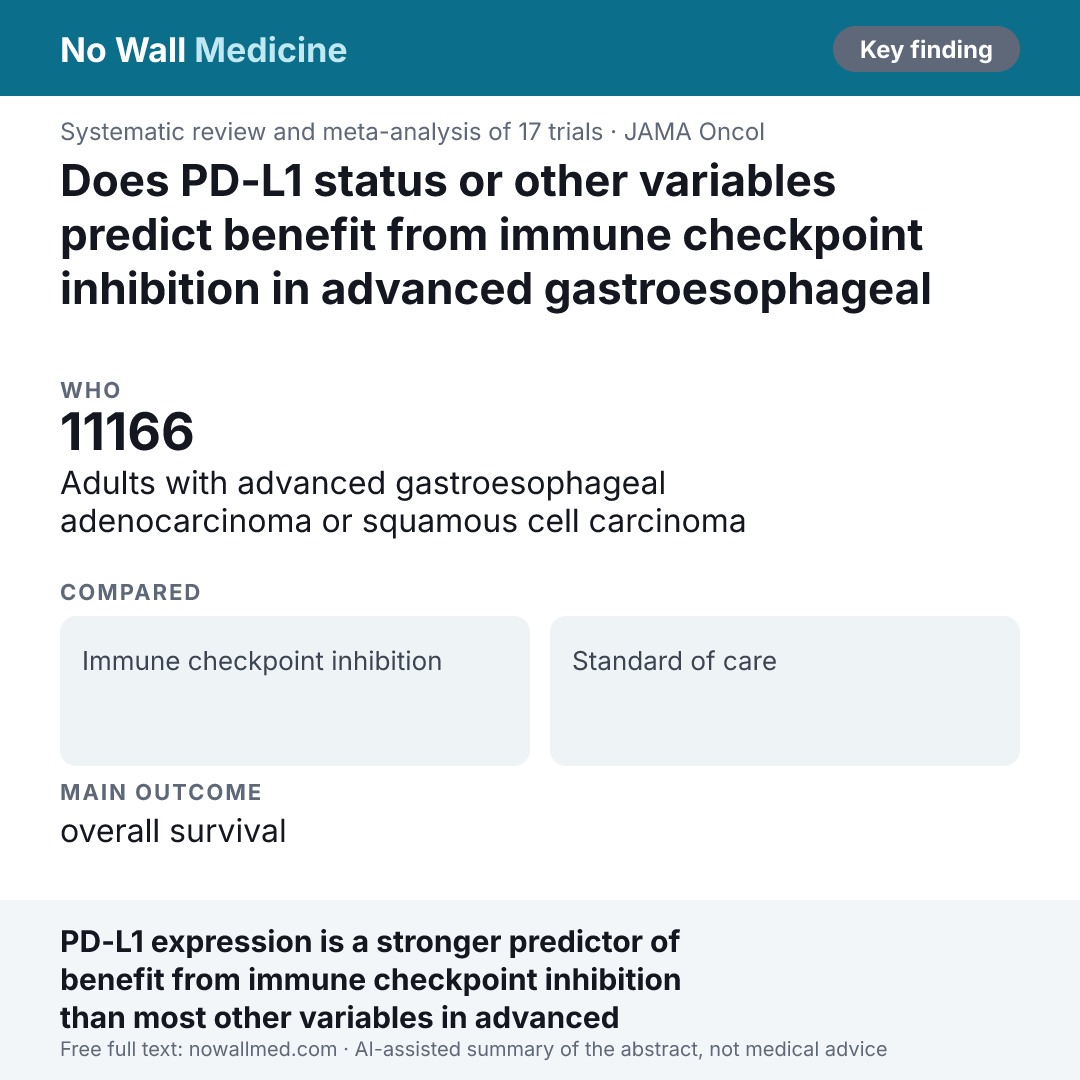
- Researchers analyzed 17 randomized clinical trials involving 11,166 participants with advanced adenocarcinoma or squamous cell carcinoma of the gastroesophageal tract.
- In squamous cell carcinoma, PD-L1 tumor proportion score was the strongest predictor of benefit, with a predictive value of 41.0% favoring high expression.
- In adenocarcinoma, PD-L1 combined positive score was the strongest predictor after microsatellite instability-high status, with a predictive value of 29.4% favoring high expression.
Why it matters: It is controversial whether immune checkpoint inhibition provides benefit to patients with advanced gastroesophageal cancer regardless of their PD-L1 status.
Discussion prompts
- Would these patients look like yours? Who was left out?
- Is the main outcome one that matters to patients?
- Is the difference large enough to change what you do?
Cite: Yoon HH, Jin Z, Kour O, et al. Association of PD-L1 Expression and Other Variables With Benefit From Immune Checkpoint Inhibition in Advanced Gastroesophageal Cancer: Systematic Review and Meta-analysis of 17 Phase 3 Randomized Clinical Trials. JAMA Oncol. 2022;8(10):1456-1465. doi:10.1001/jamaoncol.2022.3707
Free full text: PubMed Central · Summary and visual abstract: nowallmed.com/a/association-of-pd-l1-expression-and-other-variables-with-benefit-from-uiar6q/ (AI-assisted from the abstract; check the paper before relying on it).