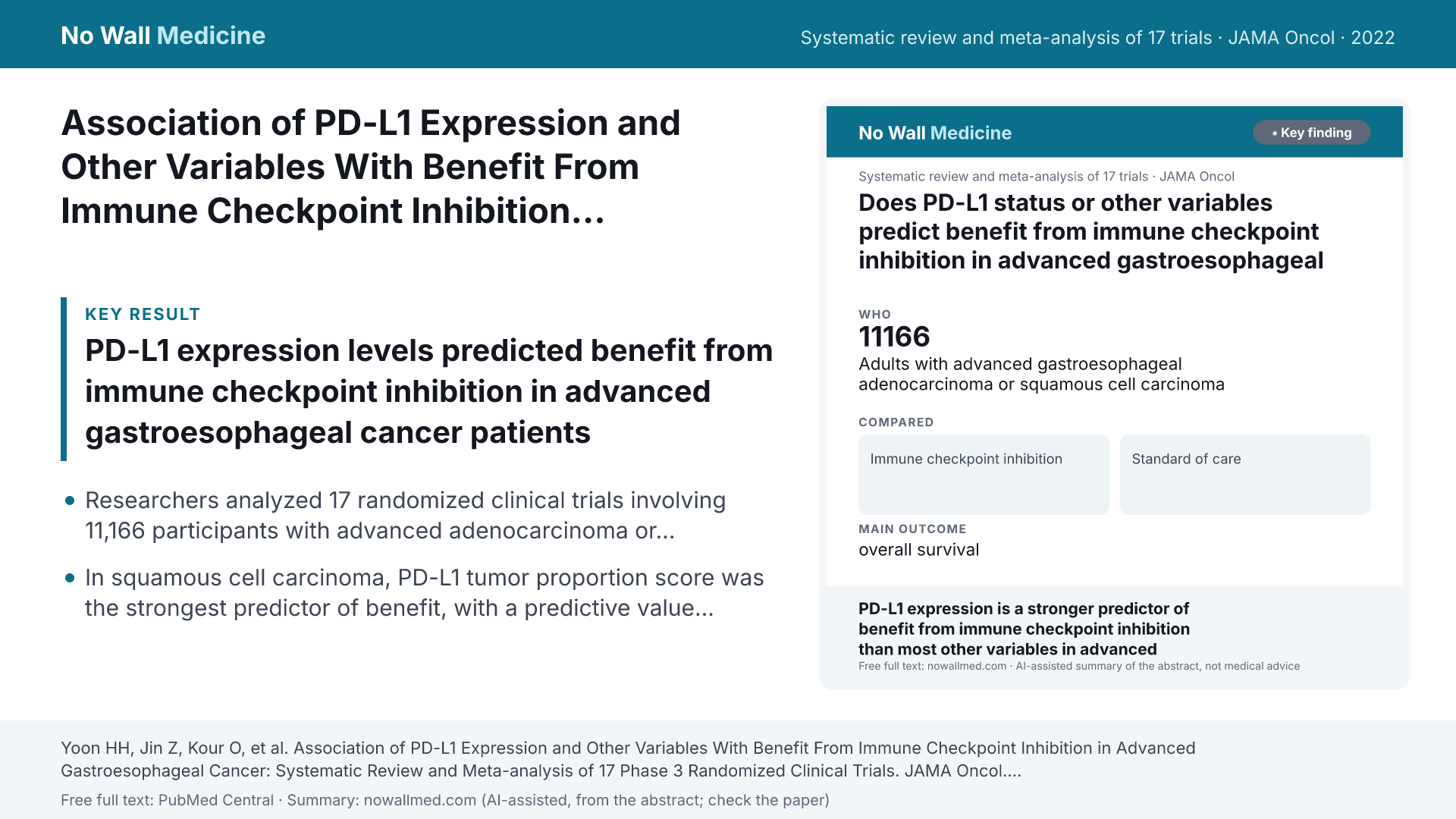
PD-L1 expression levels predicted benefit from immune checkpoint inhibition in advanced gastroesophageal cancer patients
Association of PD-L1 Expression and Other Variables With Benefit From Immune Checkpoint Inhibition in Advanced Gastroesophageal Cancer: Systematic Review and Meta-analysis of 17 Phase 3 Randomized Clinical Trials
Systematic review and meta-analysis of 17 trialsBenefit found
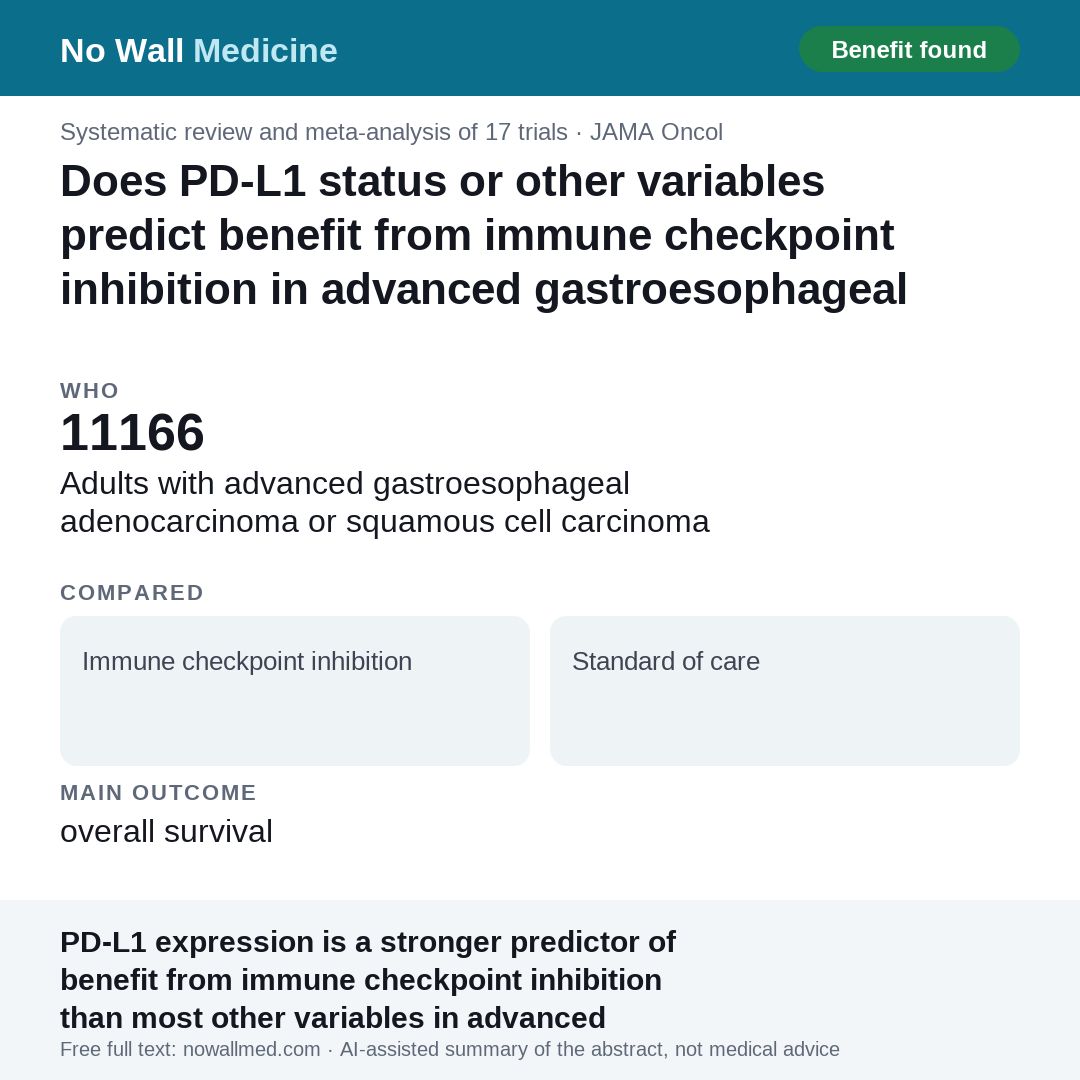
Does PD-L1 status or other variables predict benefit from immune checkpoint inhibition in advanced gastroesophageal cancer?
Who
11166
Adults with advanced gastroesophageal adenocarcinoma or squamous cell carcinoma
Compared
Immune checkpoint inhibition
Standard of care
Main outcome
overall survival
Bottom line: PD-L1 expression is a stronger predictor of benefit from immune checkpoint inhibition than most other variables in advanced gastroesophageal cancer.
JAMA Oncol · 2022-08-26Download image
Clinical question: Does PD-L1 status or other variables predict benefit from immune checkpoint inhibition in advanced gastroesophageal cancer?
Why it matters: It is controversial whether immune checkpoint inhibition provides benefit to patients with advanced gastroesophageal cancer regardless of their PD-L1 status.
Key points
- Researchers analyzed 17 randomized clinical trials involving 11,166 participants with advanced adenocarcinoma or squamous cell carcinoma of the gastroesophageal tract.
- In squamous cell carcinoma, PD-L1 tumor proportion score was the strongest predictor of benefit, with a predictive value of 41.0% favoring high expression.
- In adenocarcinoma, PD-L1 combined positive score was the strongest predictor after microsatellite instability-high status, with a predictive value of 29.4% favoring high expression.
Headline and key points written with AI from the paper’s abstract, with every number checked against it. Read the paper before relying on them.
Was this summary helpful?
Subject terms
Cite this article
Yoon HH, Jin Z, Kour O, et al. Association of PD-L1 Expression and Other Variables With Benefit From Immune Checkpoint Inhibition in Advanced Gastroesophageal Cancer: Systematic Review and Meta-analysis of 17 Phase 3 Randomized Clinical Trials. JAMA Oncol. 2022. doi:10.1001/jamaoncol.2022.3707
Spotted a mistake? Suggest a correction