Energy and protein supplementation was associated with better global cognition in stroke survivors
Associations between Diet and Cognitive Function in Stroke Survivors: A Systematic Review and Meta-analysis
Systematic review and meta-analysisMixed results
What are the associations between diet and cognitive function in stroke survivors?
Who
Adult stroke survivors
Compared
Energy-protein supplementation: standardized mean difference 0.62
B-vitamins: standardized mean difference -0.40
Main outcome
Cognitive performance and dementia risk
Result: standardized mean difference 0.62 (95% CI 0.15 to 1.08)
Bottom line: Energy-protein supplementation may benefit cognition, but B-vitamin supplementation showed a negative effect in stroke survivors.
Adv Nutr · 2025-05-10Download image
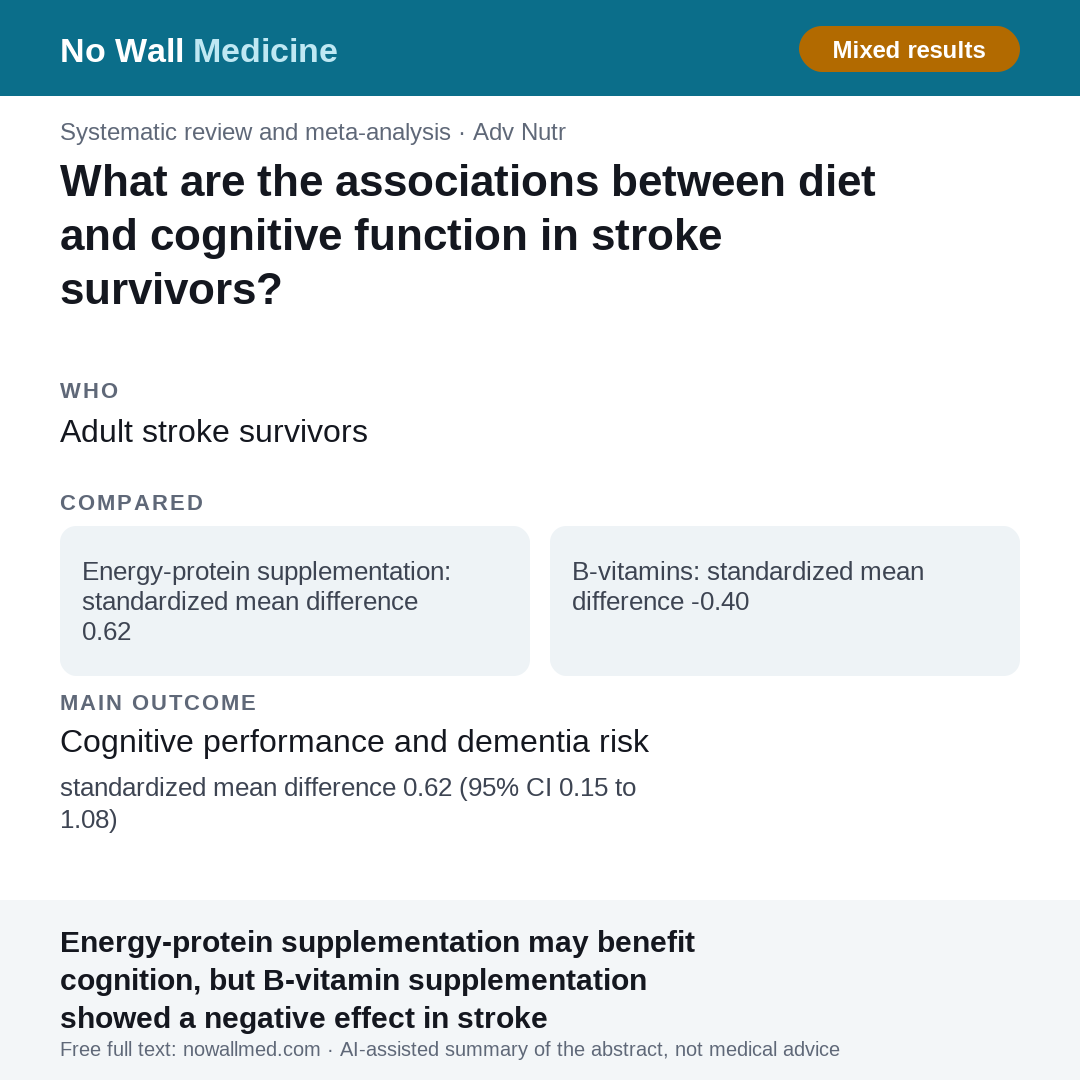
Clinical question: What are the associations between diet and cognitive function in stroke survivors?
Why it matters: The effects of dietary interventions on cognitive outcomes in people who have already experienced a stroke remain unclear.
Key points
- Researchers analyzed 20 clinical trials and 14 observational studies to examine how nutrition affects cognitive performance and dementia risk in adult stroke survivors.
- Energy-protein supplementation was associated with better global cognition (standardized mean difference: 0.62; 95% confidence interval: 0.15, 1.08; P = 0.009).
- Higher intake of butter, sugar, and B-vitamins (folic acid, vitamin B6, and vitamin B12) was associated with negative cognitive outcomes.
Limitation the authors note: Substantial heterogeneity among studies hinders conclusions about other dietary strategies.
Headline and key points written with AI from the paper’s abstract, with every number checked against it. Read the paper before relying on them.
Topics
Cite this article
Amanat S, Dordevic AL, Brodtmann A, Cardoso BR. Associations between Diet and Cognitive Function in Stroke Survivors: A Systematic Review and Meta-analysis. Adv Nutr. 2025. doi:10.1016/j.advnut.2025.100440
Spotted a mistake? Suggest a correction
Top studies every Monday
The week’s key trials and guidelines in your specialties, by email. Free.
Get the weekly digest