Associations between psychological and trauma-related factors and urinary incontinence severity and treatment response among women veterans
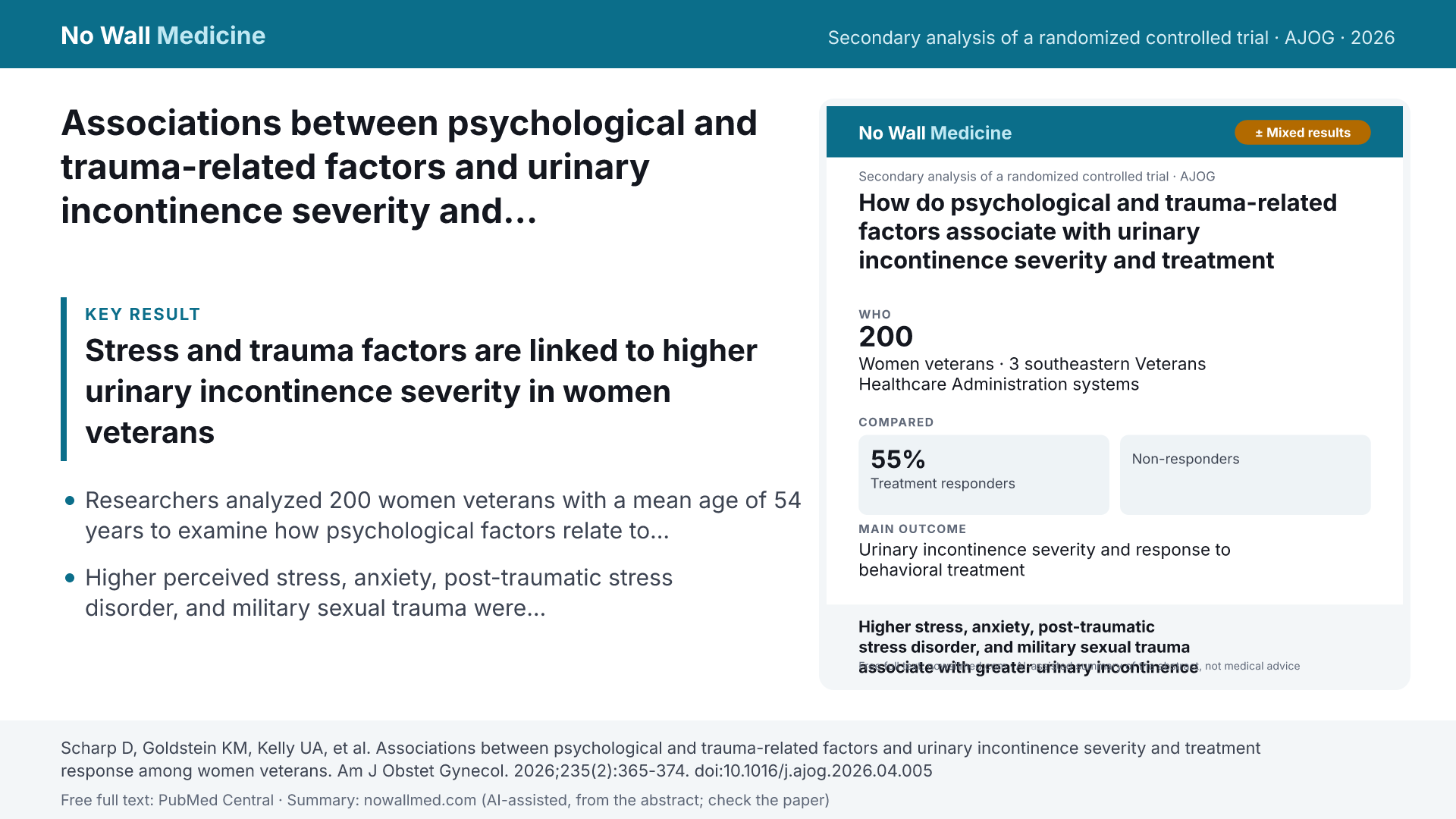
Key result: Stress and trauma factors are linked to higher urinary incontinence severity in women veterans
Secondary analysis of a randomized controlled trialMixed results
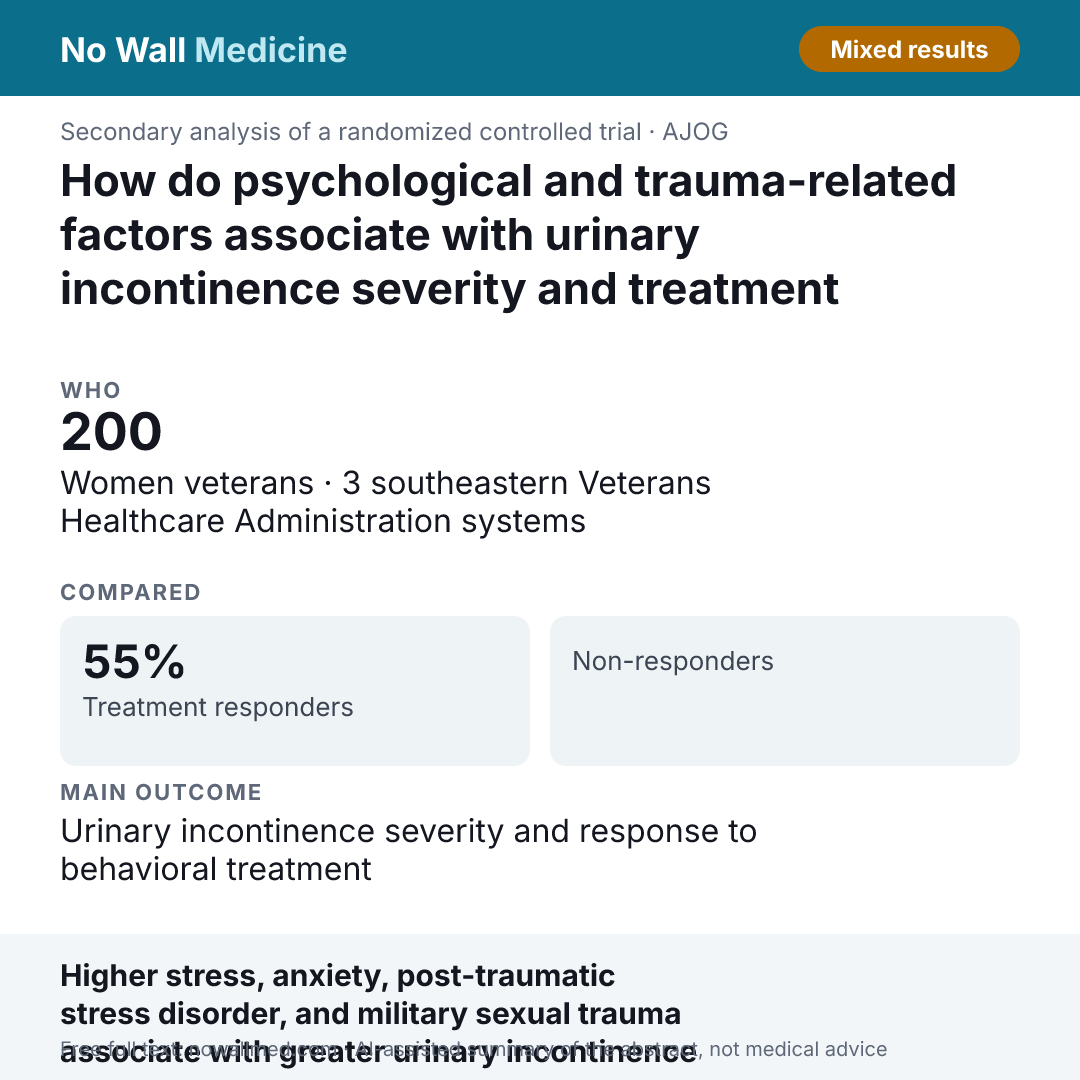
How do psychological and trauma-related factors associate with urinary incontinence severity and treatment response?
Who
200
Women veterans · 3 southeastern Veterans Healthcare Administration systems
Compared
55%Treatment responders (109/200)
Non-responders
Main outcome
Urinary incontinence severity and response to behavioral treatment
Result: adjusted odds ratio 0.98 (95% CI 0.97 to 0.99)
Bottom line: Higher stress, anxiety, post-traumatic stress disorder, and military sexual trauma associate with greater urinary incontinence severity.
AJOG · 2026-04-09 · Save PNG
Key points
- Researchers analyzed 200 women veterans with a mean age of 54 years to examine how psychological factors relate to urinary incontinence severity and treatment response.
- Higher perceived stress, anxiety, post-traumatic stress disorder, and military sexual trauma were significantly associated with greater urinary incontinence severity.
- Among the participants, 55% of women were classified as responders to behavioral treatment, but higher perceived stress was associated with lower odds of responding.
Discussion prompts
- Would these patients look like yours? Who was left out?
- Is the main outcome one that matters to patients?
- Is the difference large enough to change what you do?
Cite: Scharp D, Goldstein KM, Kelly UA, et al. Associations between psychological and trauma-related factors and urinary incontinence severity and treatment response among women veterans. Am J Obstet Gynecol. 2026;235(2):365-374. doi:10.1016/j.ajog.2026.04.005
Free full text: PubMed Central · Summary and visual abstract: nowallmed.com/a/associations-between-psychological-and-trauma-related-factors-and-8y9c13/ (AI-assisted from the abstract; check the paper before relying on it).