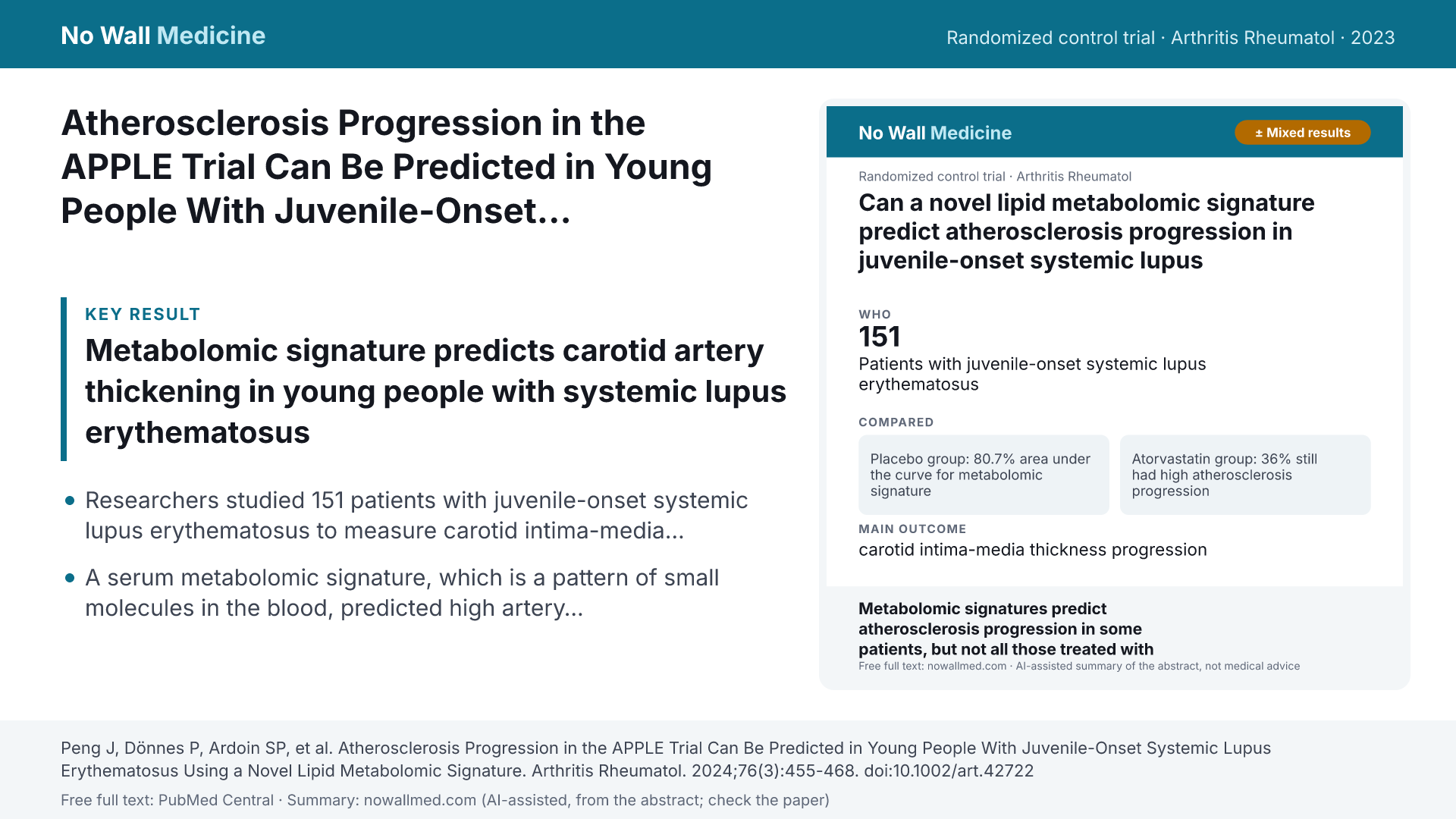
Metabolomic signature predicts carotid artery thickening in young people with systemic lupus erythematosus
Atherosclerosis Progression in the APPLE Trial Can Be Predicted in Young People With Juvenile-Onset Systemic Lupus Erythematosus Using a Novel Lipid Metabolomic Signature
Randomized control trialMixed results
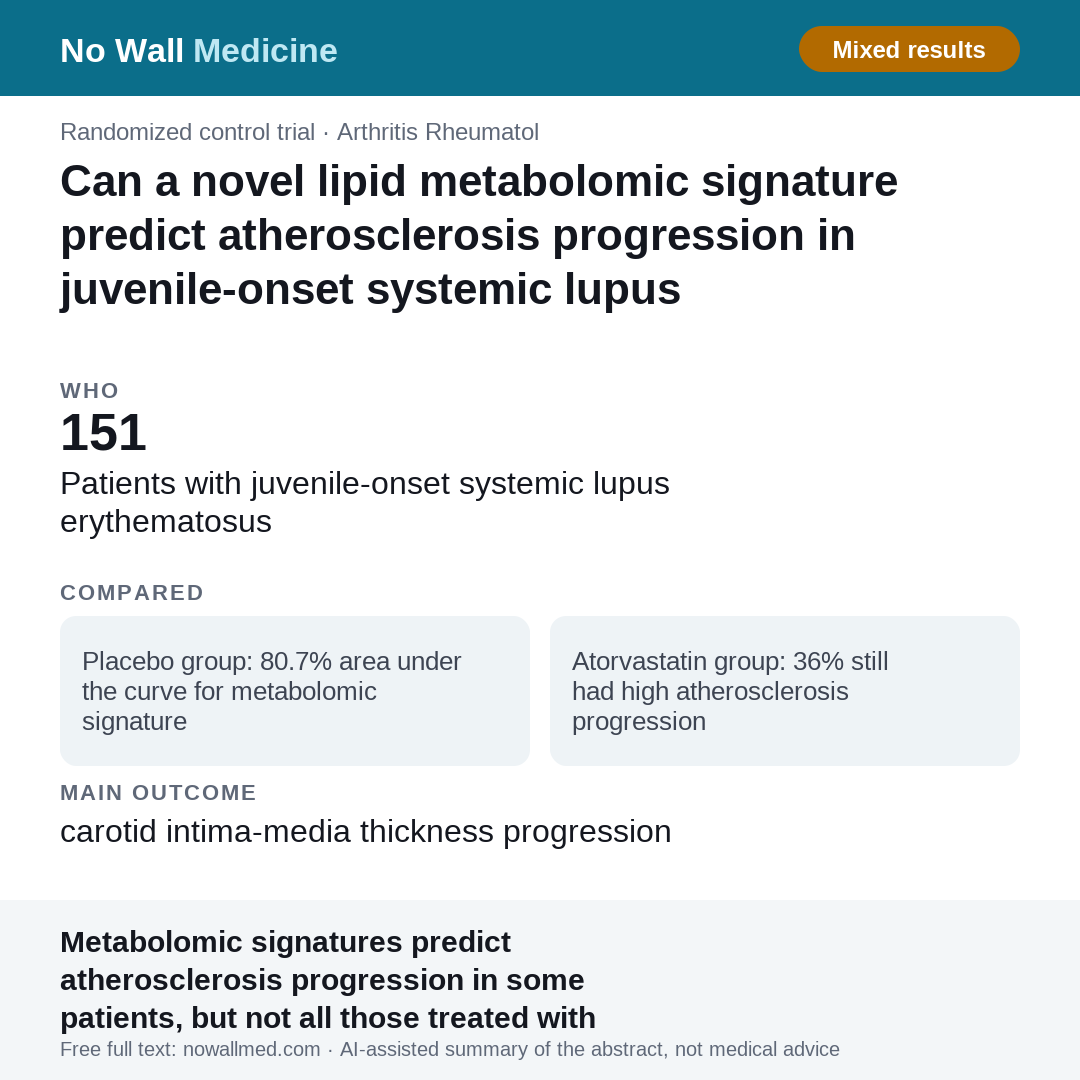
Can a novel lipid metabolomic signature predict atherosclerosis progression in juvenile-onset systemic lupus erythematosus?
Who
151
Patients with juvenile-onset systemic lupus erythematosus
Compared
Placebo group: 80.7% area under the curve for metabolomic signature
Atorvastatin group: 36% still had high atherosclerosis progression
Main outcome
carotid intima-media thickness progression
Bottom line: Metabolomic signatures predict atherosclerosis progression in some patients, but not all those treated with atorvastatin.
Arthritis Rheumatol · 2023-12-19Download image
Clinical question: Can a novel lipid metabolomic signature predict atherosclerosis progression in juvenile-onset systemic lupus erythematosus?
Why it matters: It is unknown how to predict the progression of subclinical atherosclerosis in young people with juvenile-onset systemic lupus erythematosus.
Key points
- Researchers studied 151 patients with juvenile-onset systemic lupus erythematosus to measure carotid intima-media thickness, which is the thickness of the artery walls.
- A serum metabolomic signature, which is a pattern of small molecules in the blood, predicted high artery thickening progression with an area under the curve of 80.7%.
- In the atorvastatin group, 36% of patients still had high atherosclerosis progression despite the medication reducing low-density lipoprotein cholesterol levels.
Headline and key points written with AI from the paper’s abstract, with every number checked against it. Read the paper before relying on them.
Was this summary helpful?
Subject terms
Cite this article
Peng J, Dönnes P, Ardoin SP, Schanberg LE, Lewandowski L, APPLE trial investigators and Childhood Rheumatology Research Alliance (CARRA). Atherosclerosis Progression in the APPLE Trial Can Be Predicted in Young People With Juvenile-Onset Systemic Lupus Erythematosus Using a Novel Lipid Metabolomic Signature. Arthritis Rheumatol. 2023. doi:10.1002/art.42722
Spotted a mistake? Suggest a correction
Top studies every Monday
The week’s key trials and guidelines in your specialties, plus any topics you follow. By email, free.
Get the weekly digest