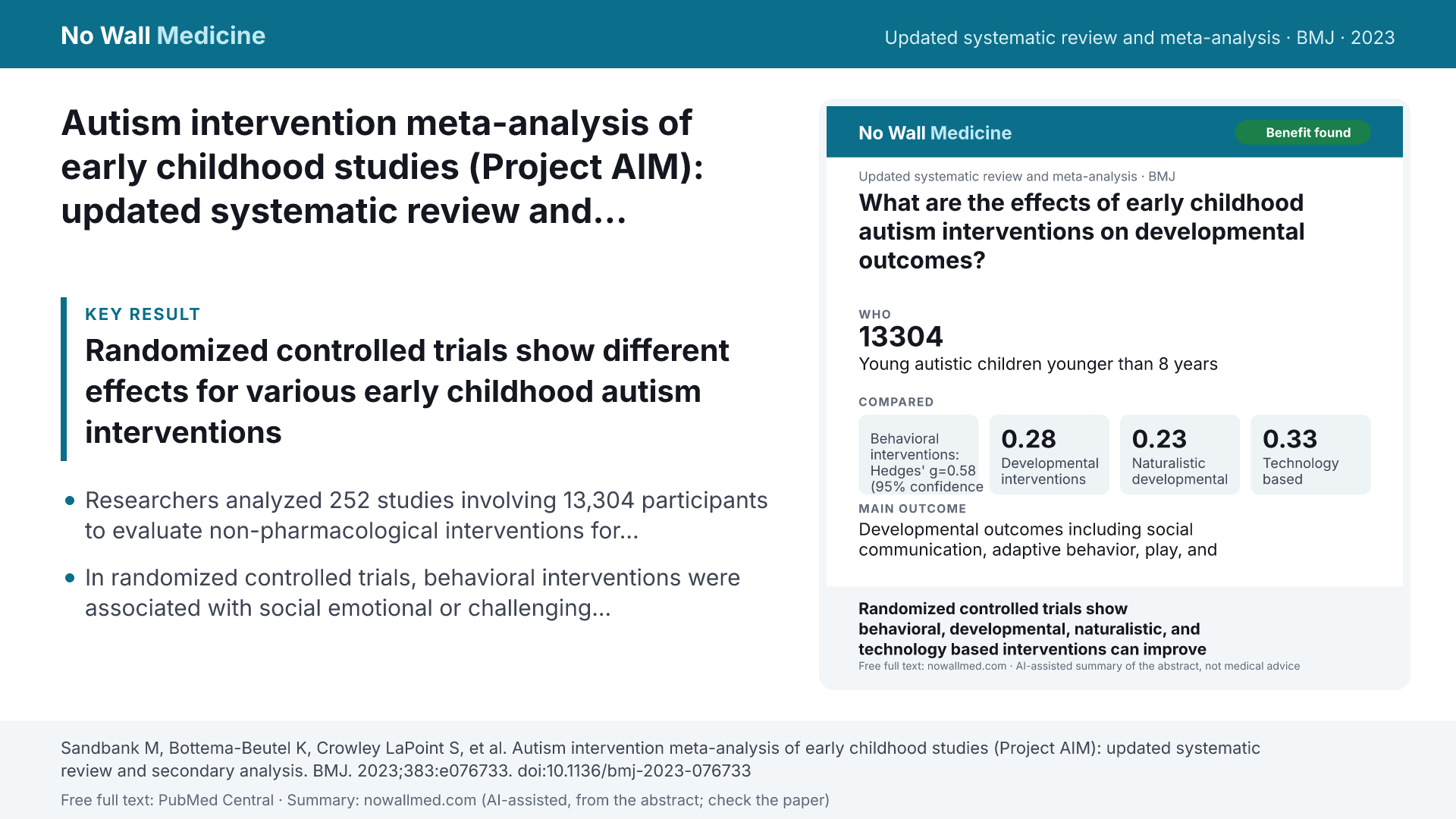
Autism intervention meta-analysis of early childhood studies (Project AIM): updated systematic review and secondary analysis
Key result: Randomized controlled trials show different effects for various early childhood autism interventions
Key points
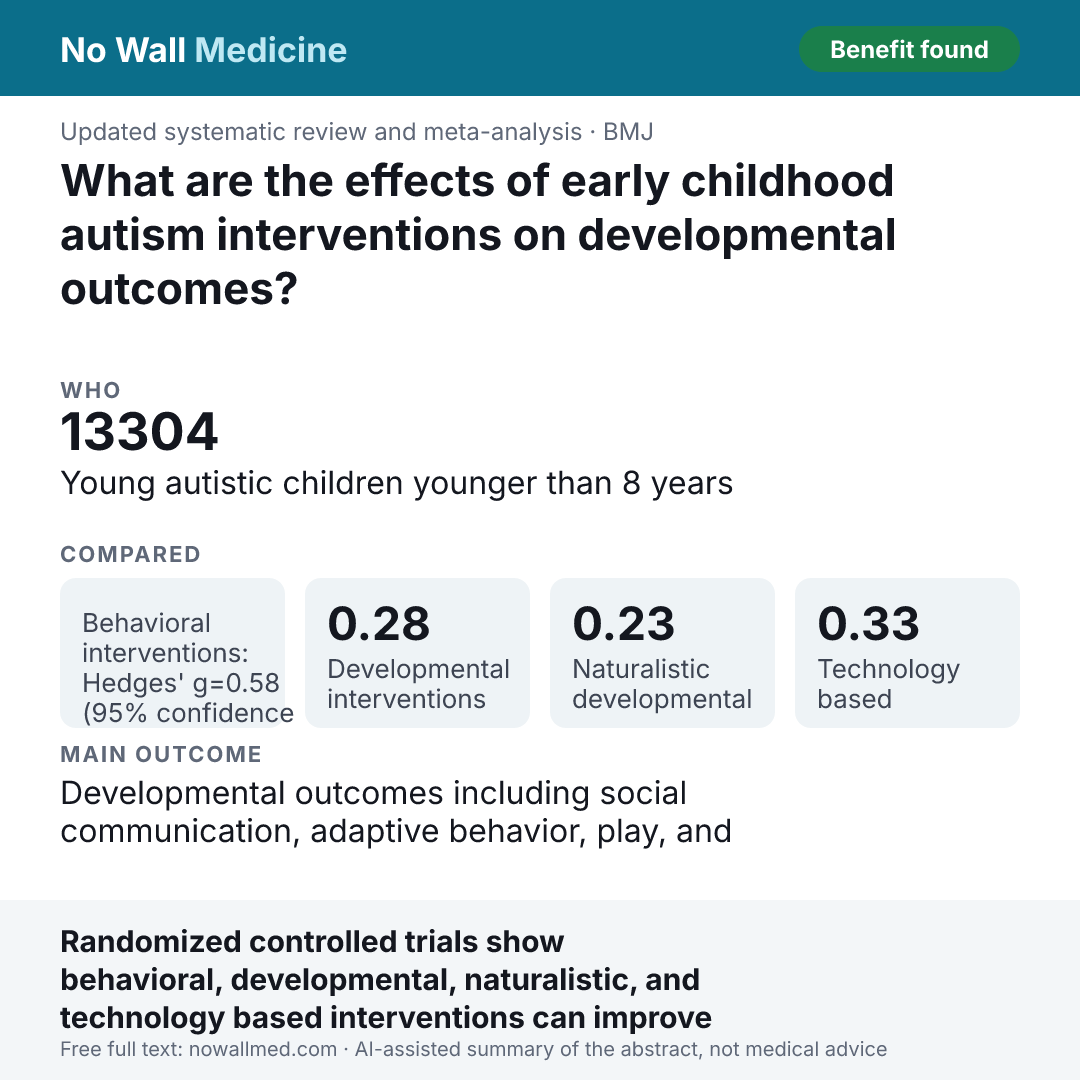
- Researchers analyzed 252 studies involving 13,304 participants to evaluate non-pharmacological interventions for children younger than 8 years.
- In randomized controlled trials, behavioral interventions were associated with social emotional or challenging behavior outcomes (Hedges' g=0.58, 95% confidence interval 0.11 to 1.06).
- Naturalistic developmental behavioral interventions were associated with adaptive behavior (0.23, 95% confidence interval 0.02 to 0.43), language (0.16, 0.01 to 0.31), and social communication (0.35, 0.23 to 0.47).
Why it matters: The breadth and quality of evidence supporting commonly recommended early childhood autism interventions and their effects on developmental outcomes were not fully summarized.
Limitation the authors note: Adverse events were poorly monitored, but possibly common.
Discussion prompts
- Would these patients look like yours? Who was left out?
- Is the main outcome one that matters to patients?
- Is the difference large enough to change what you do?
Cite: Sandbank M, Bottema-Beutel K, Crowley LaPoint S, et al. Autism intervention meta-analysis of early childhood studies (Project AIM): updated systematic review and secondary analysis. BMJ. 2023;383:e076733. doi:10.1136/bmj-2023-076733
Free full text: PubMed Central · Summary and visual abstract: nowallmed.com/a/autism-intervention-meta-analysis-of-early-childhood-studies-project-ksh692/ (AI-assisted from the abstract; check the paper before relying on it).