Automated digital interventions were associated with higher smoking abstinence rates than self-help or no treatment
Automated Digital Interventions and Smoking Cessation: Systematic Review and Meta-analysis Relating Efficiency to a Psychological Theory of Intervention Perspective
Systematic review and meta-analysis of 19 trialsBenefit found
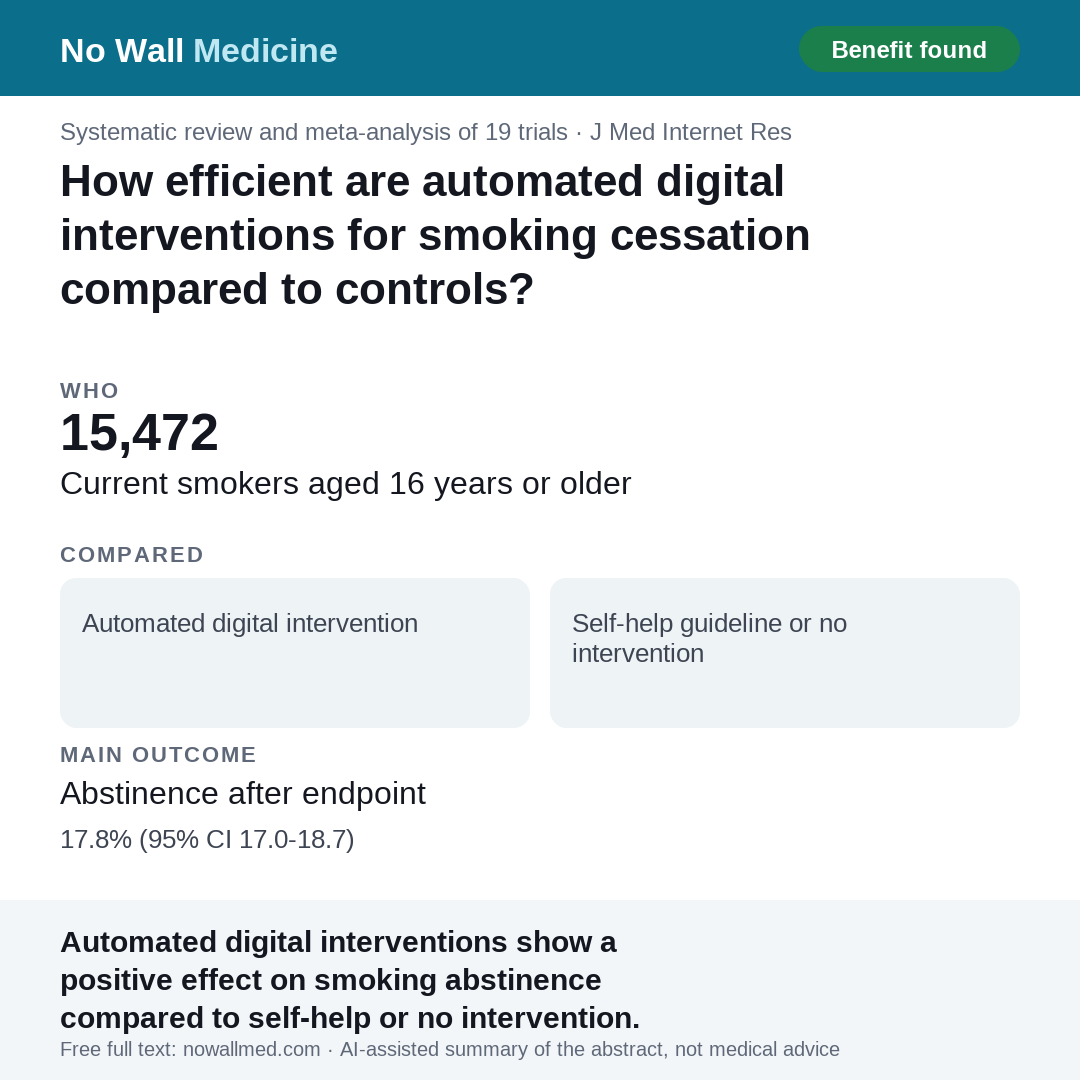
How efficient are automated digital interventions for smoking cessation compared to controls?
Who
15,472
Current smokers aged 16 years or older
Compared
Automated digital intervention
Self-help guideline or no intervention
Main outcome
Abstinence after endpoint
Result: 17.8% (95% CI 17.0-18.7)
Bottom line: Automated digital interventions show a positive effect on smoking abstinence compared to self-help or no intervention.
J Med Internet Res · 2022-11-16Download image
Clinical question: How efficient are automated digital interventions for smoking cessation compared to controls?
Why it matters: It was unknown how effective automated digital interventions are compared to self-help guidelines and how their psychological theoretical basis influences success.
Key points
- Researchers analyzed 19 randomized controlled trials involving 15,472 current smokers to evaluate automated digital interventions for quitting smoking.
- The overall abstinence rate at the endpoint for the intervention group was 17.8% (95% CI 17.0-18.7).
- Effectiveness was associated with psychological theory-related constructs or predictors such as anxiety or craving.
Headline and key points written with AI from the paper’s abstract, with every number checked against it. Read the paper before relying on them.
Was this summary helpful?
Subject terms
Cite this article
Sha L, Yang X, Deng R, Wang W, Tao Y, Cao H. Automated Digital Interventions and Smoking Cessation: Systematic Review and Meta-analysis Relating Efficiency to a Psychological Theory of Intervention Perspective. J Med Internet Res. 2022. doi:10.2196/38206
Spotted a mistake? Suggest a correction
Top studies every Monday
The week’s key trials and guidelines in your specialties, plus any topics you follow. By email, free.
Get the weekly digest