Effectiveness of Digital Interventions for Preventing Alcohol Consumption in Pregnancy: Systematic Review and Meta-analysis
Systematic review and random effects meta-analysisBenefit found
Are digital interventions effective in preventing alcohol consumption during pregnancy or pregnancy planning?
Who
Pregnant women or women planning to become pregnant
Compared
Digital interventions
Controls
Main outcome
Risk of alcohol consumption during pregnancy
Result: odds ratio 0.62 (95% CI 0.42-0.91)
Bottom line: Digital interventions may effectively decrease the risk of alcohol consumption during pregnancy or pregnancy planning.
J Med Internet Res · 2022-04-11Download image
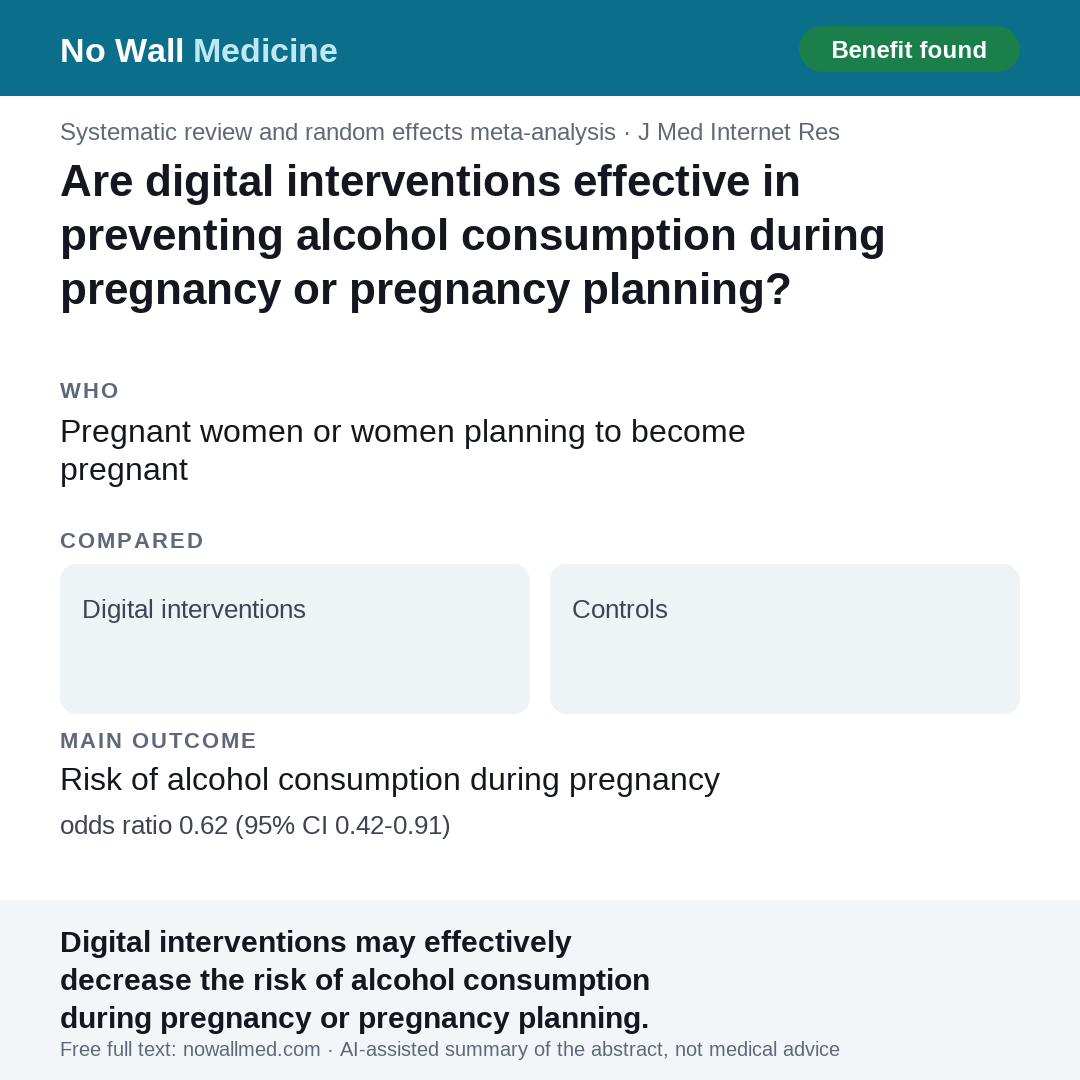
Clinical question: Are digital interventions effective in preventing alcohol consumption during pregnancy or pregnancy planning?
Abstract
Background
Alcohol consumption in pregnancy has been associated with serious fetal health risks and maternal complications. While previous systematic reviews of digital interventions during pregnancy have targeted smoking cessation and flu vaccine uptake, few studies have sought to evaluate their effectiveness in preventing alcohol consumption during pregnancy. Objective
This systematic review aims to assess (1) whether digital interventions are effective in preventing alcohol consumption during the pregnancy/pregnancy-planning period, and (2) the differential effectiveness of alternative digital intervention platforms (ie, computers, mobiles, and text messaging services). Methods
PubMed, Embase, CINAHL, and Web of Science were searched for studies with digital interventions aiming to prevent alcohol consumption among pregnant women or women planning to become pregnant. A random effects primary meta-analysis was conducted to estimate the combined effect size and extent to which different digital platforms were successful in preventing alcohol consumption in pregnancy. Results
Six studies were identified and included in the final review. The primary meta-analysis produced a sample-weighted odds ratio (OR) of 0.62 (95% CI 0.42-0.91; P=.02) in favor of digital interventions decreasing the risk of alcohol consumption during pregnancy when compared to controls. Computer/internet-based interventions (OR 0.59, 95% CI 0.38-0.93) were an effective platform for preventing alcohol consumption. Too few studies of text messaging (OR 0.29, 95% CI 0.29-2.52) were available to draw a conclusion. Conclusions
Overall, our review highlights the potential for digital interventions to prevent alcohol consumption among pregnant women and women planning to become pregnant. Considering the advantages of digital interventions in promoting healthy behavioral changes, future research is necessary to understand how certain platforms may increase user engagement and intervention effectiveness to prevent women from consuming alcohol during their pregnancies.
Subject terms
Cite this article
Oh SS, Moon JY, Chon D, Mita C, Lawrence JA, Park EC. Effectiveness of Digital Interventions for Preventing Alcohol Consumption in Pregnancy: Systematic Review and Meta-analysis. J Med Internet Res. 2022. doi:10.2196/35554
Spotted a mistake? Suggest a correction
Top studies every Monday
The week’s key trials and guidelines in your specialties, plus any topics you follow. By email, free.
Get the weekly digest