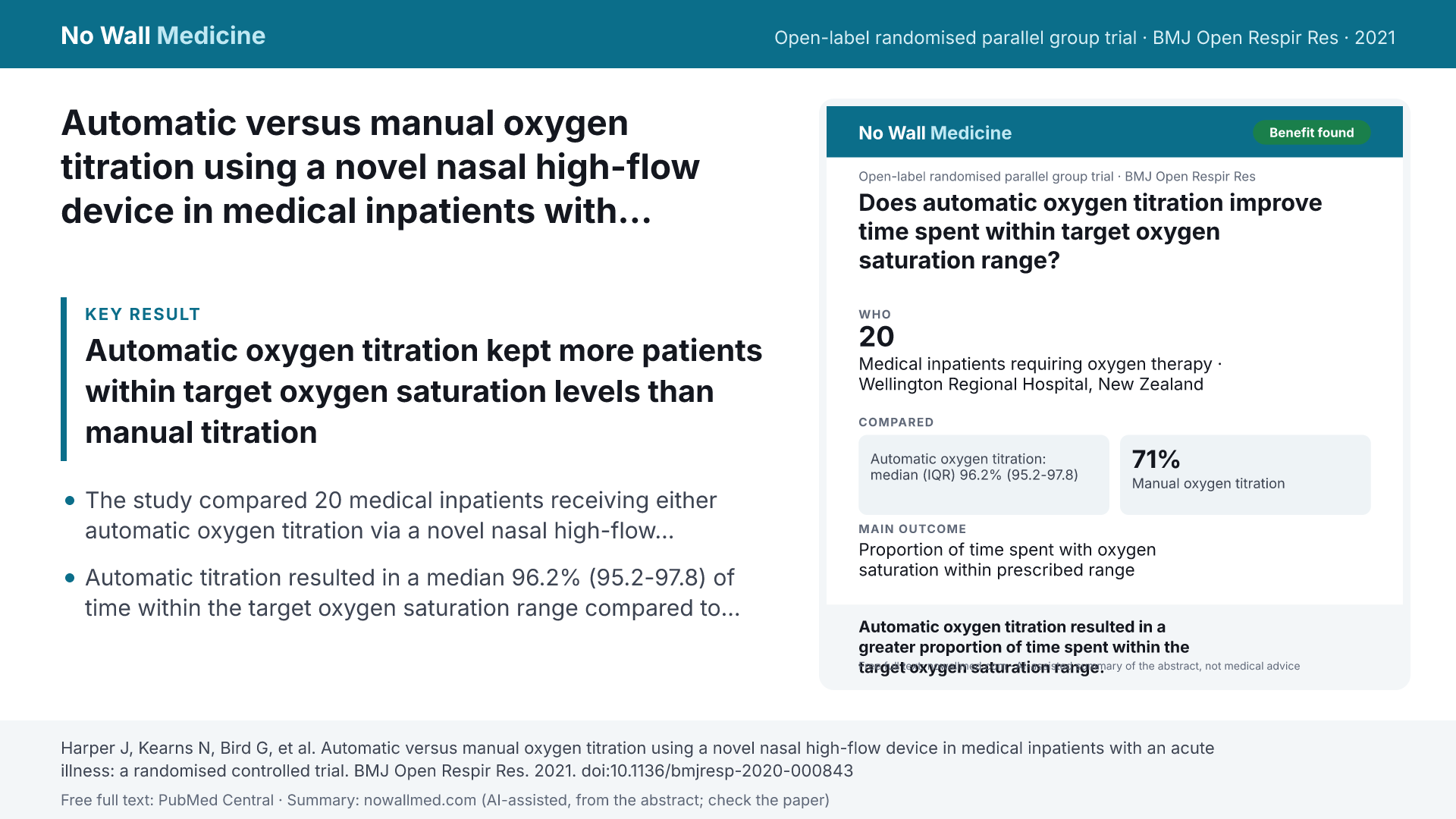
Automatic versus manual oxygen titration using a novel nasal high-flow device in medical inpatients with an acute illness: a randomised controlled trial
Key result: Automatic oxygen titration kept more patients within target oxygen saturation levels than manual titration
Key points
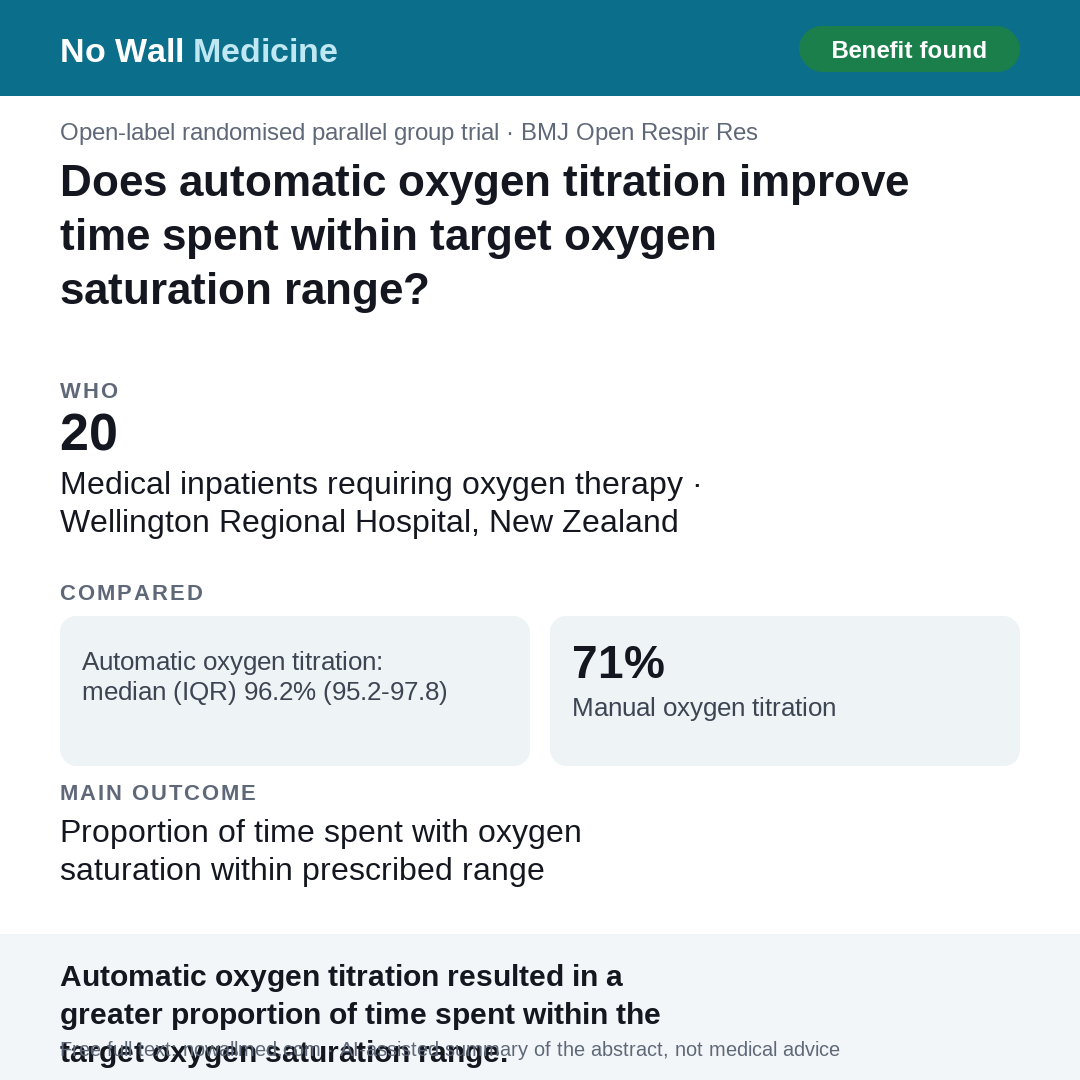
- The study compared 20 medical inpatients receiving either automatic oxygen titration via a novel nasal high-flow device or manual titration using nasal high flow.
- Automatic titration resulted in a median 96.2% (95.2-97.8) of time within the target oxygen saturation range compared to 71% (59.4-88.3) for manual titration.
- Automatic titration was associated with a -1% (-8.2% to -0.04%) difference in time spent with oxygen saturation 2% or more above the target range.
Why it matters: Manual oxygen titration frequently results in oxygen saturation levels falling outside of the prescribed target range for acutely unwell patients.
Discussion prompts
- Would these patients look like yours? Who was left out?
- Is the main outcome one that matters to patients?
- Is the difference large enough to change what you do?
Cite: Harper J, Kearns N, Bird G, et al. Automatic versus manual oxygen titration using a novel nasal high-flow device in medical inpatients with an acute illness: a randomised controlled trial. BMJ Open Respir Res. 2021. doi:10.1136/bmjresp-2020-000843
Free full text: PubMed Central · Summary and visual abstract: nowallmed.com/a/automatic-versus-manual-oxygen-titration-using-a-novel-nasal-high-10310j2/ (AI-assisted from the abstract; check the paper before relying on it).