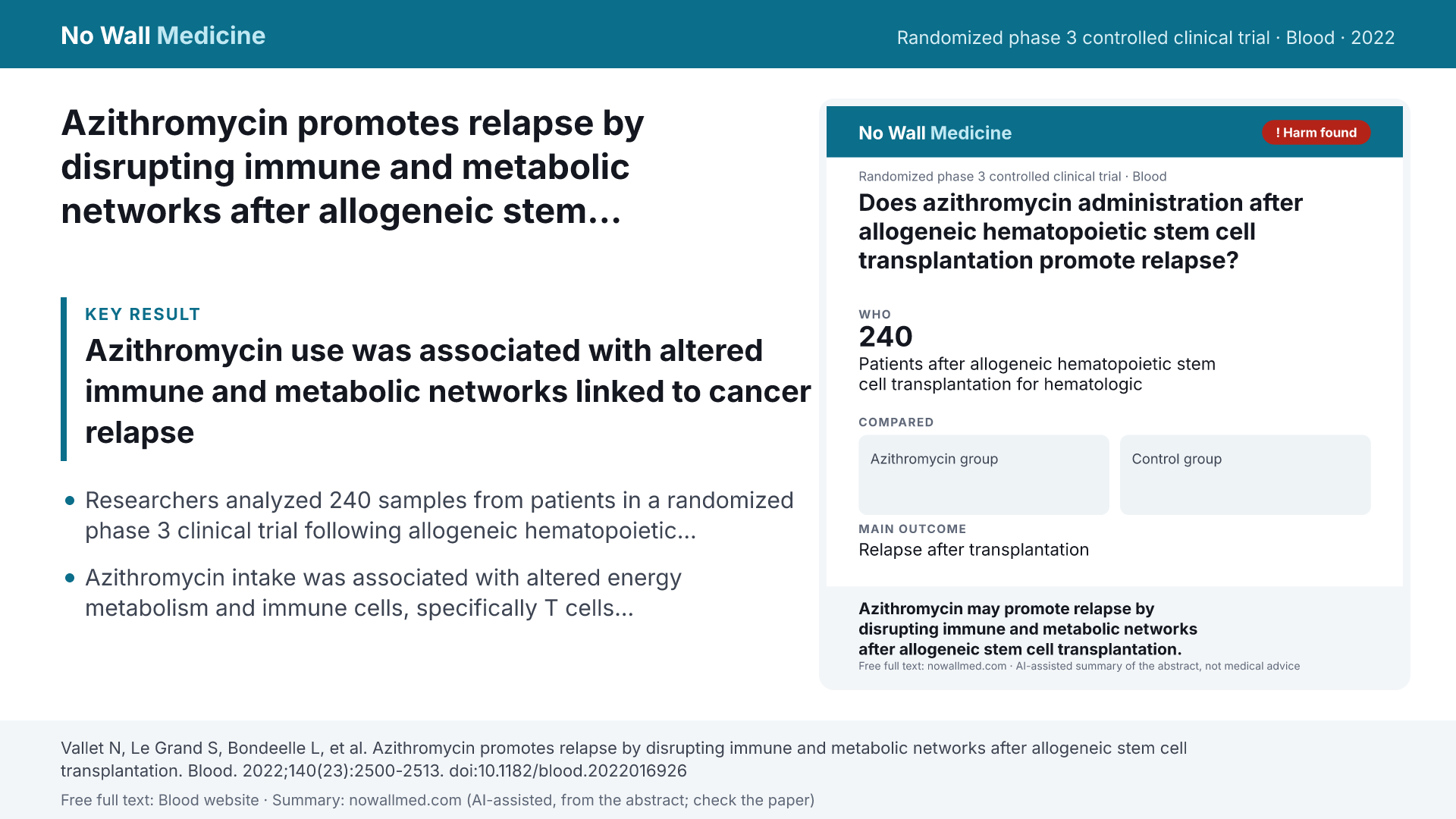
Azithromycin use was associated with altered immune and metabolic networks linked to cancer relapse
Azithromycin promotes relapse by disrupting immune and metabolic networks after allogeneic stem cell transplantation
Randomized phase 3 controlled clinical trialHarm found
Does azithromycin administration after allogeneic hematopoietic stem cell transplantation promote relapse?
Who
240
Patients after allogeneic hematopoietic stem cell transplantation for hematologic malignancies
Compared
Azithromycin group
Control group
Main outcome
Relapse after transplantation
Bottom line: Azithromycin may promote relapse by disrupting immune and metabolic networks after allogeneic stem cell transplantation.
Blood · 2022-08-20Download image
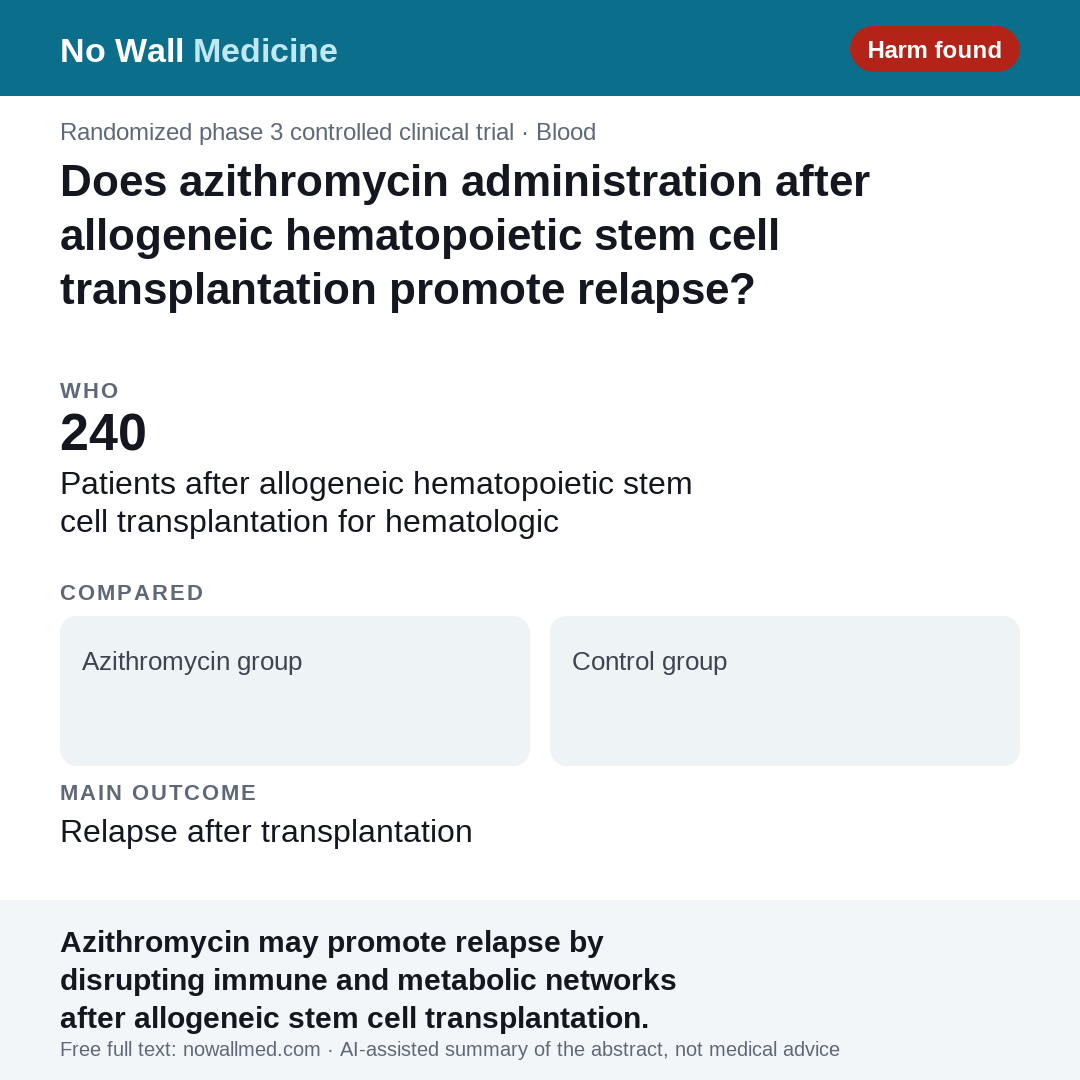
Clinical question: Does azithromycin administration after allogeneic hematopoietic stem cell transplantation promote relapse?
Key points
- Researchers analyzed 240 samples from patients in a randomized phase 3 clinical trial following allogeneic hematopoietic stem cell transplantation for blood cancers.
- Azithromycin intake was associated with altered energy metabolism and immune cells, specifically T cells showing exhausted and immunomodulatory profiles.
- In laboratory tests, azithromycin exposure was linked to inhibited T-cell ability to kill tumor cells and impaired metabolism through glycolysis inhibition.
Headline and key points written with AI from the paper’s abstract, with every number checked against it. Read the paper before relying on them.
Was this summary helpful?
Subject terms
Cite this article
Vallet N, Le Grand S, Bondeelle L, et al. Azithromycin promotes relapse by disrupting immune and metabolic networks after allogeneic stem cell transplantation. Blood. 2022. doi:10.1182/blood.2022016926
Spotted a mistake? Suggest a correction