AZFc microdeletions are associated with lower pregnancy and live birth rates in assisted reproduction
Azoospermia factor c microdeletions and outcomes of assisted reproductive technology: a systematic review and meta-analysis
Systematic review and meta-analysisHarm found
Do Azoospermia Factor c microdeletions affect assisted reproductive technology outcomes?
Who
3,807
Infertile men with and without Azoospermia Factor c microdeletions
Compared
Men with Azoospermia Factor c microdeletions: lower live birth rate (OR = 0.54, 95% CI [0.40, 0.72])
Men without Azoospermia Factor c microdeletions
Main outcome
Sperm retrieval and assisted reproductive technology outcomes
Result: OR = 0.54 (95% CI [0.40, 0.72]) for live birth rate
Bottom line: Azoospermia Factor c microdeletions adversely affect live birth, clinical pregnancy, and fertilization rates in assisted reproductive technology.
Fertil Steril · 2023-11-03Download image
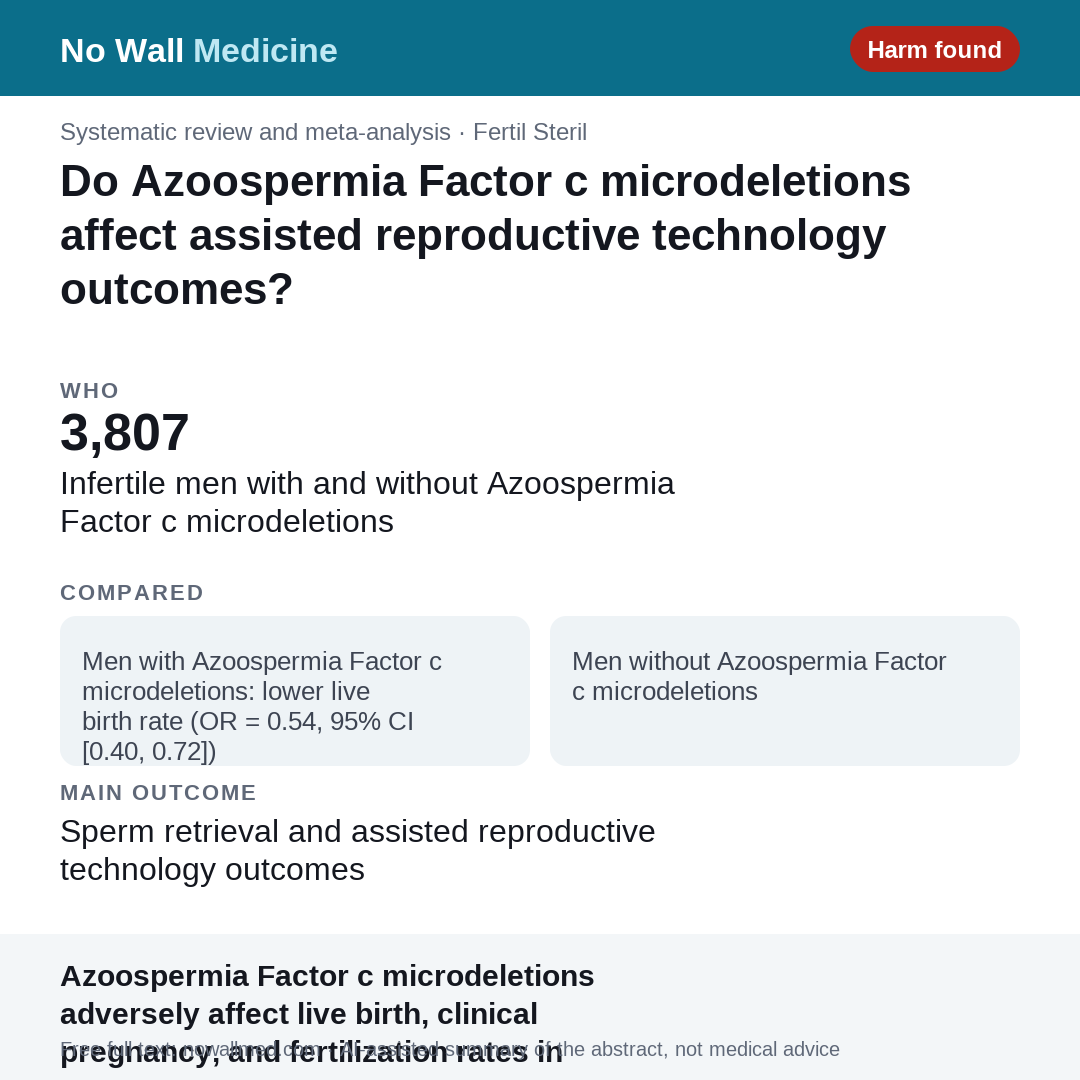
Clinical question: Do Azoospermia Factor c microdeletions affect assisted reproductive technology outcomes?
Why it matters: It is unknown how AZFc microdeletions, which are small missing pieces of genetic material on the Y chromosome, affect the success of assisted reproductive technology.
Key points
- Researchers analyzed data from 3,807 infertile men to compare sperm retrieval and assisted reproductive technology outcomes between those with and without AZFc microdeletions.
- Men with AZFc microdeletions had significantly lower fertilization rates (OR = 0.61, 95% CI [0.50, 0.74]), clinical pregnancy rates (OR = 0.61, 95% CI [0.42, 0.89]), and live birth rates (OR = 0.54, 95% CI [0.40, 0.72]).
- Sperm retrieval rates were higher in men with AZFc microdeletions (OR = 1.82, 95% CI 0.97, 3.41), but this difference was not statistically significant.
Headline and key points written with AI from the paper’s abstract, with every number checked against it. Read the paper before relying on them.
Was this summary helpful?
Subject terms
Cite this article
Colaco S, Modi D. Azoospermia factor c microdeletions and outcomes of assisted reproductive technology: a systematic review and meta-analysis. Fertil Steril. 2023. doi:10.1016/j.fertnstert.2023.10.029
Spotted a mistake? Suggest a correction
Top studies every Monday
The week’s key trials and guidelines in your specialties, plus any topics you follow. By email, free.
Get the weekly digest