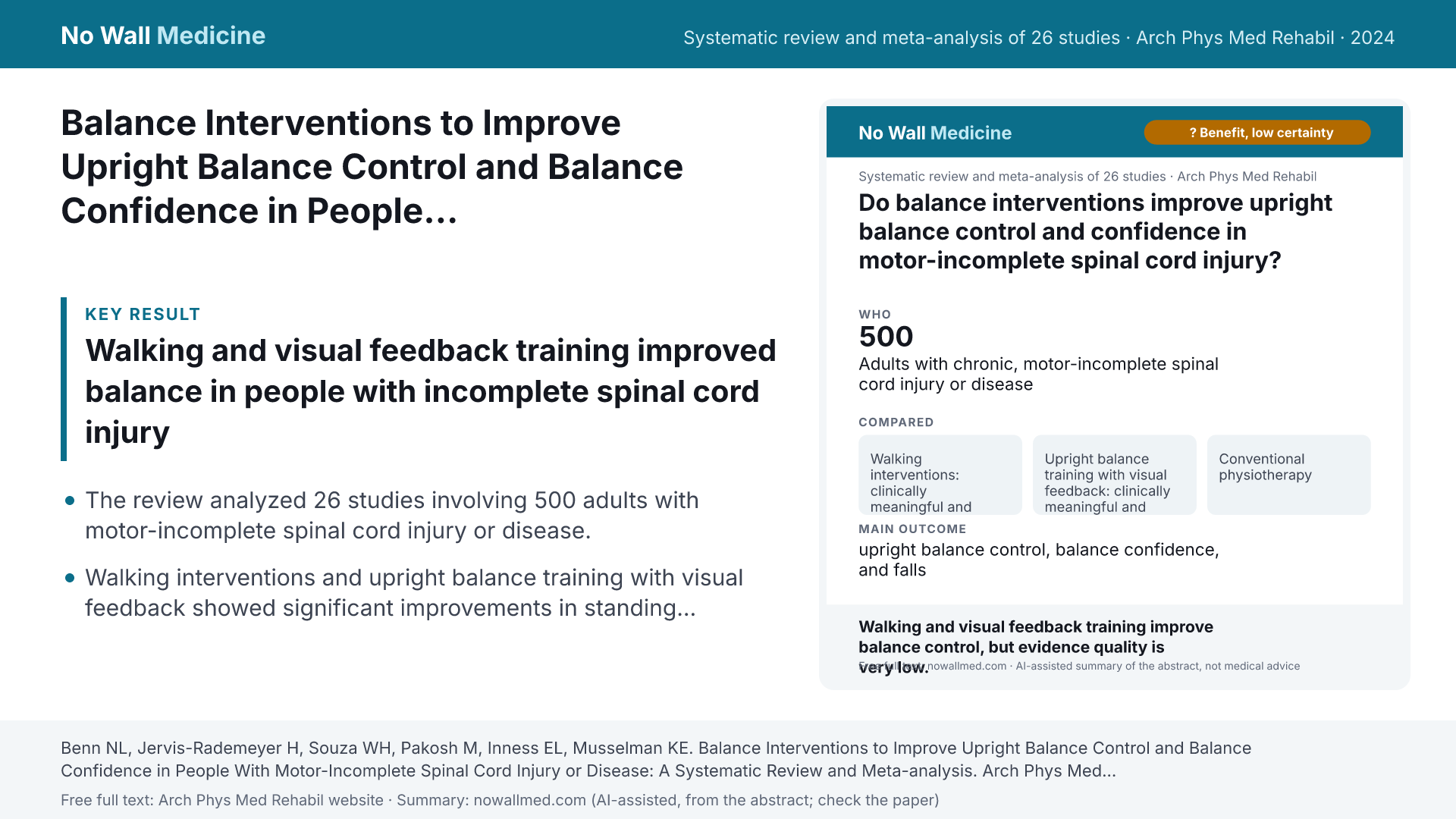
Balance Interventions to Improve Upright Balance Control and Balance Confidence in People With Motor-Incomplete Spinal Cord Injury or Disease: A Systematic Review and Meta-analysis
Key result: Walking and visual feedback training improved balance in people with incomplete spinal cord injury
Key points
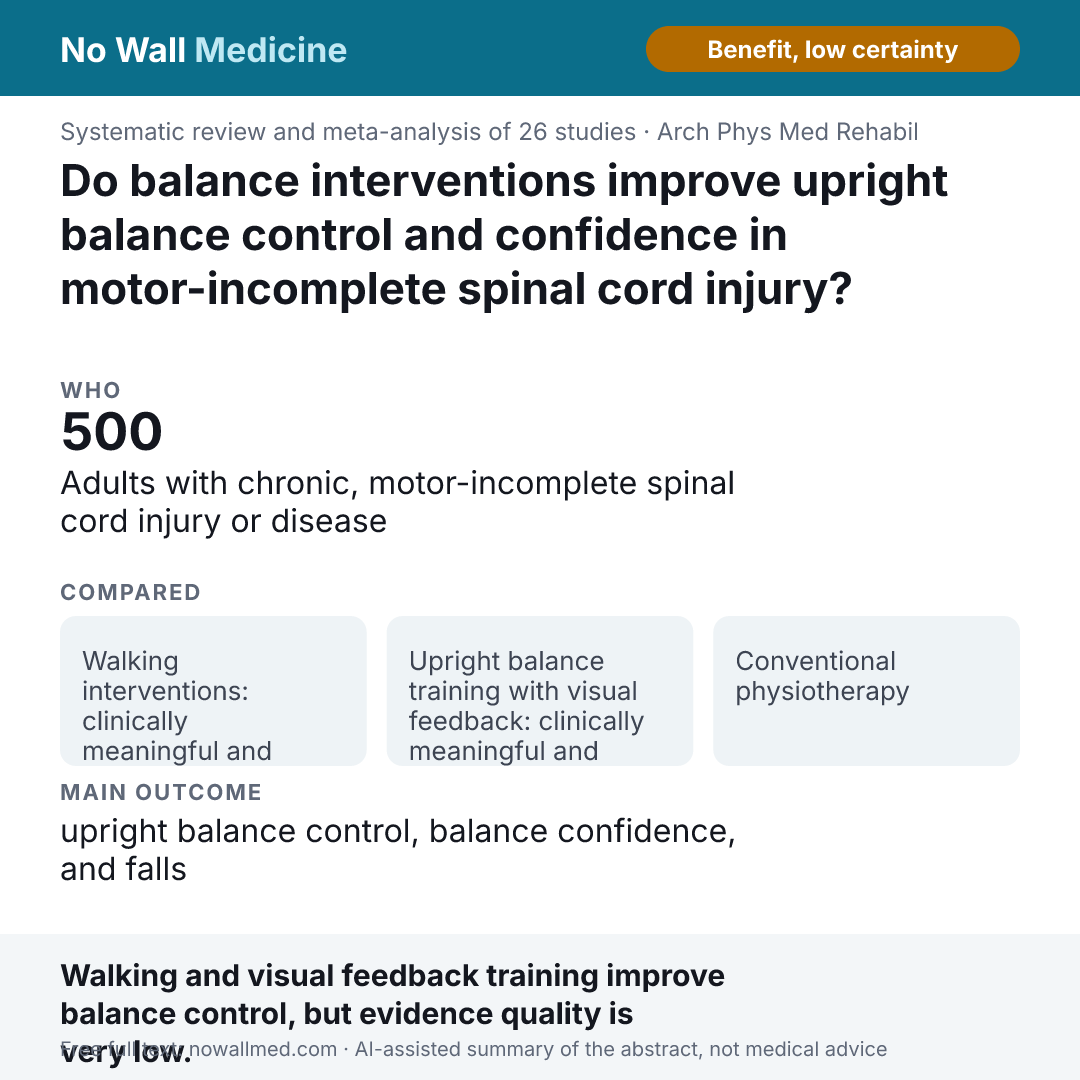
- The review analyzed 26 studies involving 500 adults with motor-incomplete spinal cord injury or disease.
- Walking interventions and upright balance training with visual feedback showed significant improvements in standing balance control.
- Only walking interventions had a significant pooled effect on improving balance confidence, while dosage effects were not significant.
Why it matters: Clinical decision making requires evidence syntheses to demonstrate the efficacy of available interventions and examine their components and dosage parameters.
Discussion prompts
- Would these patients look like yours? Who was left out?
- Is the main outcome one that matters to patients?
- Is the difference large enough to change what you do?
Cite: Benn NL, Jervis-Rademeyer H, Souza WH, Pakosh M, Inness EL, Musselman KE. Balance Interventions to Improve Upright Balance Control and Balance Confidence in People With Motor-Incomplete Spinal Cord Injury or Disease: A Systematic Review and Meta-analysis. Arch Phys Med Rehabil. 2025;106(3):444-458. doi:10.1016/j.apmr.2024.07.013
Free full text: Arch Phys Med Rehabil website · Summary and visual abstract: nowallmed.com/a/balance-interventions-to-improve-upright-balance-control-and-balance-110fcqw/ (AI-assisted from the abstract; check the paper before relying on it).