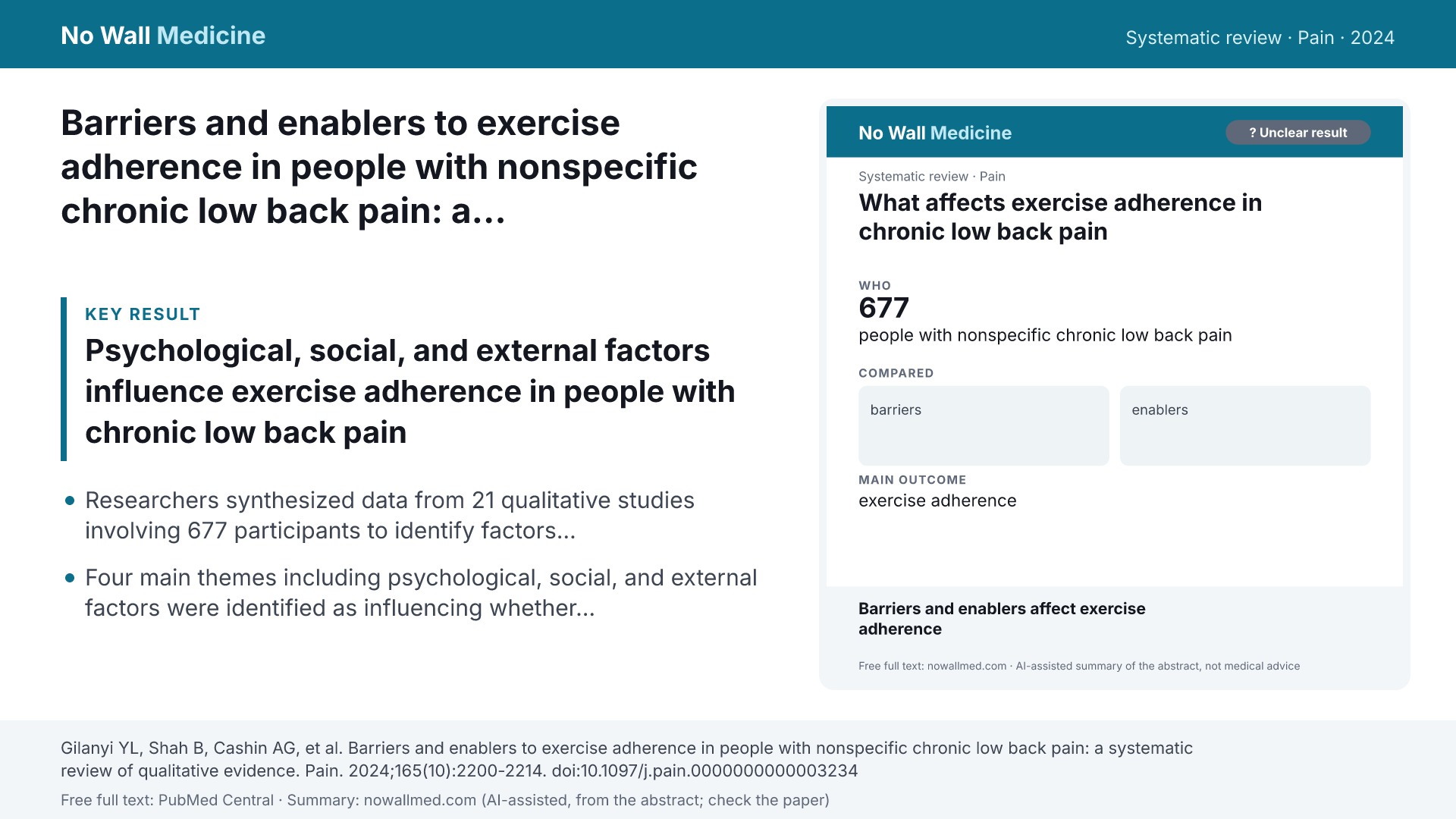
Psychological, social, and external factors influence exercise adherence in people with chronic low back pain
Barriers and enablers to exercise adherence in people with nonspecific chronic low back pain: a systematic review of qualitative evidence
Systematic reviewUnclear result
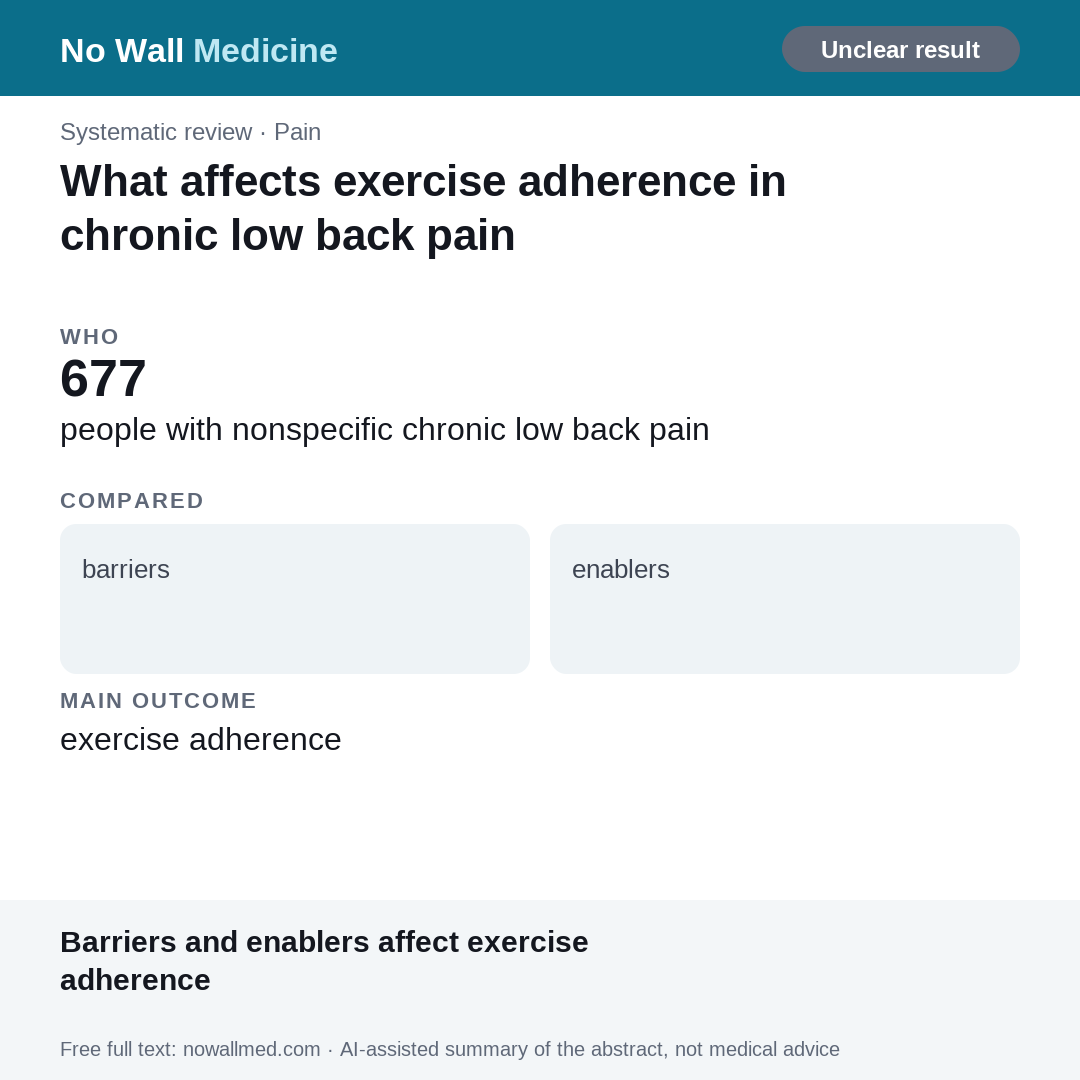
What affects exercise adherence in chronic low back pain
Who
677
people with nonspecific chronic low back pain
Compared
barriers
enablers
Main outcome
exercise adherence
Bottom line: Barriers and enablers affect exercise adherence
Pain · 2024-04-16Download image
Why it matters: It is unknown what specific perceptions and beliefs act as barriers or enablers to long-term exercise adherence for people with chronic low back pain.
Key points
- Researchers synthesized data from 21 qualitative studies involving 677 participants to identify factors affecting exercise adherence in people with chronic low back pain.
- Four main themes including psychological, social, and external factors were identified as influencing whether individuals stick to exercise programs.
- The 16 identified subthemes often acted as both barriers and enablers depending on whether they occurred before, during, or after exercise.
Headline and key points written with AI from the paper’s abstract, with every number checked against it. Read the paper before relying on them.
Was this summary helpful?
Subject terms
Cite this article
Gilanyi YL, Shah B, Cashin AG, et al. Barriers and enablers to exercise adherence in people with nonspecific chronic low back pain: a systematic review of qualitative evidence. Pain. 2024. doi:10.1097/j.pain.0000000000003234
Spotted a mistake? Suggest a correction