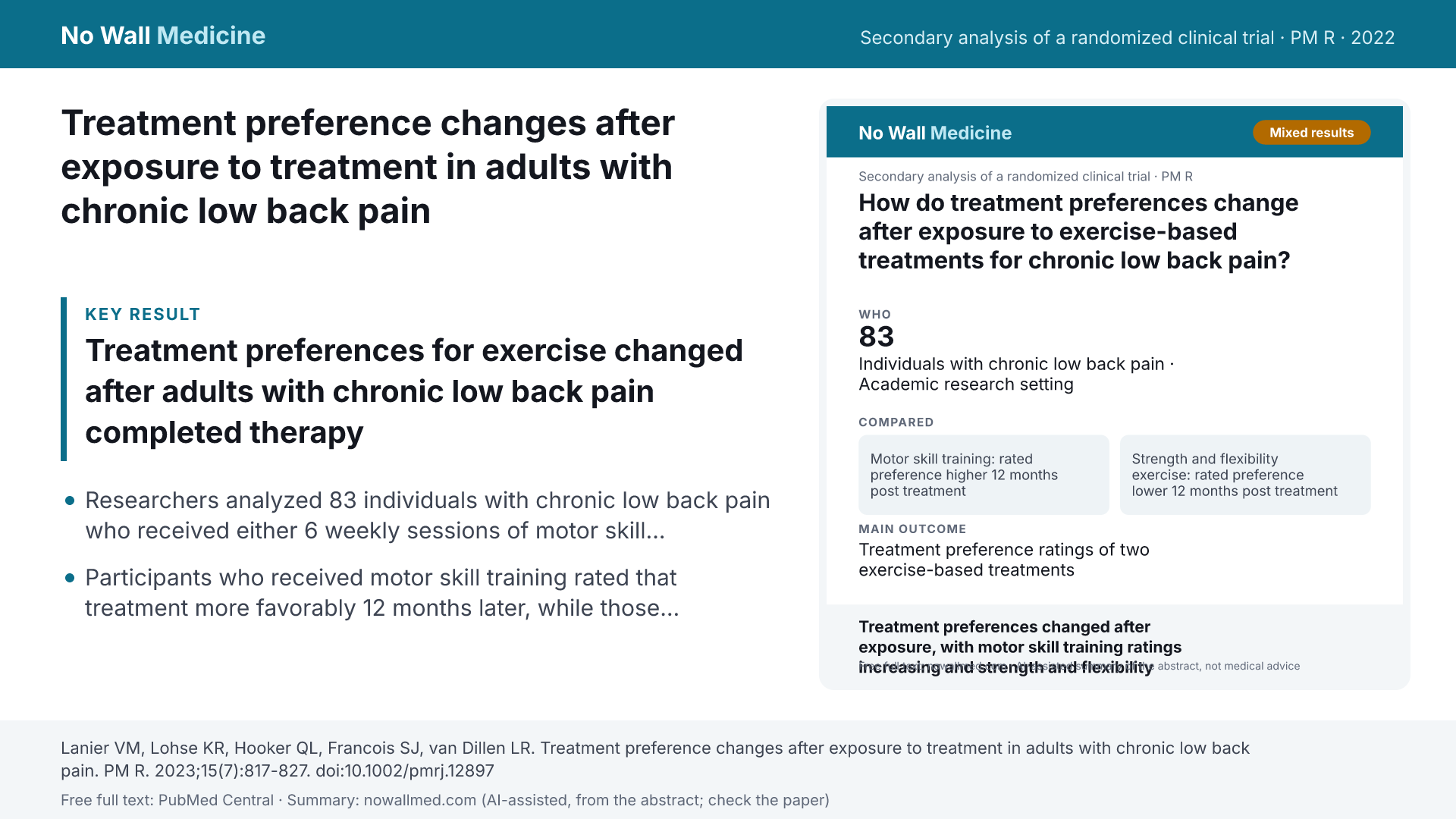
Treatment preferences for exercise changed after adults with chronic low back pain completed therapy
Treatment preference changes after exposure to treatment in adults with chronic low back pain
Secondary analysis of a randomized clinical trialMixed results
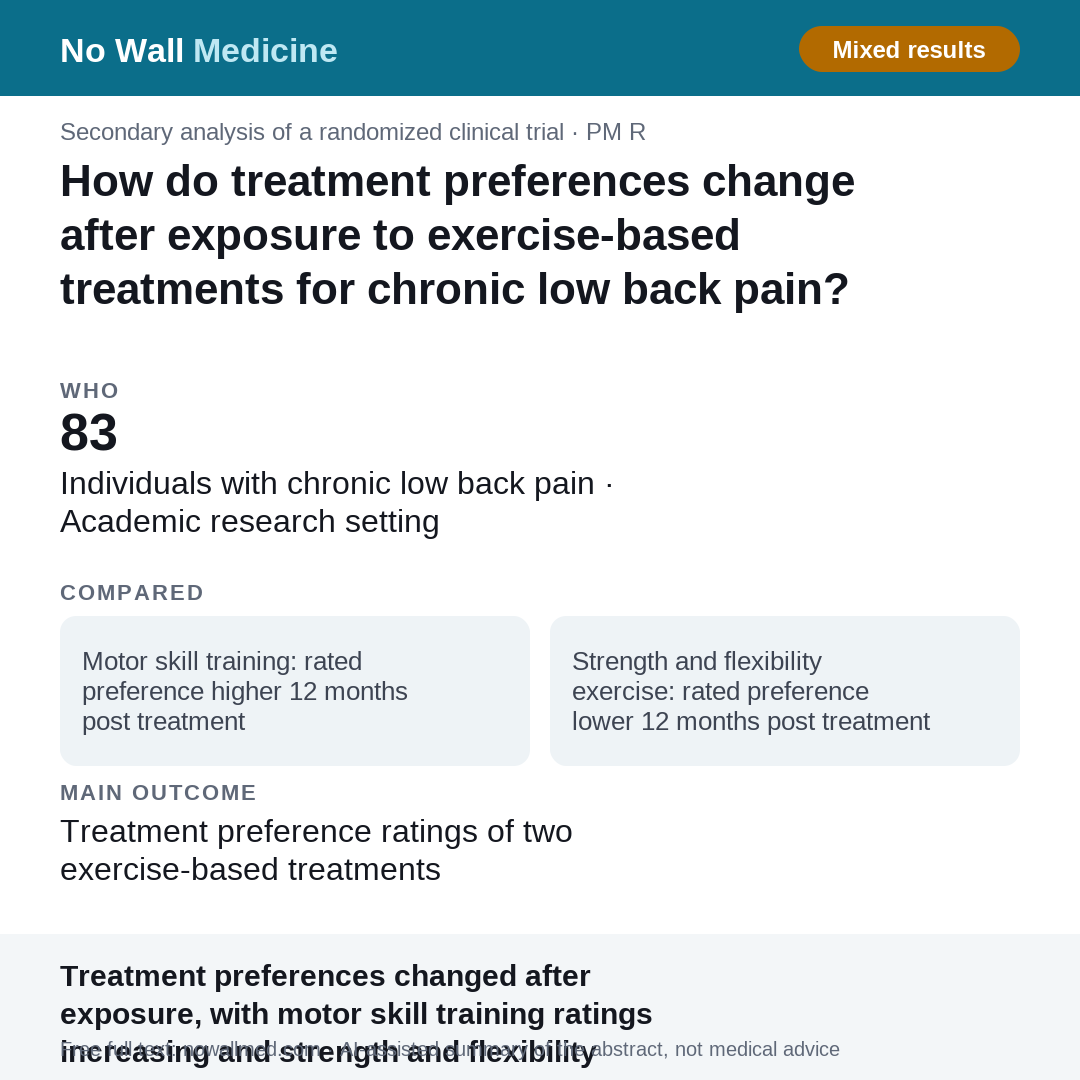
How do treatment preferences change after exposure to exercise-based treatments for chronic low back pain?
Who
83
Individuals with chronic low back pain · Academic research setting
Compared
Motor skill training: rated preference higher 12 months post treatment
Strength and flexibility exercise: rated preference lower 12 months post treatment
Main outcome
Treatment preference ratings of two exercise-based treatments
Bottom line: Treatment preferences changed after exposure, with motor skill training ratings increasing and strength and flexibility exercise ratings decreasing.
PM R · 2022-10-24Download image
Clinical question: How do treatment preferences change after exposure to exercise-based treatments for chronic low back pain?
Why it matters: It is unknown how a person's preference for nonpharmacologic treatments changes after they have actually experienced the treatment.
Key points
- Researchers analyzed 83 individuals with chronic low back pain who received either 6 weekly sessions of motor skill training or strength and flexibility exercise.
- Participants who received motor skill training rated that treatment more favorably 12 months later, while those receiving strength and flexibility exercise rated it lower.
- In the strength and flexibility exercise group, smaller improvements or worsening pain was associated with a reduction in preference ratings.
Headline and key points written with AI from the paper’s abstract, with every number checked against it. Read the paper before relying on them.
Was this summary helpful?
Subject terms
Cite this article
Lanier VM, Lohse KR, Hooker QL, Francois SJ, van Dillen LR. Treatment preference changes after exposure to treatment in adults with chronic low back pain. PM R. 2022. doi:10.1002/pmrj.12897
Spotted a mistake? Suggest a correction
Top studies every Monday
The week’s key trials and guidelines in your specialties, plus any topics you follow. By email, free.
Get the weekly digest