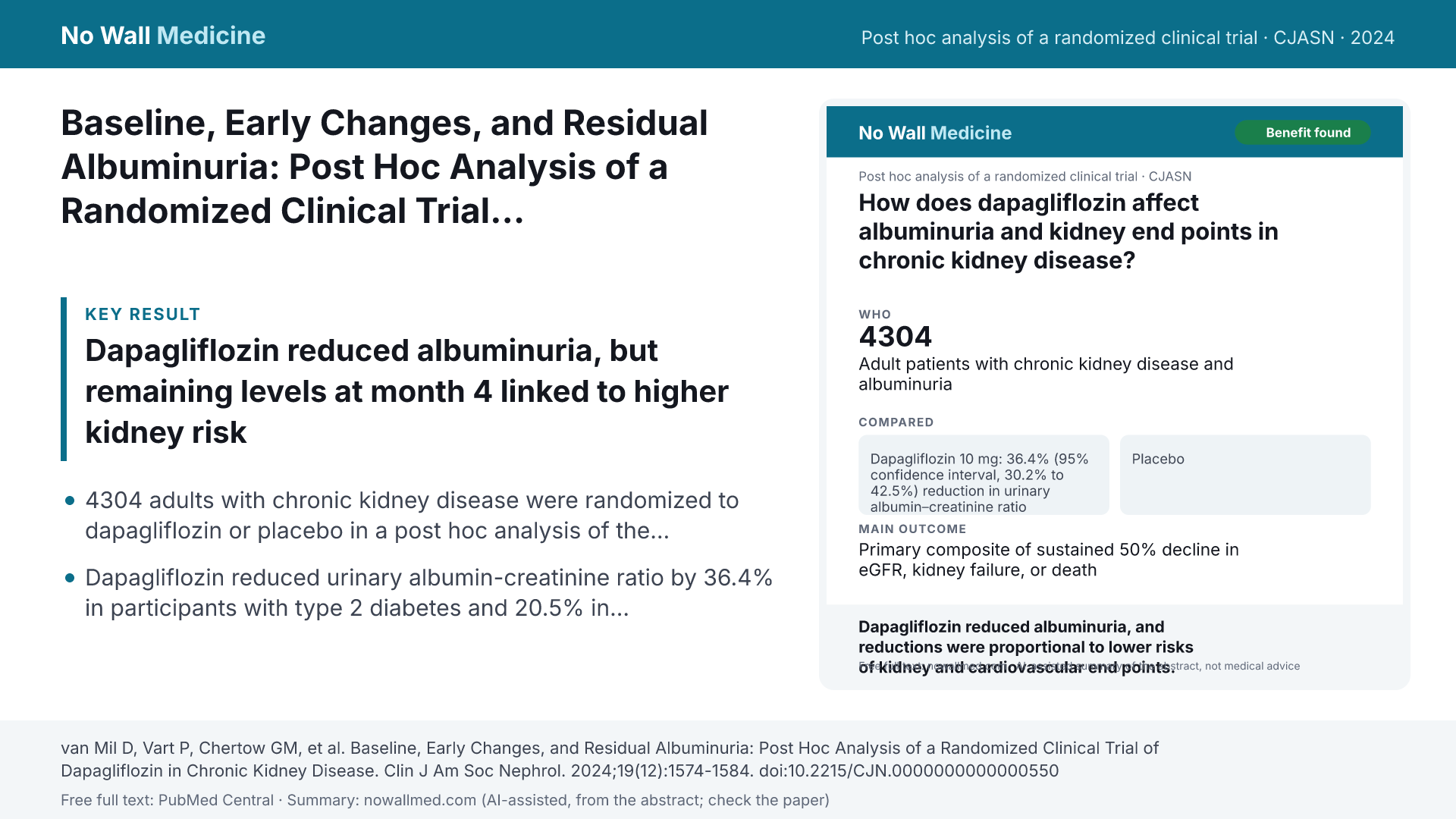
Dapagliflozin reduced albuminuria, but remaining levels at month 4 linked to higher kidney risk
Baseline, Early Changes, and Residual Albuminuria: Post Hoc Analysis of a Randomized Clinical Trial of Dapagliflozin in Chronic Kidney Disease
Post hoc analysis of a randomized clinical trialBenefit found
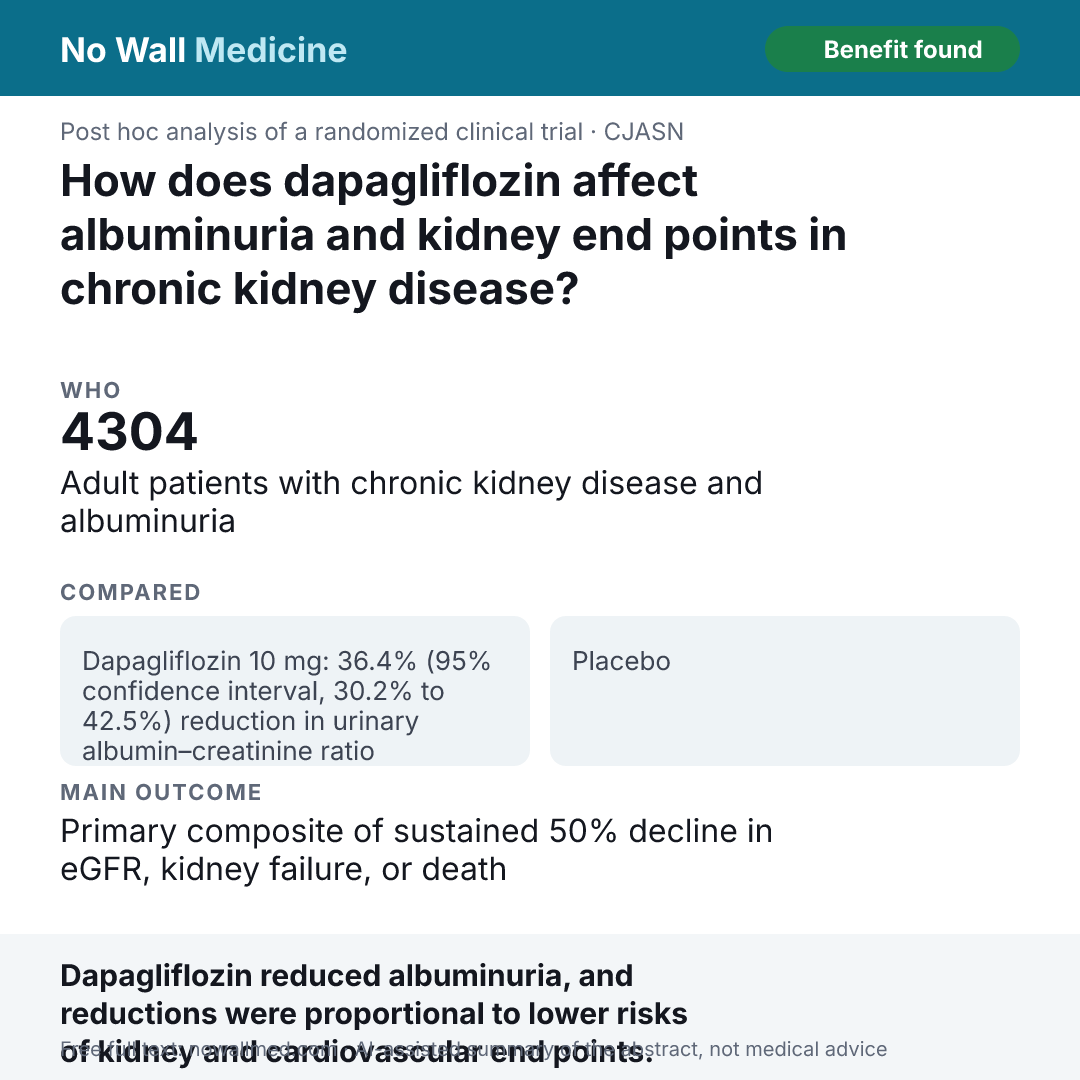
How does dapagliflozin affect albuminuria and kidney end points in chronic kidney disease?
Who
4304
Adult patients with chronic kidney disease and albuminuria
Compared
Dapagliflozin 10 mg: 36.4% (95% confidence interval, 30.2% to 42.5%) reduction in urinary albumin–creatinine ratio
Placebo
Main outcome
Primary composite of sustained 50% decline in eGFR, kidney failure, or death
Bottom line: Dapagliflozin reduced albuminuria, and reductions were proportional to lower risks of kidney and cardiovascular end points.
CJASN · 2024-10-30 · Save PNG
Same trial (NCT03036150)
Papers we list that report this registered trial, oldest first. Read a secondary analysis alongside the main results.
- Main results Benefit found
Dapagliflozin lowered kidney and cardiovascular risks in chronic kidney disease patients NEJM 2020-09 - Related analysis Benefit found
Dapagliflozin reduced kidney and cardiovascular risks in patients with or without heart failure JACC Heart Fail 2021-08 - Secondary analysis Benefit found
Dapagliflozin benefits kidney and cardiovascular outcomes across different levels of kidney disease risk Diabetologia 2022-04 - Related analysis Benefit found
Acute drop in kidney function after starting dapagliflozin was not linked to faster kidney disease progression JASN 2022-08 - Related analysis Benefit found
Combined kidney and glucose-lowering therapy was associated with more years free from kidney failure CJASN 2022-11 - Secondary analysis Benefit found
Dapagliflozin benefits remained consistent regardless of the type or number of diabetes medications used Diabetes Care 2023-01 - Secondary analysis Harm found
Higher ambient heat exposure was associated with faster kidney function decline in chronic kidney disease patients Lancet Planet Health 2024-04 - Secondary analysis Benefit found
This paper CJASN 2024-10
Clinical question: How does dapagliflozin affect albuminuria and kidney end points in chronic kidney disease?
Key points
- 4304 adults with chronic kidney disease were randomized to dapagliflozin or placebo in a post hoc analysis of the DAPA-CKD trial.
- Dapagliflozin reduced urinary albumin-creatinine ratio by 36.4% in participants with type 2 diabetes and 20.5% in those without.
- Residual albuminuria at month 4 was associated with higher risks of primary and kidney composite end points in both treatment groups.
Limitation the authors note: The analysis was a post hoc assessment of a randomized trial, which may introduce bias compared to pre-specified primary endpoints.
Headline and key points written with AI from the paper’s abstract, with every number checked against it. Read the paper before relying on them.
Was this summary helpful?
Headline, design, result, key points, caveat and citation as plain text.
Cite this article
van Mil D, Vart P, Chertow GM, et al. Baseline, Early Changes, and Residual Albuminuria: Post Hoc Analysis of a Randomized Clinical Trial of Dapagliflozin in Chronic Kidney Disease. Clin J Am Soc Nephrol. 2024;19(12):1574-1584. doi:10.2215/CJN.0000000000000550
Spotted a mistake? Suggest a correction