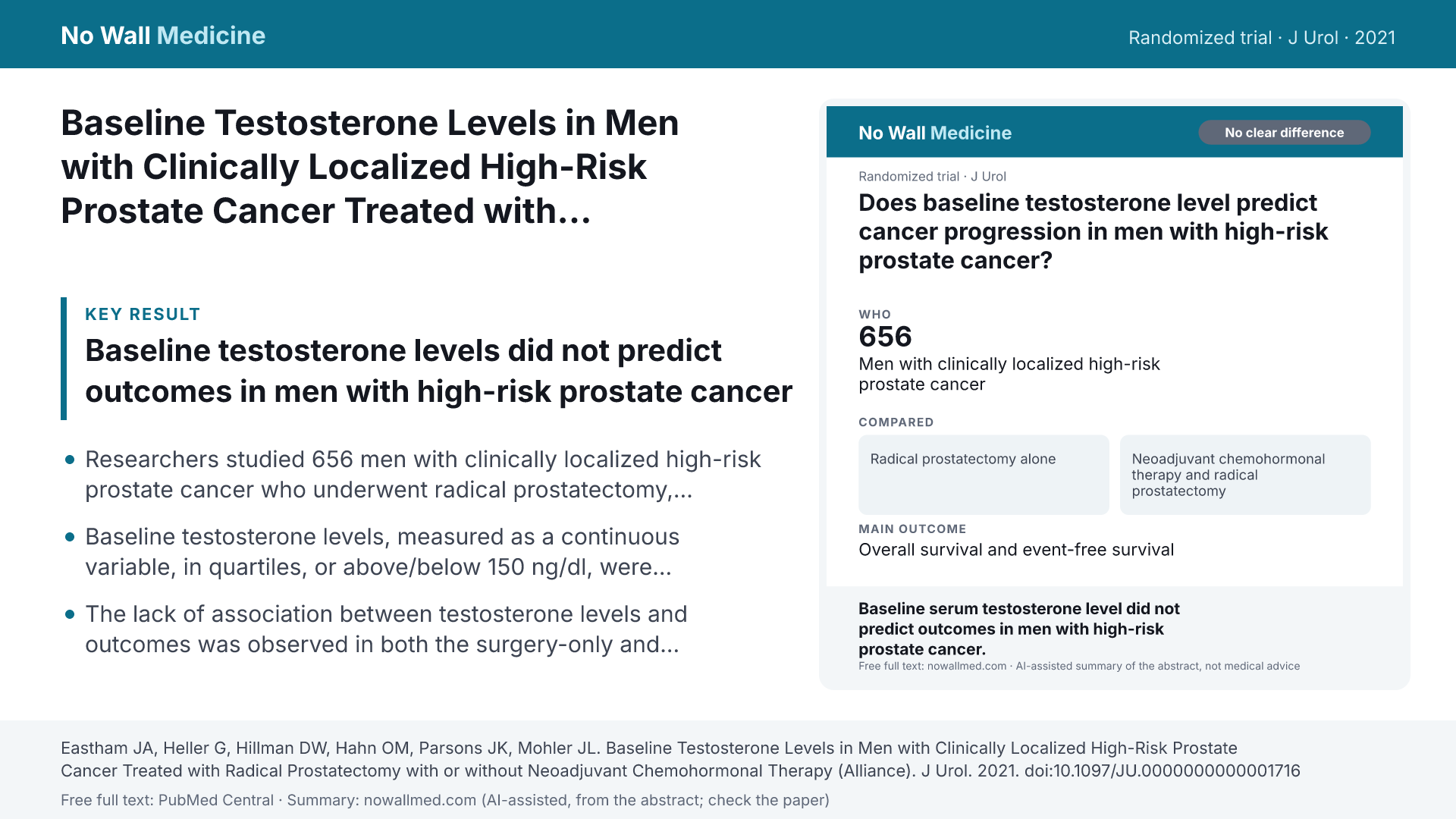
Baseline Testosterone Levels in Men with Clinically Localized High-Risk Prostate Cancer Treated with Radical Prostatectomy with or without Neoadjuvant Chemohormonal Therapy (Alliance)
Key result: Baseline testosterone levels did not predict outcomes in men with high-risk prostate cancer
Key points
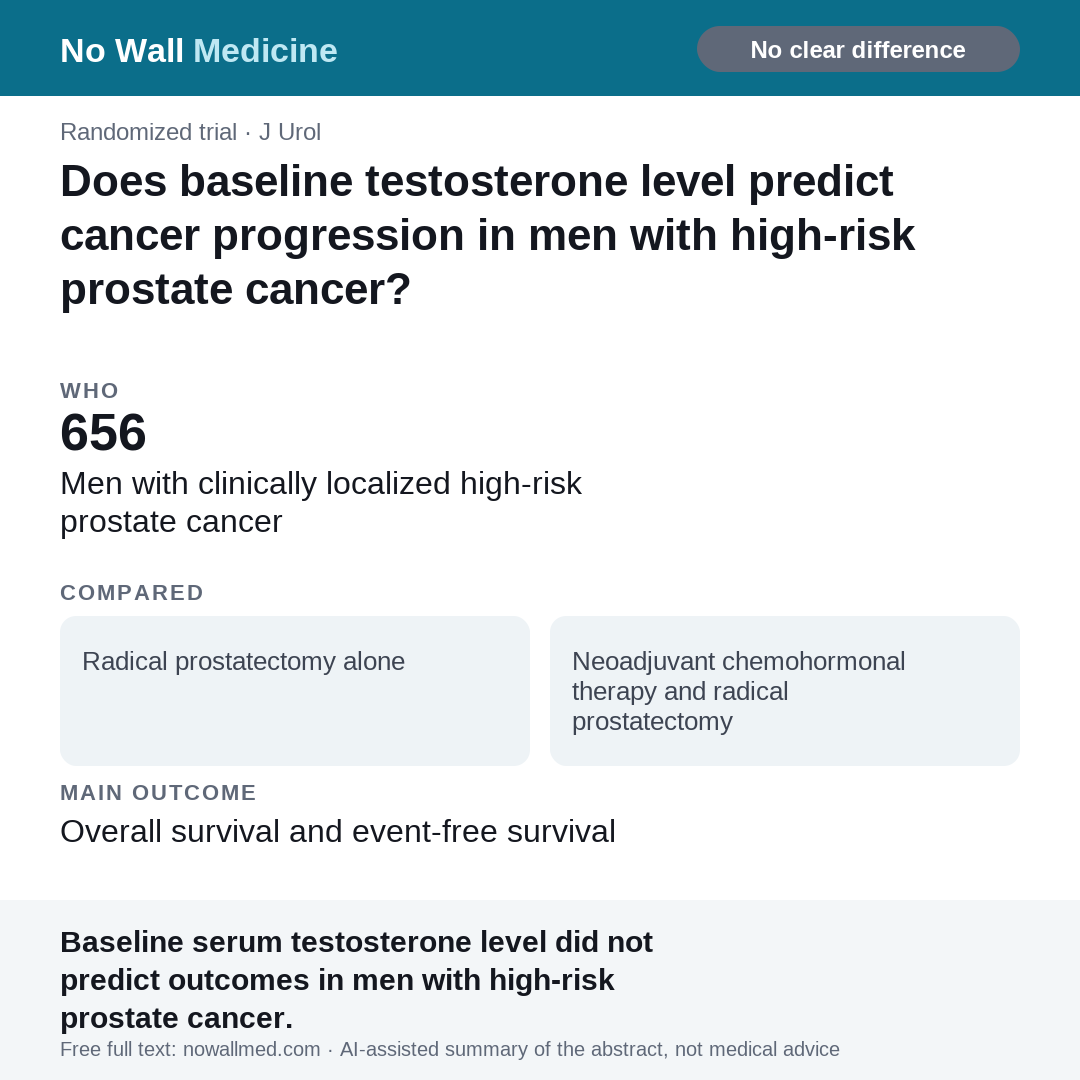
- Researchers studied 656 men with clinically localized high-risk prostate cancer who underwent radical prostatectomy, either alone or with neoadjuvant chemohormonal therapy.
- Baseline testosterone levels, measured as a continuous variable, in quartiles, or above/below 150 ng/dl, were not associated with overall survival or event-free survival.
- The lack of association between testosterone levels and outcomes was observed in both the surgery-only and the chemohormonal therapy groups.
Why it matters: It was unknown if low serum testosterone at the time of diagnosis identifies men at higher risk for cancer progression after treatment.
Discussion prompts
- Would these patients look like yours? Who was left out?
- Is the main outcome one that matters to patients?
- Is the difference large enough to change what you do?
Cite: Eastham JA, Heller G, Hillman DW, Hahn OM, Parsons JK, Mohler JL. Baseline Testosterone Levels in Men with Clinically Localized High-Risk Prostate Cancer Treated with Radical Prostatectomy with or without Neoadjuvant Chemohormonal Therapy (Alliance). J Urol. 2021. doi:10.1097/JU.0000000000001716
Free full text: PubMed Central · Summary and visual abstract: nowallmed.com/a/baseline-testosterone-levels-in-men-with-clinically-localized-high-a2hbnm/ (AI-assisted from the abstract; check the paper before relying on it).