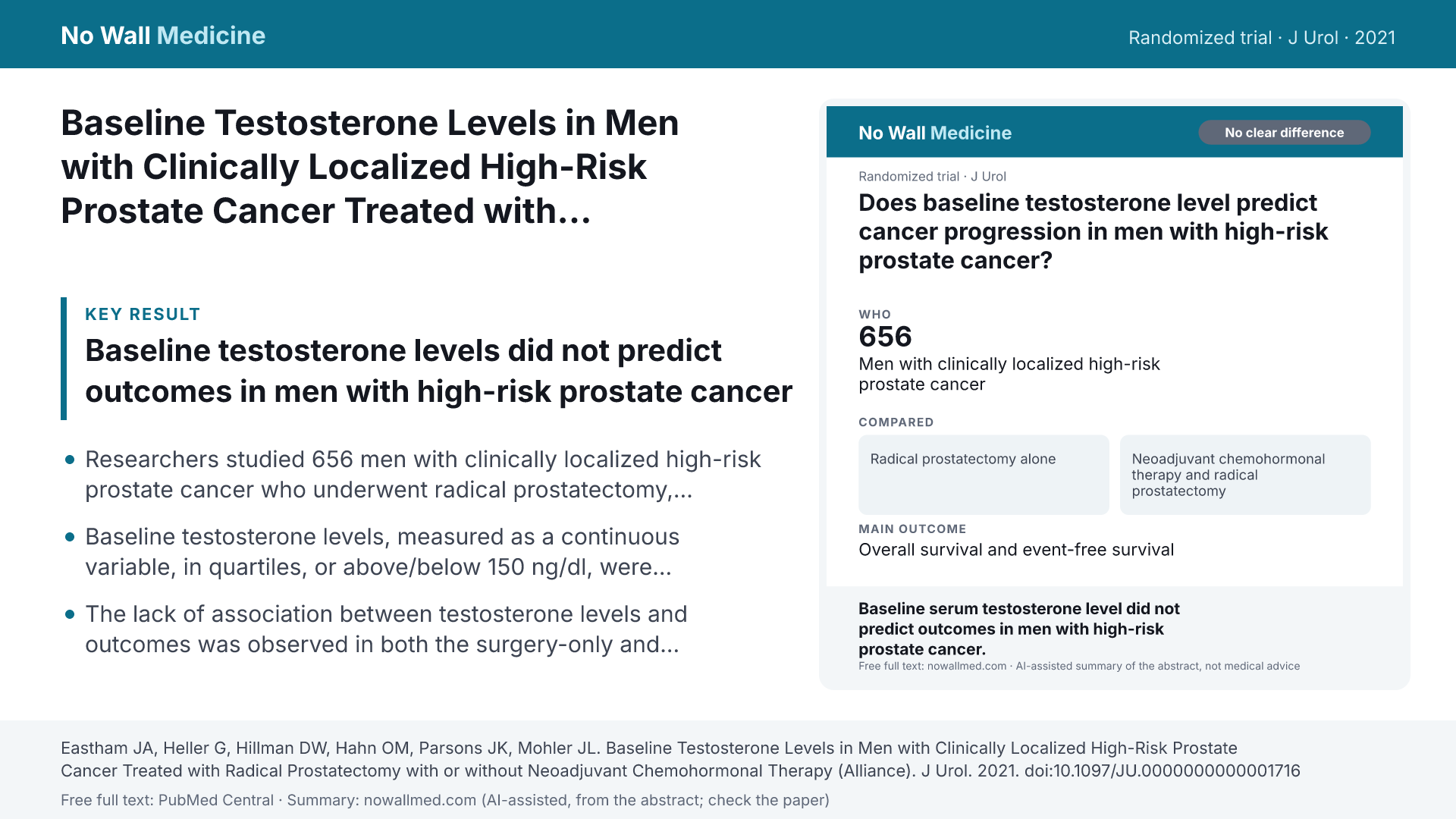
Baseline testosterone levels did not predict outcomes in men with high-risk prostate cancer
Baseline Testosterone Levels in Men with Clinically Localized High-Risk Prostate Cancer Treated with Radical Prostatectomy with or without Neoadjuvant Chemohormonal Therapy (Alliance)
Randomized trialNo clear difference
Does baseline testosterone level predict cancer progression in men with high-risk prostate cancer?
Who
656
Men with clinically localized high-risk prostate cancer
Compared
Radical prostatectomy alone
Neoadjuvant chemohormonal therapy and radical prostatectomy
Main outcome
Overall survival and event-free survival
Bottom line: Baseline serum testosterone level did not predict outcomes in men with high-risk prostate cancer.
J Urol · 2021-03-29Download image
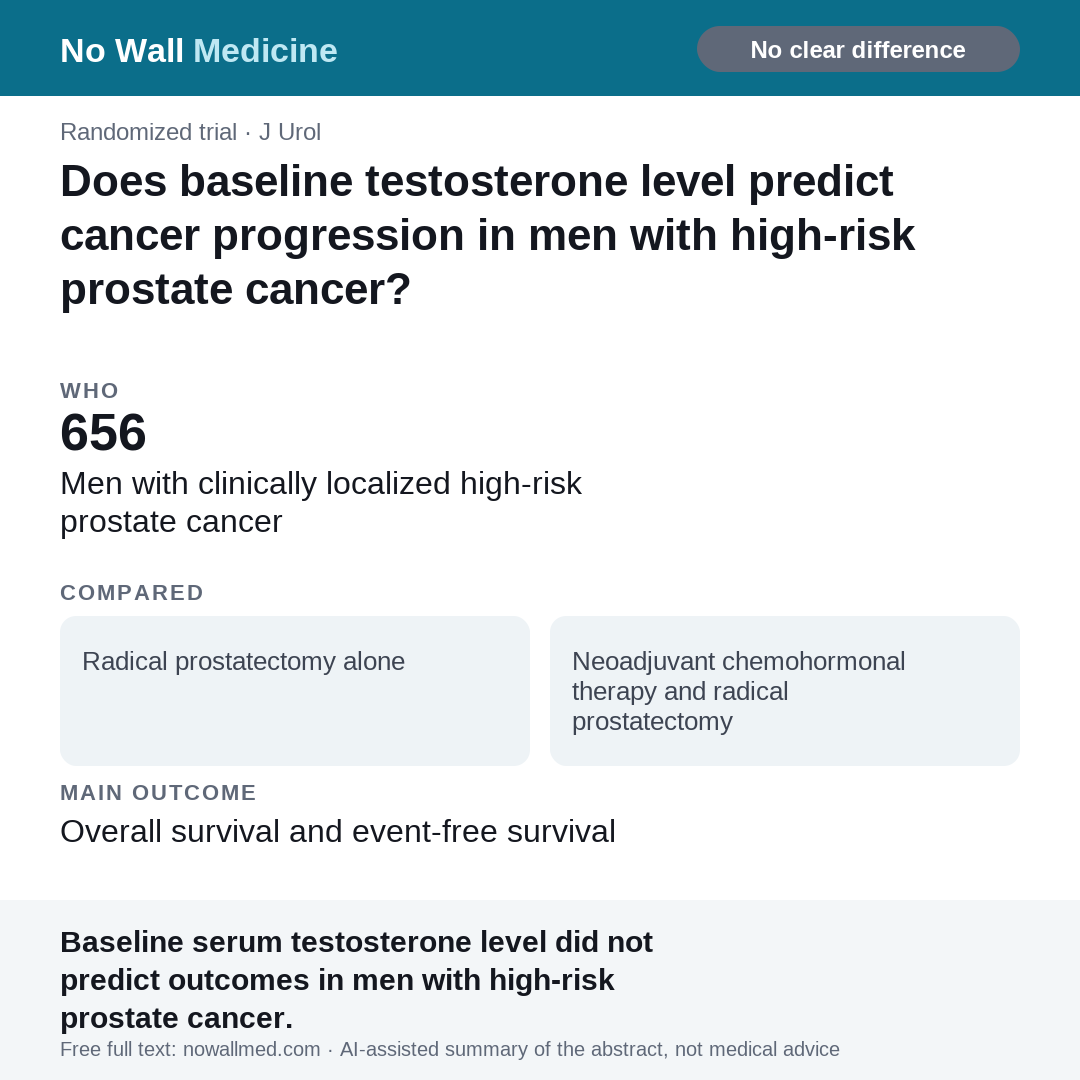
Clinical question: Does baseline testosterone level predict cancer progression in men with high-risk prostate cancer?
Why it matters: It was unknown if low serum testosterone at the time of diagnosis identifies men at higher risk for cancer progression after treatment.
Key points
- Researchers studied 656 men with clinically localized high-risk prostate cancer who underwent radical prostatectomy, either alone or with neoadjuvant chemohormonal therapy.
- Baseline testosterone levels, measured as a continuous variable, in quartiles, or above/below 150 ng/dl, were not associated with overall survival or event-free survival.
- The lack of association between testosterone levels and outcomes was observed in both the surgery-only and the chemohormonal therapy groups.
Headline and key points written with AI from the paper’s abstract, with every number checked against it. Read the paper before relying on them.
Was this summary helpful?
Subject terms
Cite this article
Eastham JA, Heller G, Hillman DW, Hahn OM, Parsons JK, Mohler JL. Baseline Testosterone Levels in Men with Clinically Localized High-Risk Prostate Cancer Treated with Radical Prostatectomy with or without Neoadjuvant Chemohormonal Therapy (Alliance). J Urol. 2021. doi:10.1097/JU.0000000000001716
Spotted a mistake? Suggest a correction
Top studies every Monday
The week’s key trials and guidelines in your specialties, plus any topics you follow. By email, free.
Get the weekly digest