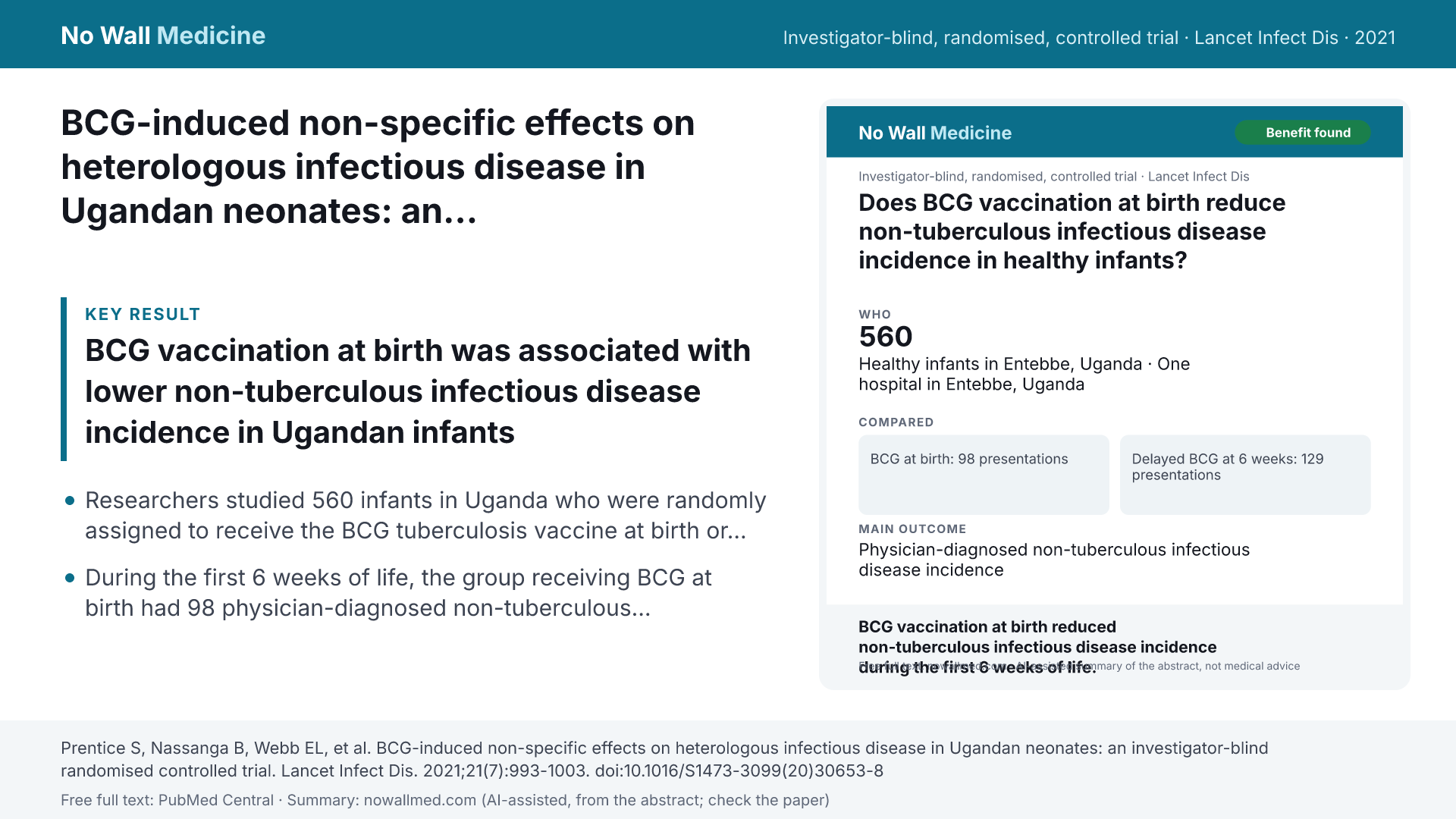
BCG-induced non-specific effects on heterologous infectious disease in Ugandan neonates: an investigator-blind randomised controlled trial
Key result: BCG vaccination at birth was associated with lower non-tuberculous infectious disease incidence in Ugandan infants
Investigator-blind, randomised, controlled trialBenefit found
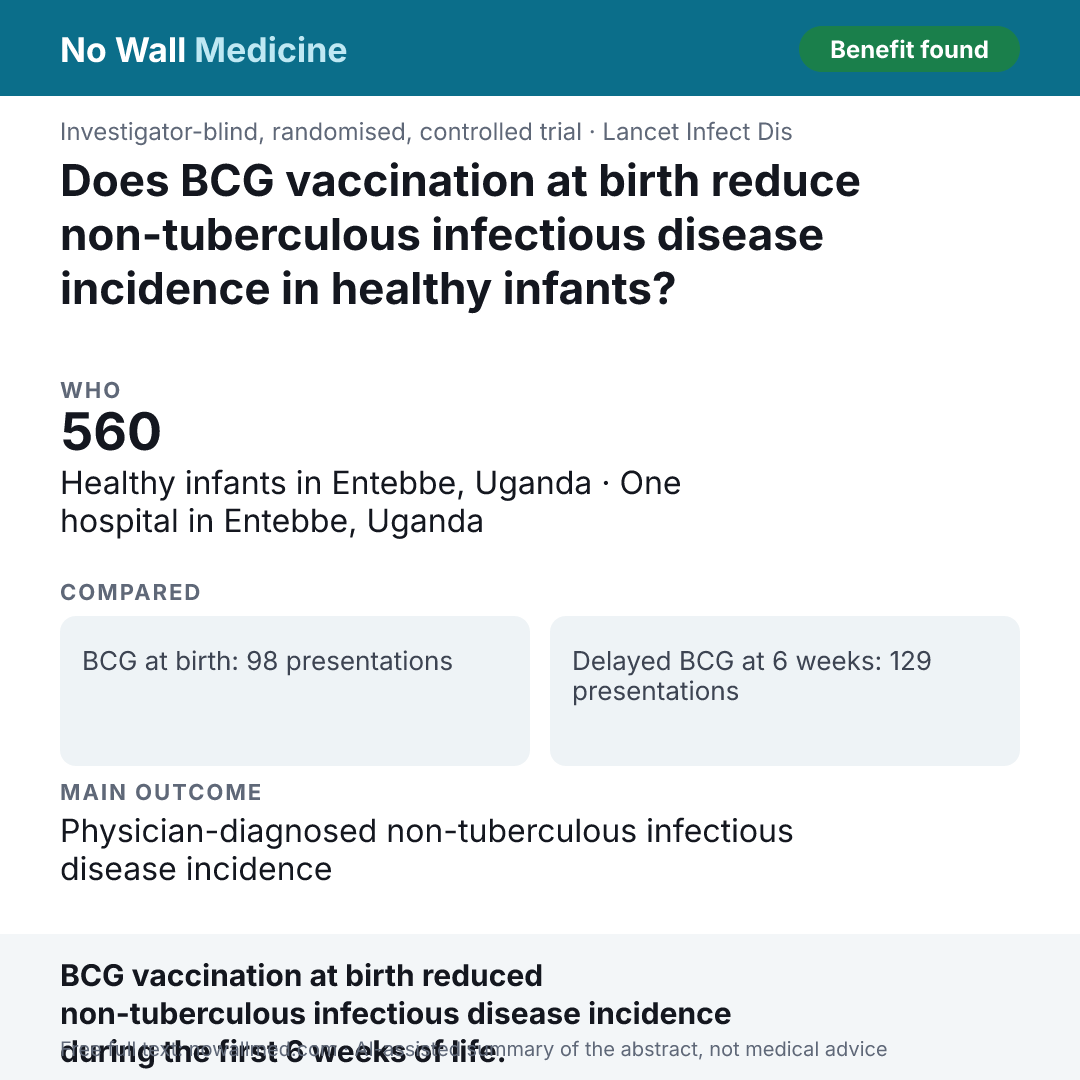
Does BCG vaccination at birth reduce non-tuberculous infectious disease incidence in healthy infants?
Who
560
Healthy infants in Entebbe, Uganda · One hospital in Entebbe, Uganda
Compared
BCG at birth: 98 presentations
Delayed BCG at 6 weeks: 129 presentations
Main outcome
Physician-diagnosed non-tuberculous infectious disease incidence
Result: hazard ratio 0·71 (95% CI 0·53-0·95)
Bottom line: BCG vaccination at birth reduced non-tuberculous infectious disease incidence during the first 6 weeks of life.
Limitation: Parents were not masked to group assignment.
Lancet Infect Dis · 2021-02-17 · Save PNG
Key points
- Researchers studied 560 infants in Uganda who were randomly assigned to receive the BCG tuberculosis vaccine at birth or at 6 weeks of age.
- During the first 6 weeks of life, the group receiving BCG at birth had 98 physician-diagnosed non-tuberculous infectious disease presentations compared to 129 in the delayed group.
- After the delayed group received their vaccine, there was no significant difference in disease incidence between the two groups, with 88 presentations versus 76 presentations.
Discussion prompts
- Would these patients look like yours? Who was left out?
- Is the main outcome one that matters to patients?
- Is the difference large enough to change what you do?
Cite: Prentice S, Nassanga B, Webb EL, et al. BCG-induced non-specific effects on heterologous infectious disease in Ugandan neonates: an investigator-blind randomised controlled trial. Lancet Infect Dis. 2021;21(7):993-1003. doi:10.1016/S1473-3099(20)30653-8
Free full text: PubMed Central · Summary and visual abstract: nowallmed.com/a/bcg-induced-non-specific-effects-on-heterologous-infectious-disease-xx7mrq/ (AI-assisted from the abstract; check the paper before relying on it).