Behavioral activation therapy was associated with lower odds of suicide ideation in pregnant and postpartum adults
Behavioral Activation for Perinatal Suicide Ideation: Secondary Analysis of a Noninferiority Randomized Clinical Trial
Secondary analysis of a noninferiority randomized clinical trialBenefit found
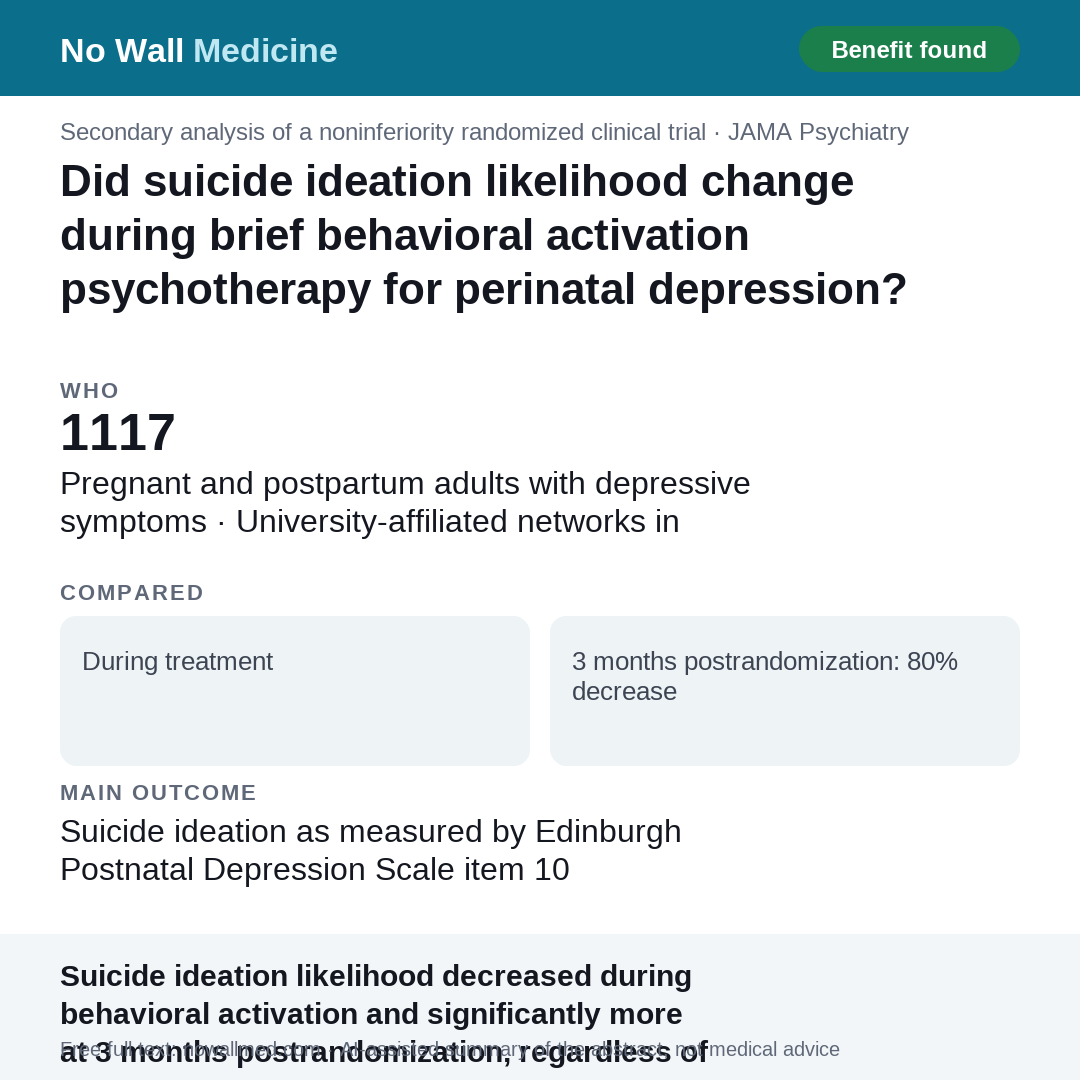
Did suicide ideation likelihood change during brief behavioral activation psychotherapy for perinatal depression?
Who
1117
Pregnant and postpartum adults with depressive symptoms · University-affiliated networks in Illinois, North Carolina, and Canada
Compared
During treatment
3 months postrandomization: 80% decrease
Main outcome
Suicide ideation as measured by Edinburgh Postnatal Depression Scale item 10
Result: odds ratio 0.75 (95% CI, 0.58-0.96) per additional session
Bottom line: Suicide ideation likelihood decreased during behavioral activation and significantly more at 3 months postrandomization, regardless of clinician or modality.
JAMA Psychiatry · 2025-08-23Download image
Clinical question: Did suicide ideation likelihood change during brief behavioral activation psychotherapy for perinatal depression?
Why it matters: Evidence-based interventions are needed to address suicide, which is a leading cause of maternal postpartum death.
Key points
- Researchers analyzed 1117 pregnant and postpartum adults with depressive symptoms who participated in a randomized clinical trial of behavioral activation, a psychotherapy focused on increasing engagement in rewarding activities.
- The odds of endorsing suicide ideation decreased by 25% with each additional treatment session and decreased by 80% at 3 months postrandomization compared to any time during treatment.
- The likelihood of endorsing suicide ideation did not differ between nonspecialist versus specialist clinicians or between telemedicine versus in person delivery.
Headline and key points written with AI from the paper’s abstract, with every number checked against it. Read the paper before relying on them.
Topics
Cite this article
Kaliush PR, Molina NC, Berenbaum TS, Dennis CL, Gaynes BN, Meltzer-Brody S. Behavioral Activation for Perinatal Suicide Ideation: Secondary Analysis of a Noninferiority Randomized Clinical Trial. JAMA Psychiatry. 2025. doi:10.1001/jamapsychiatry.2025.2116
Spotted a mistake? Suggest a correction