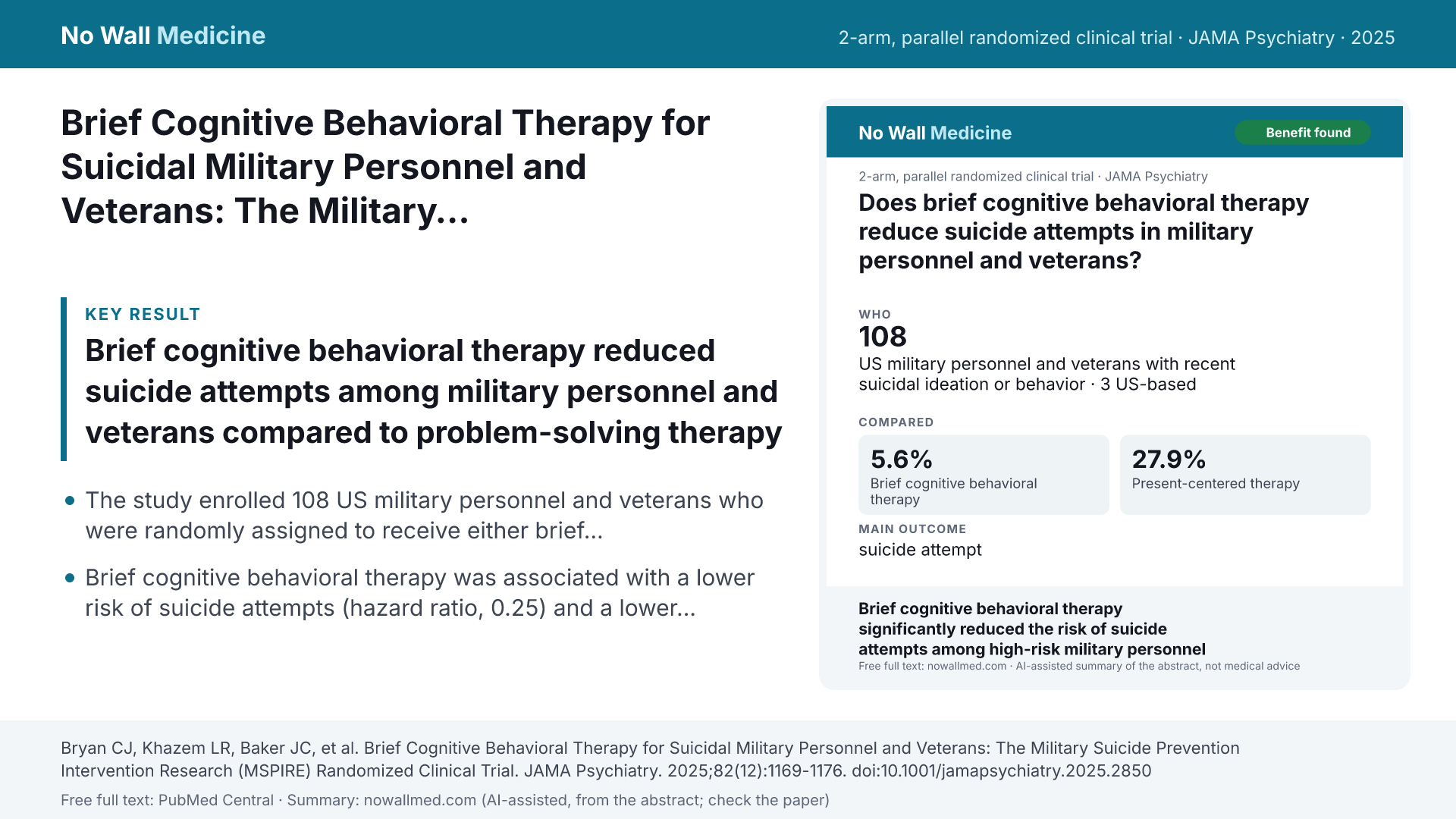
Brief cognitive behavioral therapy reduced suicide attempts among military personnel and veterans compared to problem-solving therapy
Brief Cognitive Behavioral Therapy for Suicidal Military Personnel and Veterans: The Military Suicide Prevention Intervention Research (MSPIRE) Randomized Clinical Trial
2-arm, parallel randomized clinical trialBenefit found
Does brief cognitive behavioral therapy reduce suicide attempts in military personnel and veterans?
Who
108
US military personnel and veterans with recent suicidal ideation or behavior · 3 US-based outpatient psychiatric clinics
Compared
5.6%Brief cognitive behavioral therapy
27.9%Present-centered therapy
Main outcome
suicide attempt
Result: hazard ratio 0.25 (90% CI 0.07-0.90)
Bottom line: Brief cognitive behavioral therapy significantly reduced the risk of suicide attempts among high-risk military personnel and veterans.
JAMA Psychiatry · 2025-10-08Download image
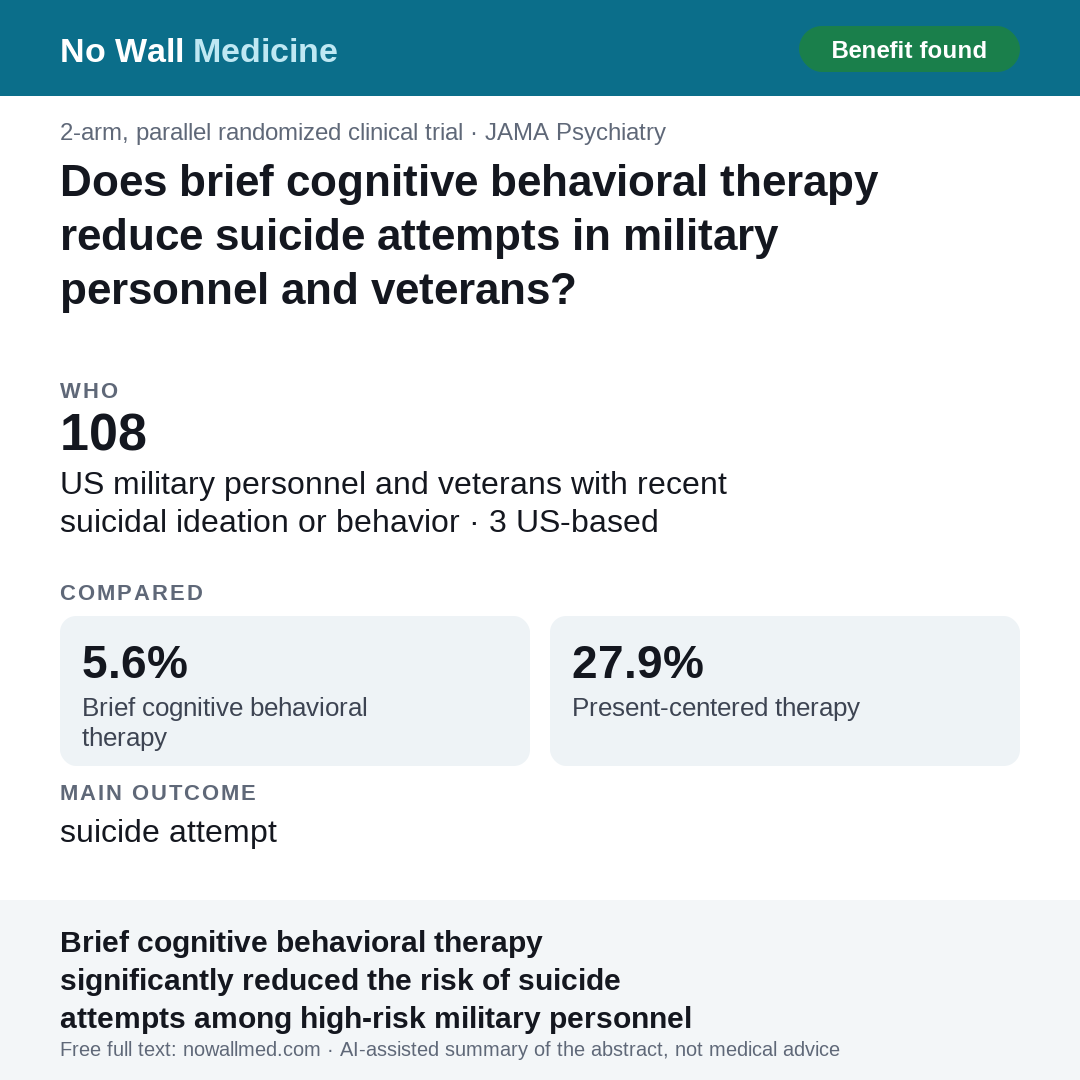
Clinical question: Does brief cognitive behavioral therapy reduce suicide attempts in military personnel and veterans?
Why it matters: Replication of previous findings was needed to confirm if brief cognitive behavioral therapy reduces suicide attempts among high-risk military personnel and veterans.
Key points
- The study enrolled 108 US military personnel and veterans who were randomly assigned to receive either brief cognitive behavioral therapy or present-centered therapy.
- Brief cognitive behavioral therapy was associated with a lower risk of suicide attempts (hazard ratio, 0.25) and a lower rate of attempts (0.06 vs 0.18 attempts per participant-year).
- Suicidal ideation, or thoughts of suicide, decreased significantly in both groups, but there was no difference in the decrease between the two therapies.
Headline and key points written with AI from the paper’s abstract, with every number checked against it. Read the paper before relying on them.
Was this summary helpful?
Subject terms
Cite this article
Bryan CJ, Khazem LR, Baker JC, et al. Brief Cognitive Behavioral Therapy for Suicidal Military Personnel and Veterans: The Military Suicide Prevention Intervention Research (MSPIRE) Randomized Clinical Trial. JAMA Psychiatry. 2025. doi:10.1001/jamapsychiatry.2025.2850
Spotted a mistake? Suggest a correction