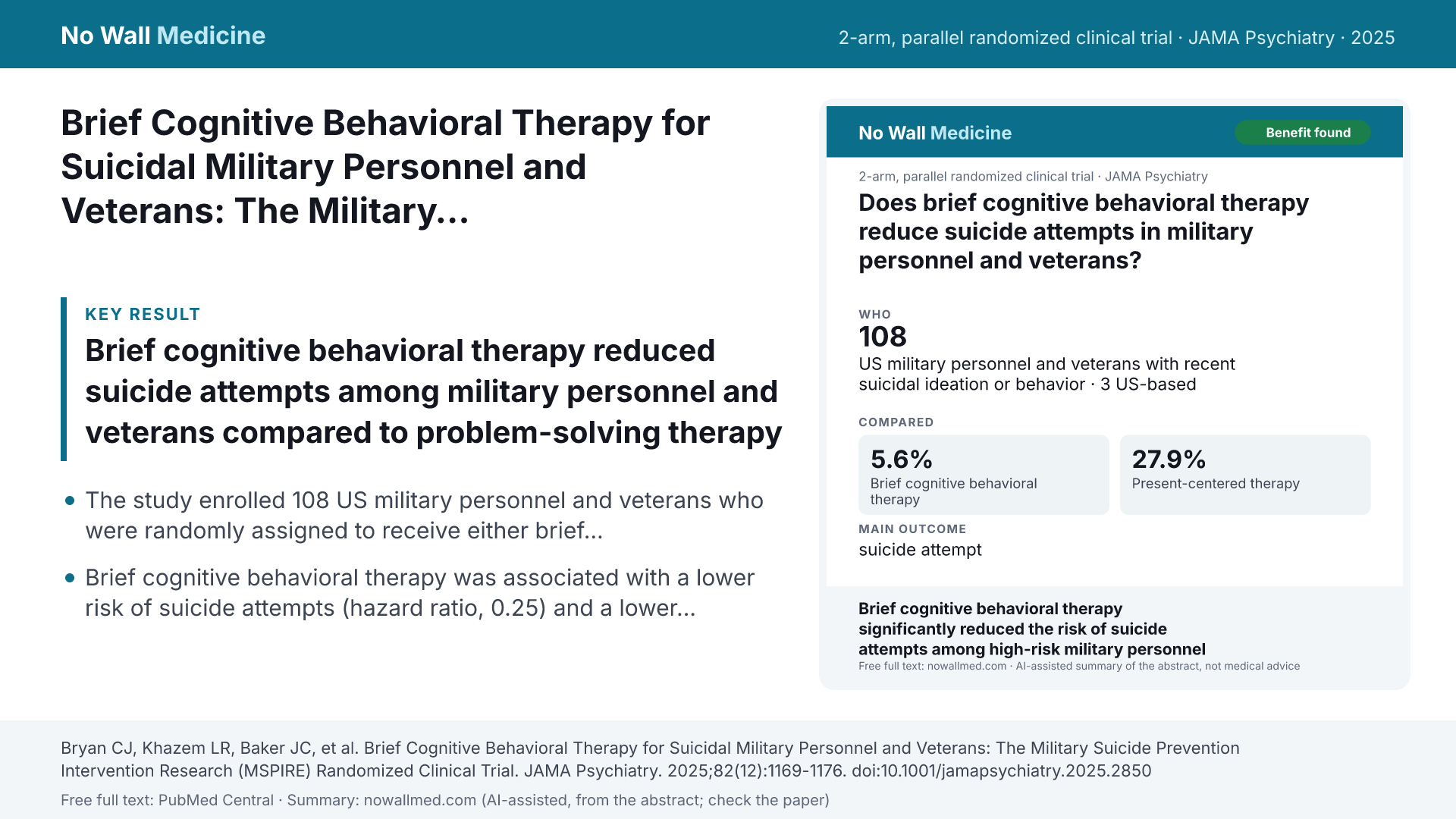
Brief Cognitive Behavioral Therapy for Suicidal Military Personnel and Veterans: The Military Suicide Prevention Intervention Research (MSPIRE) Randomized Clinical Trial
Key result: Brief cognitive behavioral therapy reduced suicide attempts among military personnel and veterans compared to problem-solving therapy
Key points
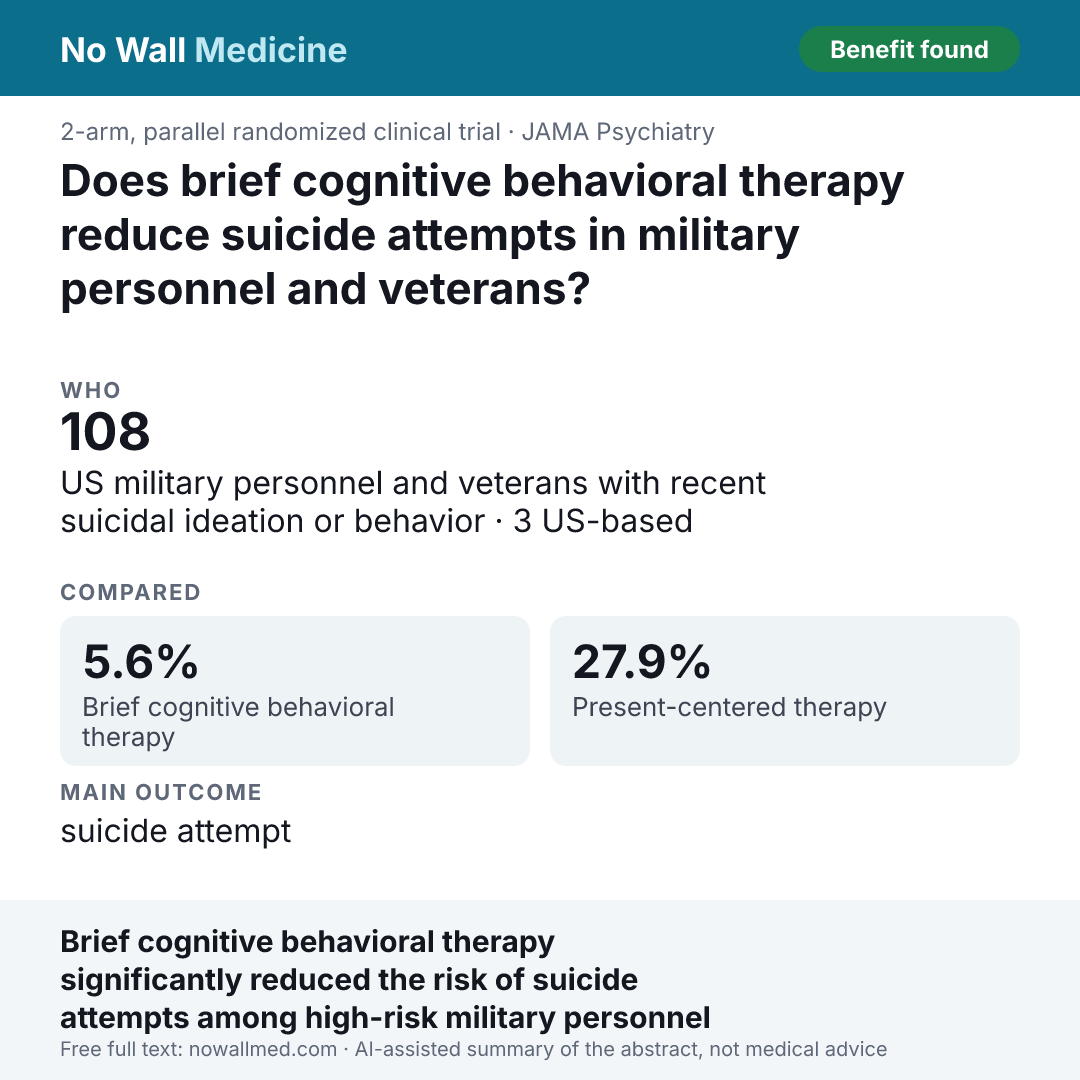
- The study enrolled 108 US military personnel and veterans who were randomly assigned to receive either brief cognitive behavioral therapy or present-centered therapy.
- Brief cognitive behavioral therapy was associated with a lower risk of suicide attempts (hazard ratio, 0.25) and a lower rate of attempts (0.06 vs 0.18 attempts per participant-year).
- Suicidal ideation, or thoughts of suicide, decreased significantly in both groups, but there was no difference in the decrease between the two therapies.
Why it matters: Replication of previous findings was needed to confirm if brief cognitive behavioral therapy reduces suicide attempts among high-risk military personnel and veterans.
Discussion prompts
- Would these patients look like yours? Who was left out?
- Is the main outcome one that matters to patients?
- Is the difference large enough to change what you do?
Cite: Bryan CJ, Khazem LR, Baker JC, et al. Brief Cognitive Behavioral Therapy for Suicidal Military Personnel and Veterans: The Military Suicide Prevention Intervention Research (MSPIRE) Randomized Clinical Trial. JAMA Psychiatry. 2025;82(12):1169-1176. doi:10.1001/jamapsychiatry.2025.2850
Free full text: PubMed Central · Summary and visual abstract: nowallmed.com/a/brief-cognitive-behavioral-therapy-for-suicidal-military-personnel-m52l5a/ (AI-assisted from the abstract; check the paper before relying on it).