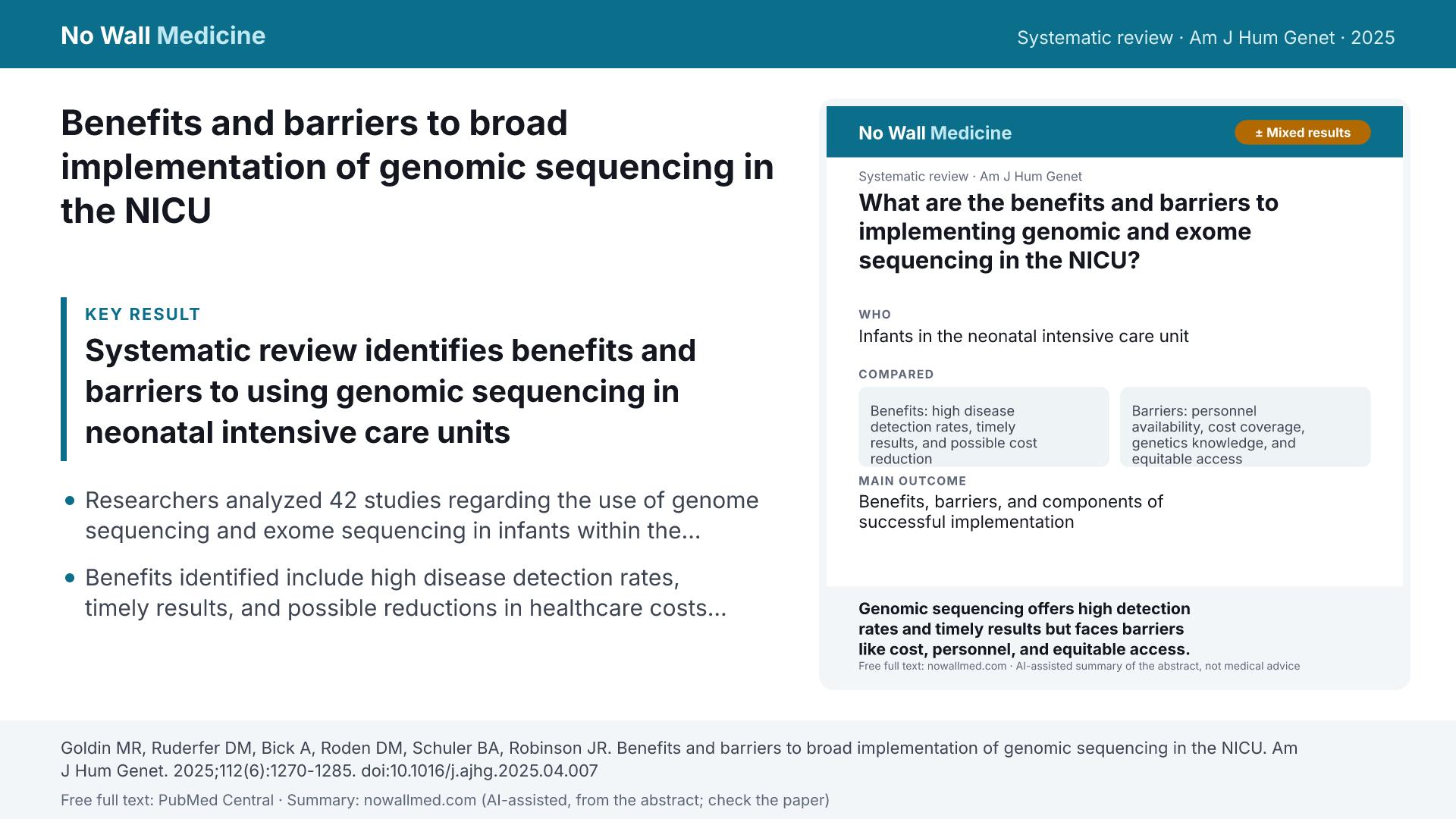
Systematic review identifies benefits and barriers to using genomic sequencing in neonatal intensive care units
Benefits and barriers to broad implementation of genomic sequencing in the NICU
Systematic reviewMixed results
What are the benefits and barriers to implementing genomic and exome sequencing in the NICU?
Who
Infants in the neonatal intensive care unit
Compared
Benefits: high disease detection rates, timely results, and possible cost reduction
Barriers: personnel availability, cost coverage, genetics knowledge, and equitable access
Main outcome
Benefits, barriers, and components of successful implementation
Bottom line: Genomic sequencing offers high detection rates and timely results but faces barriers like cost, personnel, and equitable access.
Am J Hum Genet · 2025-05-13 · Save PNG
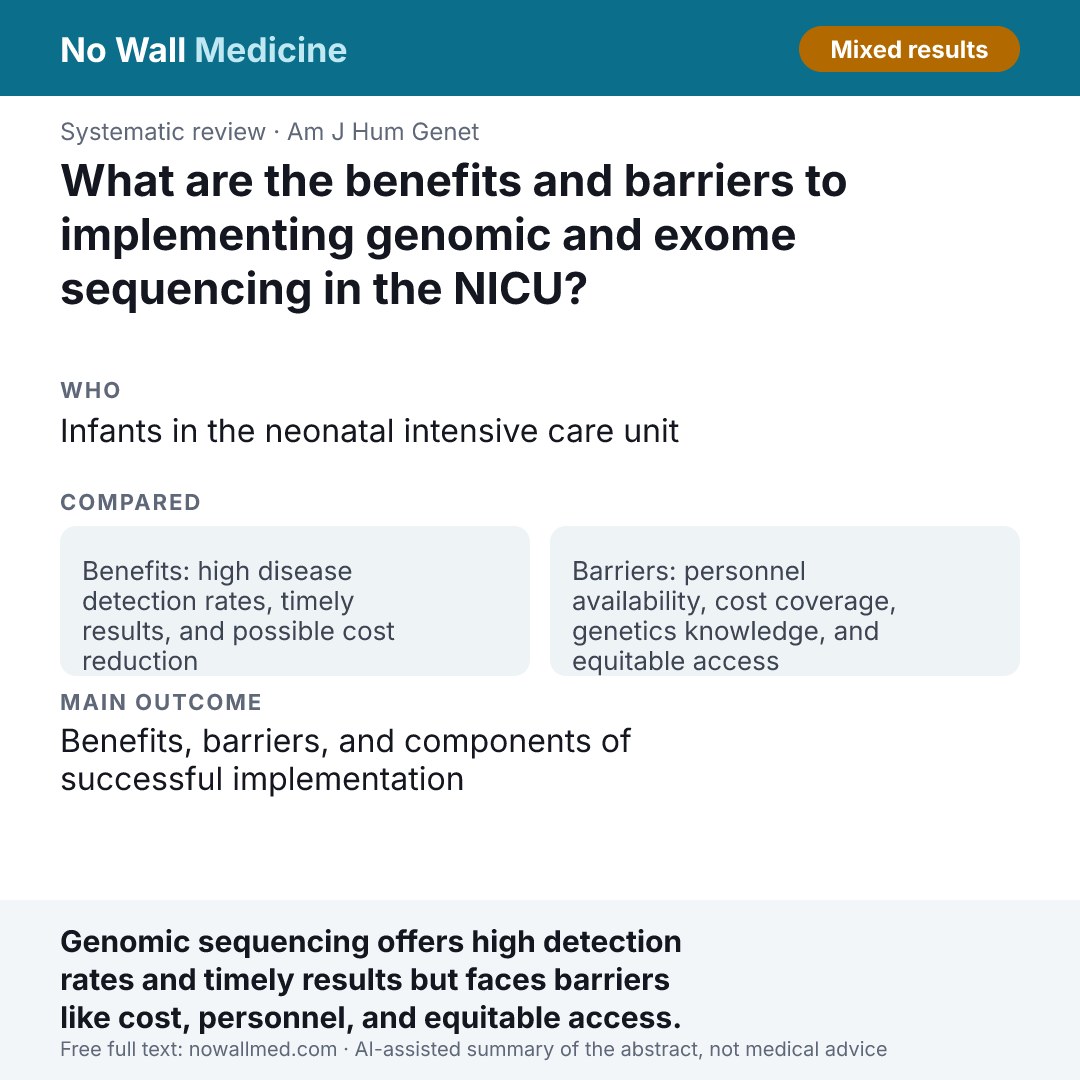
Clinical question: What are the benefits and barriers to implementing genomic and exome sequencing in the NICU?
Why it matters: The widespread use of genome and exome sequencing in the neonatal intensive care unit is currently limited by several identified barriers.
Key points
- Researchers analyzed 42 studies regarding the use of genome sequencing and exome sequencing in infants within the neonatal intensive care unit.
- Benefits identified include high disease detection rates, timely results, and possible reductions in healthcare costs by decreasing time spent in the intensive care unit.
- Barriers to implementation include personnel availability, cost coverage, clinician concerns regarding genetics knowledge, and a lack of translated consent documents for non-English or non-Spanish speakers.
Headline and key points written with AI from the paper’s abstract, with every number checked against it. Read the paper before relying on them.
Was this summary helpful?
Subject terms
Headline, design, result, key points, caveat and citation as plain text.
Cite this article
Goldin MR, Ruderfer DM, Bick A, Roden DM, Schuler BA, Robinson JR. Benefits and barriers to broad implementation of genomic sequencing in the NICU. Am J Hum Genet. 2025;112(6):1270-1285. doi:10.1016/j.ajhg.2025.04.007
Spotted a mistake? Suggest a correction