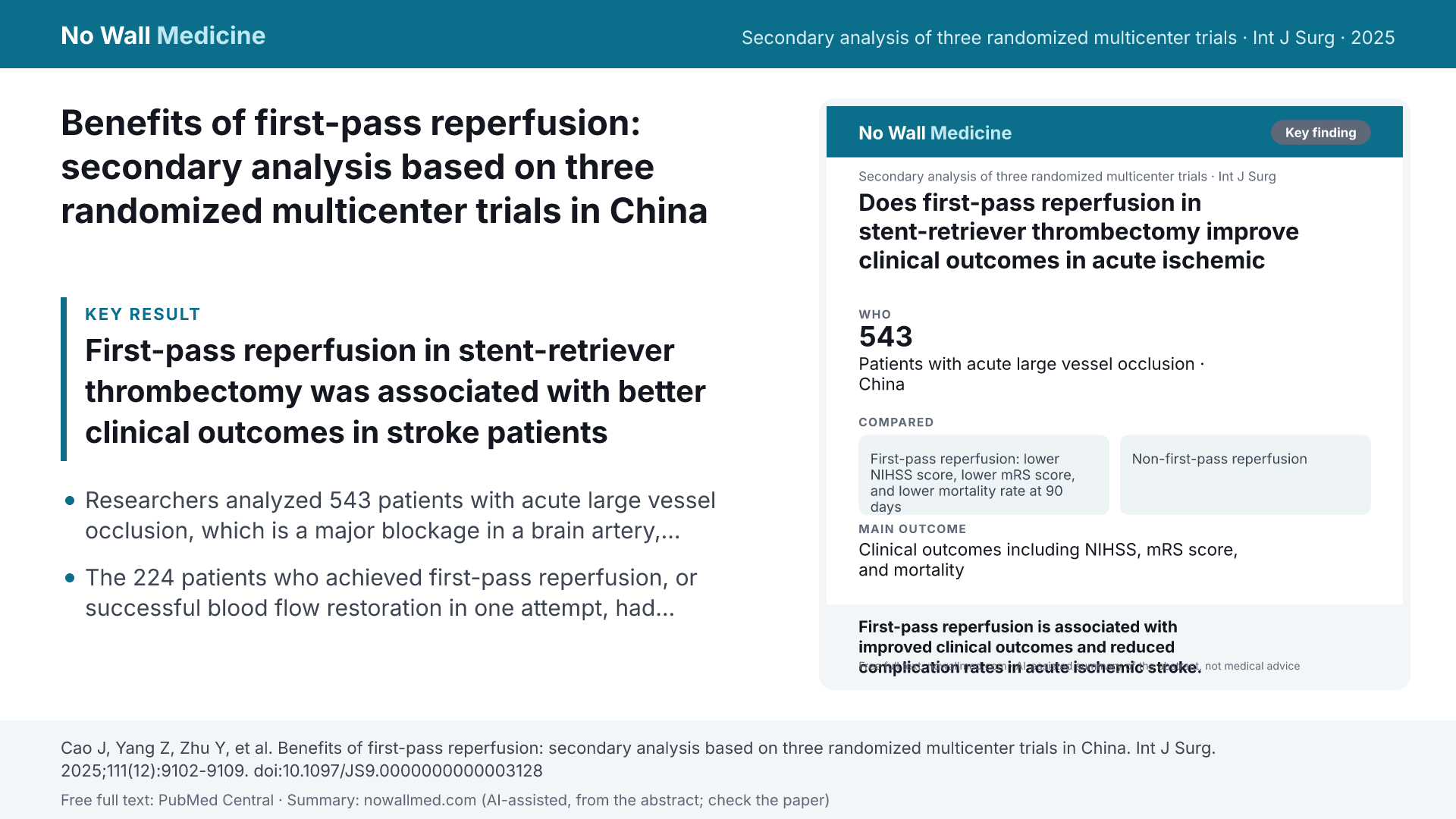
Benefits of first-pass reperfusion: secondary analysis based on three randomized multicenter trials in China
Key result: First-pass reperfusion in stent-retriever thrombectomy was associated with better clinical outcomes in stroke patients
Key points
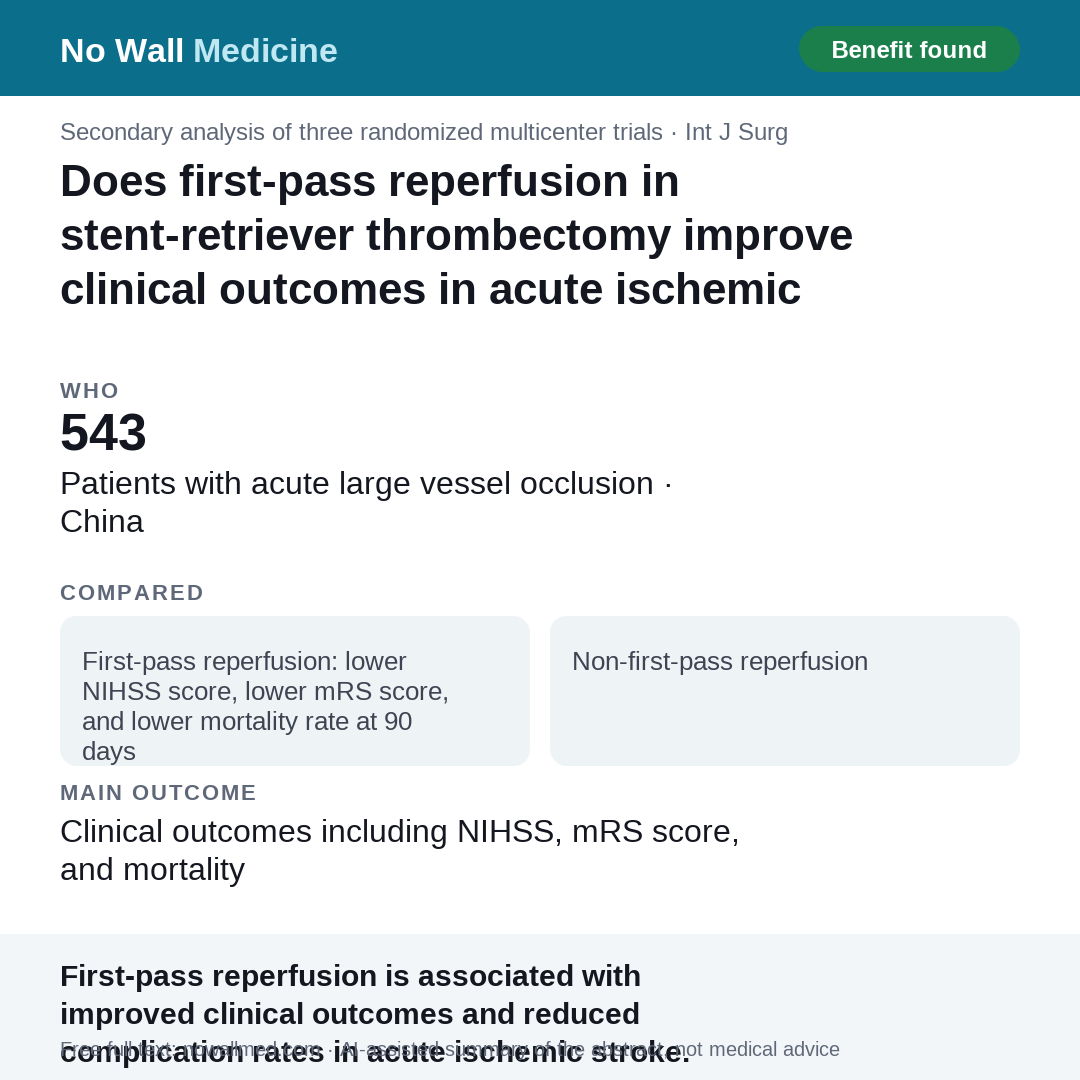
- Researchers analyzed 543 patients with acute large vessel occlusion, which is a major blockage in a brain artery, from three randomized multicenter trials.
- The 224 patients who achieved first-pass reperfusion, or successful blood flow restoration in one attempt, had lower NIHSS and mRS scores and lower mortality at 90 days.
- Successful first-pass reperfusion was associated with lower rates of symptomatic intracranial hemorrhage, which is bleeding in the brain, and embolization into new territory.
Why it matters: The clinical significance of achieving successful blood flow restoration in a single attempt during stent-retriever thrombectomy for acute ischemic stroke needed systematic evaluation.
Discussion prompts
- Would these patients look like yours? Who was left out?
- Is the main outcome one that matters to patients?
- Is the difference large enough to change what you do?
Cite: Cao J, Yang Z, Zhu Y, et al. Benefits of first-pass reperfusion: secondary analysis based on three randomized multicenter trials in China. Int J Surg. 2025. doi:10.1097/JS9.0000000000003128
Free full text: PubMed Central · Summary and visual abstract: nowallmed.com/a/benefits-of-first-pass-reperfusion-secondary-analysis-based-on-three-l5xgom/ (AI-assisted from the abstract; check the paper before relying on it).