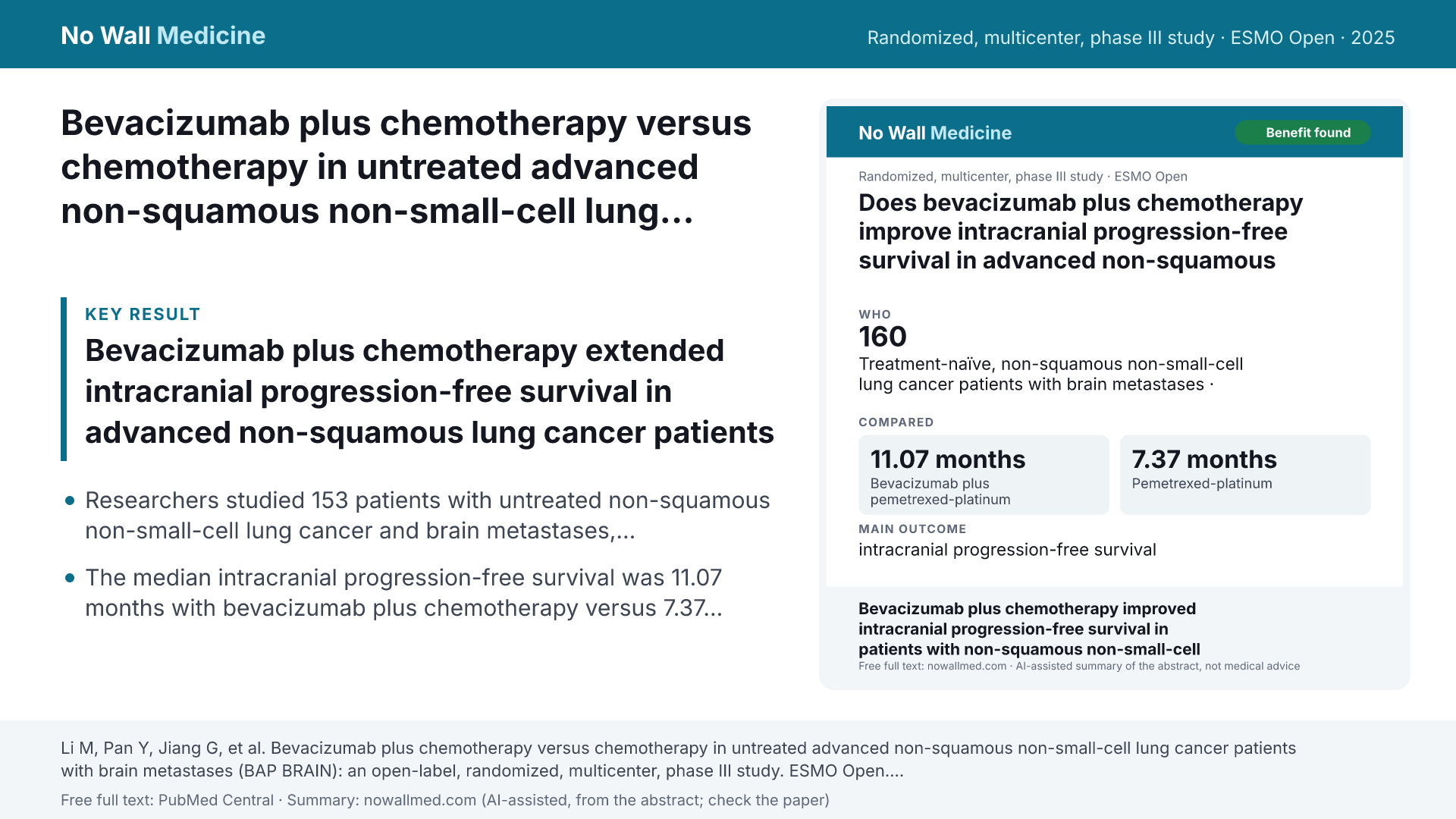
Bevacizumab plus chemotherapy extended intracranial progression-free survival in advanced non-squamous lung cancer patients
Bevacizumab plus chemotherapy versus chemotherapy in untreated advanced non-squamous non-small-cell lung cancer patients with brain metastases (BAP BRAIN): an open-label, randomized, multicenter, phase III study
Randomized, multicenter, phase III studyBenefit found
Does bevacizumab plus chemotherapy improve intracranial progression-free survival in advanced non-squamous non-small-cell lung cancer?
Who
160
Treatment-naïve, non-squamous non-small-cell lung cancer patients with brain metastases · 11 centers in China
Compared
11.07 monthsBevacizumab plus pemetrexed-platinum
7.37 monthsPemetrexed-platinum
Main outcome
intracranial progression-free survival
Result: hazard ratio 0.494, P < 0.001
Bottom line: Bevacizumab plus chemotherapy improved intracranial progression-free survival in patients with non-squamous non-small-cell lung cancer and brain metastases.
ESMO Open · 2025-11-20Download image
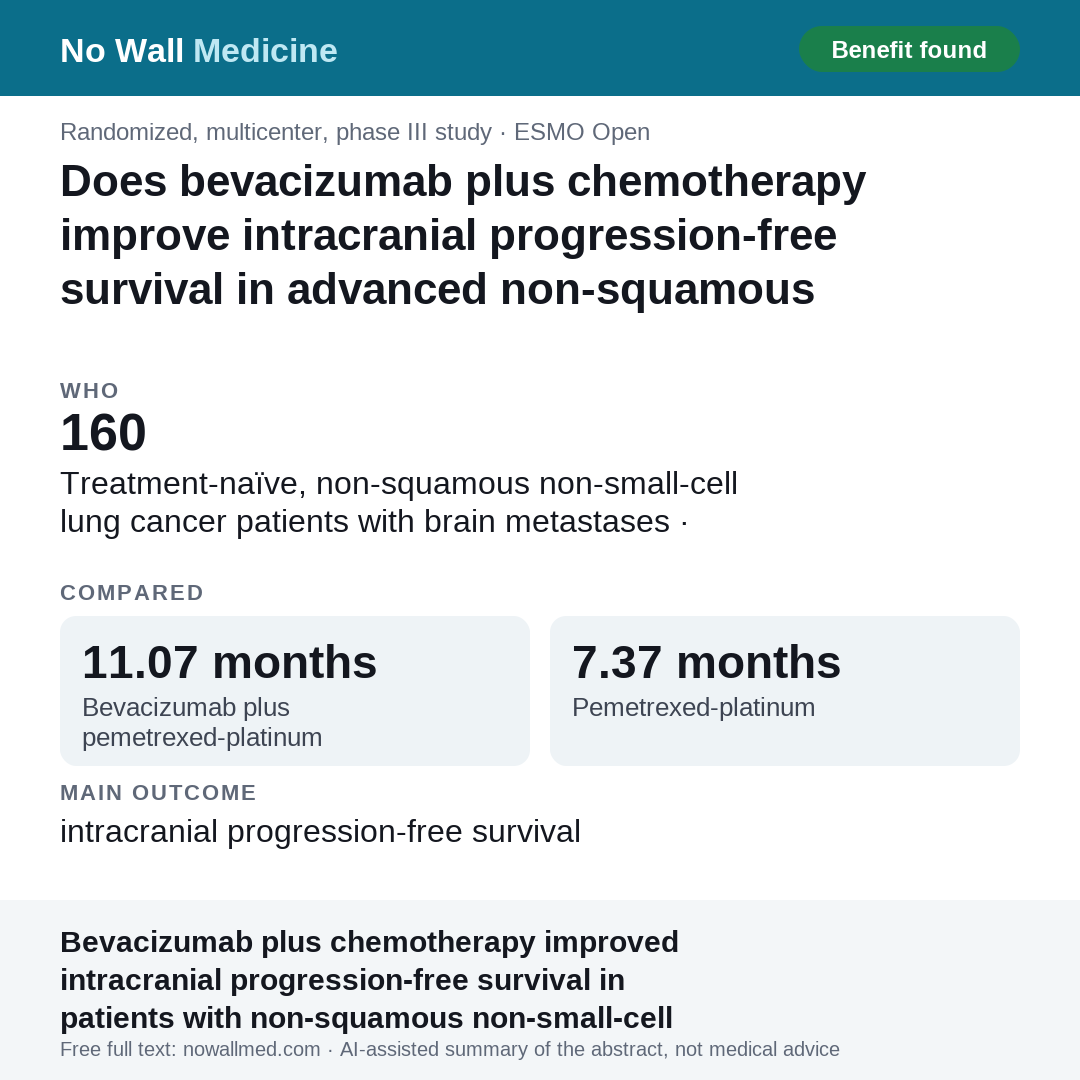
Clinical question: Does bevacizumab plus chemotherapy improve intracranial progression-free survival in advanced non-squamous non-small-cell lung cancer?
Why it matters: There is a lack of prospective randomized controlled trials regarding antiangiogenic therapy for patients with lung cancer and brain metastases.
Key points
- Researchers studied 153 patients with untreated non-squamous non-small-cell lung cancer and brain metastases, comparing bevacizumab plus chemotherapy to chemotherapy alone.
- The median intracranial progression-free survival was 11.07 months with bevacizumab plus chemotherapy versus 7.37 months with chemotherapy alone.
- The bevacizumab plus chemotherapy group had a 69.6% intracranial objective response rate compared to 32.4% in the chemotherapy-only group.
Headline and key points written with AI from the paper’s abstract, with every number checked against it. Read the paper before relying on them.
Was this summary helpful?
Subject terms
Cite this article
Li M, Pan Y, Jiang G, Wang Q, Wu G, Feng W. Bevacizumab plus chemotherapy versus chemotherapy in untreated advanced non-squamous non-small-cell lung cancer patients with brain metastases (BAP BRAIN): an open-label, randomized, multicenter, phase III study. ESMO Open. 2025. doi:10.1016/j.esmoop.2025.105908
Spotted a mistake? Suggest a correction