GnRH agonist protocol resulted in more retrieved eggs than antagonist protocol in first stimulation cycles
BEYOND: a randomized controlled trial comparing efficacy and safety of individualized follitropin delta dosing in a GnRH agonist versus antagonist protocol during the first ovarian stimulation cycle
Obstetrics & GynecologyAdult and pediatric
Randomized, controlled, open-label, multi-centre trialBenefit found
Does GnRH agonist versus antagonist protocol affect ovarian response with individualized follitropin delta dosing?
Who
437
Women aged 18-40 years with anti-Müllerian hormone ≤35 pmol/l · Specialist reproductive health clinics in seven European and Middle Eastern countries
Compared
GnRH agonist protocol: 11.1 ± 5.9 oocytes retrieved
GnRH antagonist protocol: 9.6 ± 5.5 oocytes retrieved
Main outcome
Number of oocytes retrieved
Result: mean difference of 1.31 oocytes (95% CI: 0.22; 2.40)
Bottom line: Individualized follitropin delta dosing in a GnRH agonist protocol resulted in significantly more retrieved oocytes than an antagonist protocol.
Hum Reprod · 2024-05-09Download image
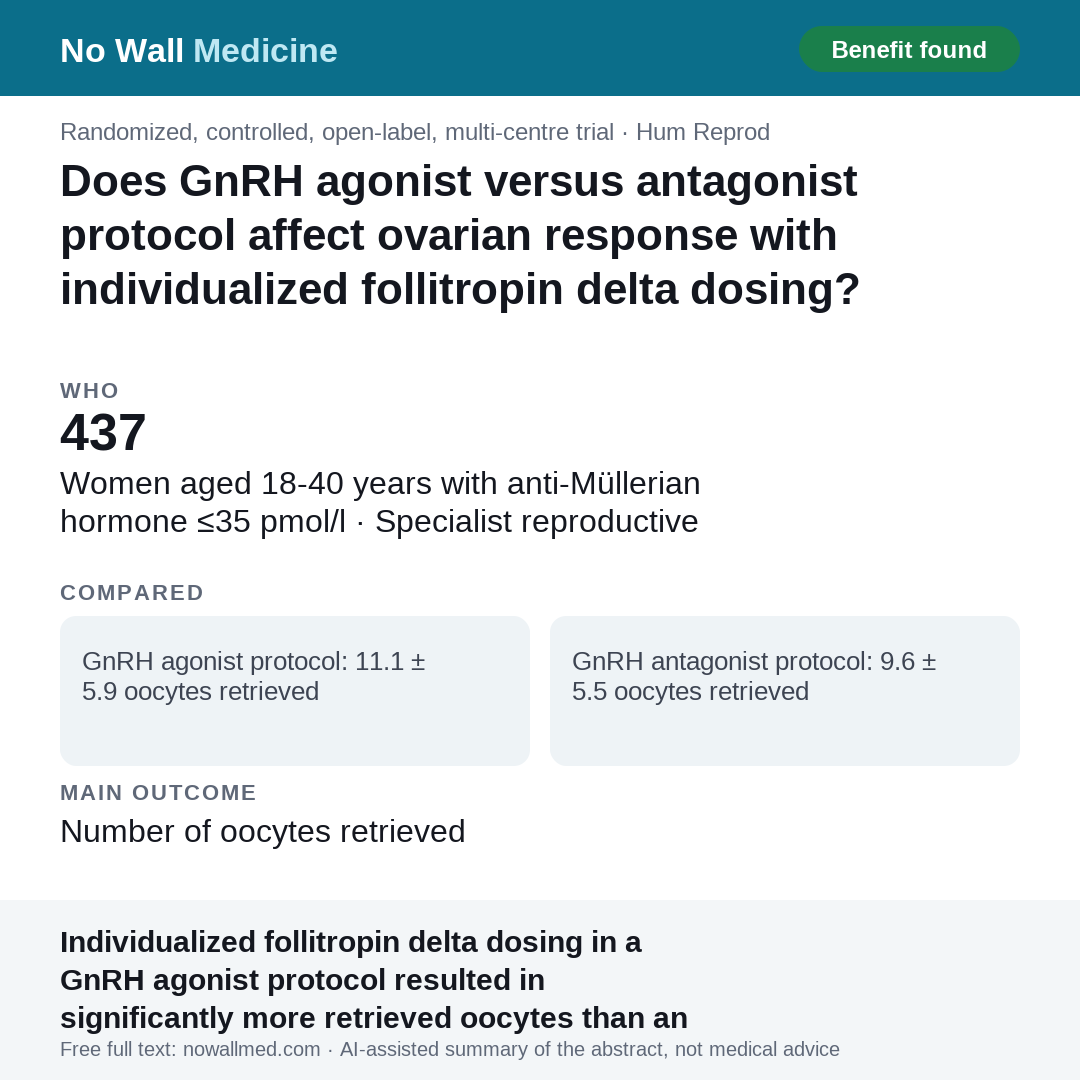
Clinical question: Does GnRH agonist versus antagonist protocol affect ovarian response with individualized follitropin delta dosing?
Why it matters: It was unknown how a GnRH agonist protocol compares to a GnRH antagonist protocol when using individualized follitropin delta dosing for ovarian stimulation.
Key points
- Researchers randomized 437 women with anti-Müllerian hormone levels ≤35 pmol/l to either a GnRH agonist or antagonist protocol using individualized follitropin delta dosing.
- The mean number of retrieved eggs was 11.1 ± 5.9 in the agonist group compared to 9.6 ± 5.5 in the antagonist group, with a mean difference of 1.31 eggs.
- Ongoing pregnancy rates (36.9% versus 29.1%) and live birth rates (35.8% versus 28.7%) did not show statistically significant differences between the two groups.
Headline and key points written with AI from the paper’s abstract, with every number checked against it. Read the paper before relying on them.
Was this summary helpful?
Cite this article
Lobo R, Soerdal T, Ekerhovd E, Cohlen B, Porcu E, Schenk M. BEYOND: a randomized controlled trial comparing efficacy and safety of individualized follitropin delta dosing in a GnRH agonist versus antagonist protocol during the first ovarian stimulation cycle. Hum Reprod. 2024. doi:10.1093/humrep/deae092
Spotted a mistake? Suggest a correction
Top studies every Monday
The week’s key trials and guidelines in your specialties, plus any topics you follow. By email, free.
Get the weekly digest