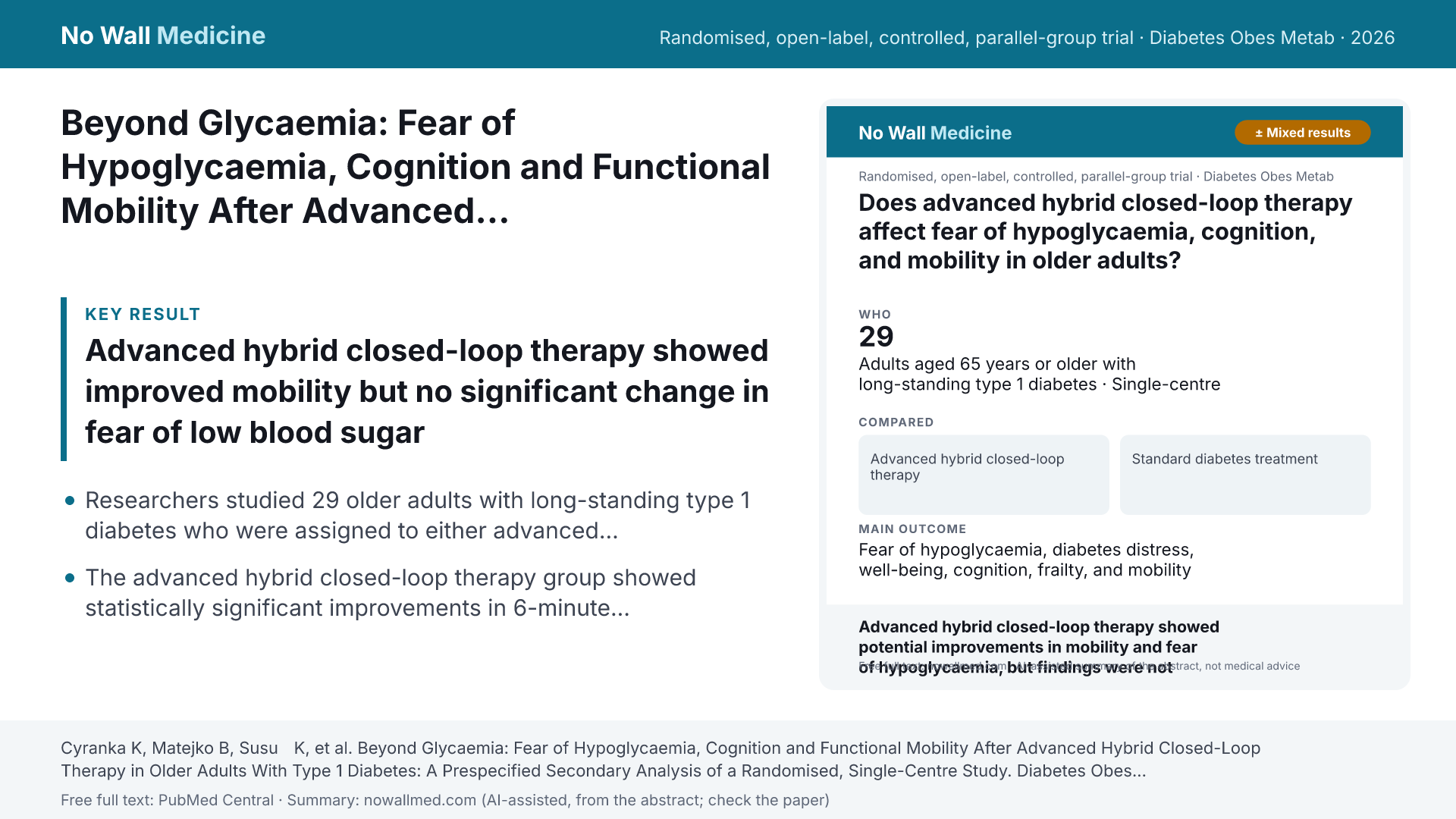
Advanced hybrid closed-loop therapy showed improved mobility but no significant change in fear of low blood sugar
Beyond Glycaemia: Fear of Hypoglycaemia, Cognition and Functional Mobility After Advanced Hybrid Closed-Loop Therapy in Older Adults With Type 1 Diabetes: A Prespecified Secondary Analysis of a Randomised, Single-Centre Study
Secondary analysis of a trialMixed results
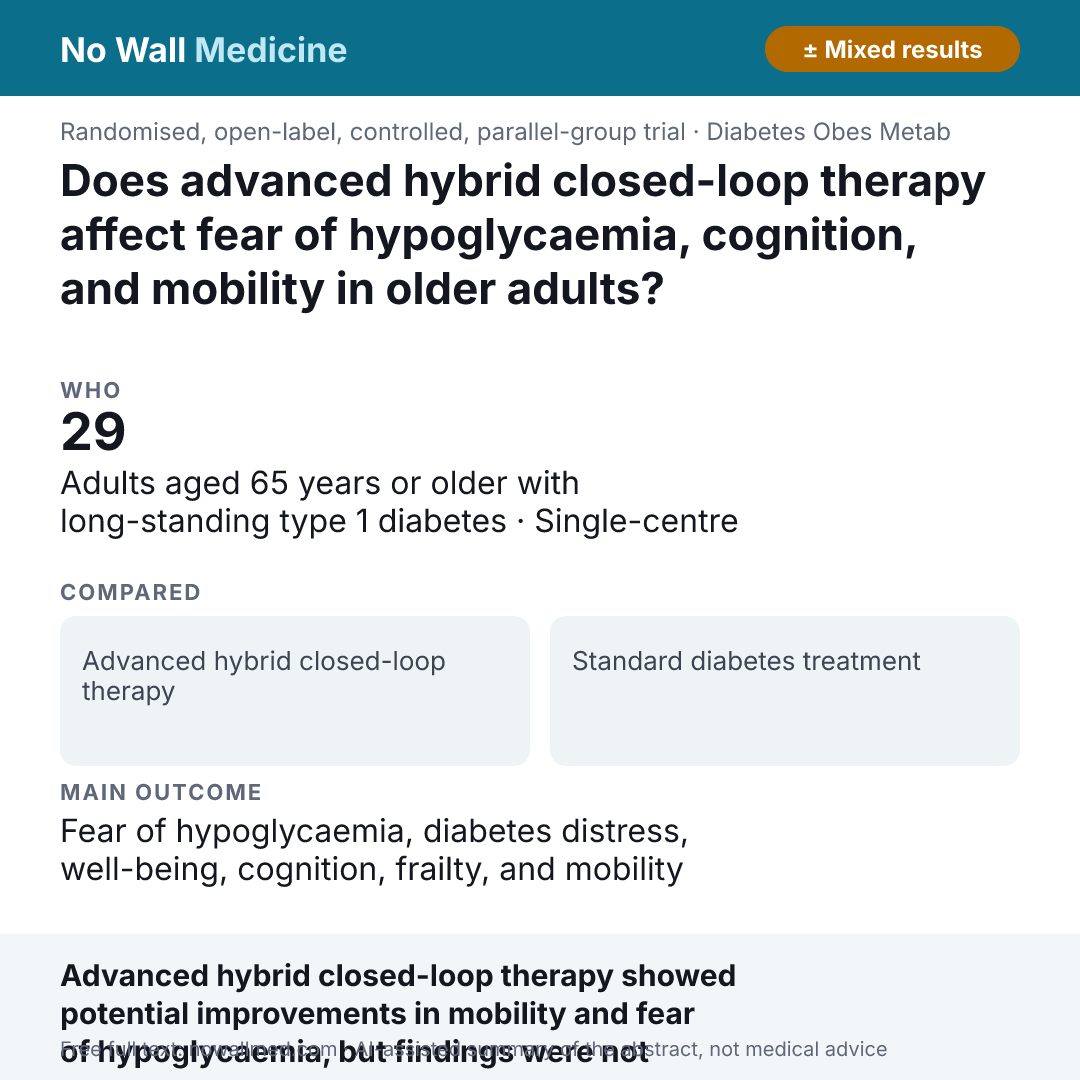
Does advanced hybrid closed-loop therapy affect fear of hypoglycaemia, cognition, and mobility in older adults?
Who
29
Adults aged 65 years or older with long-standing type 1 diabetes · Single-centre
Compared
Advanced hybrid closed-loop therapy
Standard diabetes treatment
Main outcome
Fear of hypoglycaemia, diabetes distress, well-being, cognition, frailty, and mobility
Result: adjusted mean difference -18.9 (95% CI -32.4 to -5.4) for fear of hypoglycaemia
Bottom line: Advanced hybrid closed-loop therapy showed potential improvements in mobility and fear of hypoglycaemia, but findings were not statistically significant after corrections.
Limitation: Small, selected cohort; findings require confirmation in larger studies with balanced sex representation.
Diabetes Obes Metab · 2026-07-30
Why it matters: Evidence on the psychological, cognitive, and functional outcomes of advanced diabetes technologies in older adults with long-standing type 1 diabetes remains limited.
Headline and visual abstract written with AI from the paper’s abstract, with every number checked against it. Read the paper before relying on them.
Was this summary helpful?
Subject terms
Cite this article
Cyranka K, Matejko B, Susuł K, et al. Beyond Glycaemia: Fear of Hypoglycaemia, Cognition and Functional Mobility After Advanced Hybrid Closed-Loop Therapy in Older Adults With Type 1 Diabetes: A Prespecified Secondary Analysis of a Randomised, Single-Centre Study. Diabetes Obes Metab. 2026;28(10):9473-9482. doi:10.1111/dom.71170
Spotted a mistake? Suggest a correction