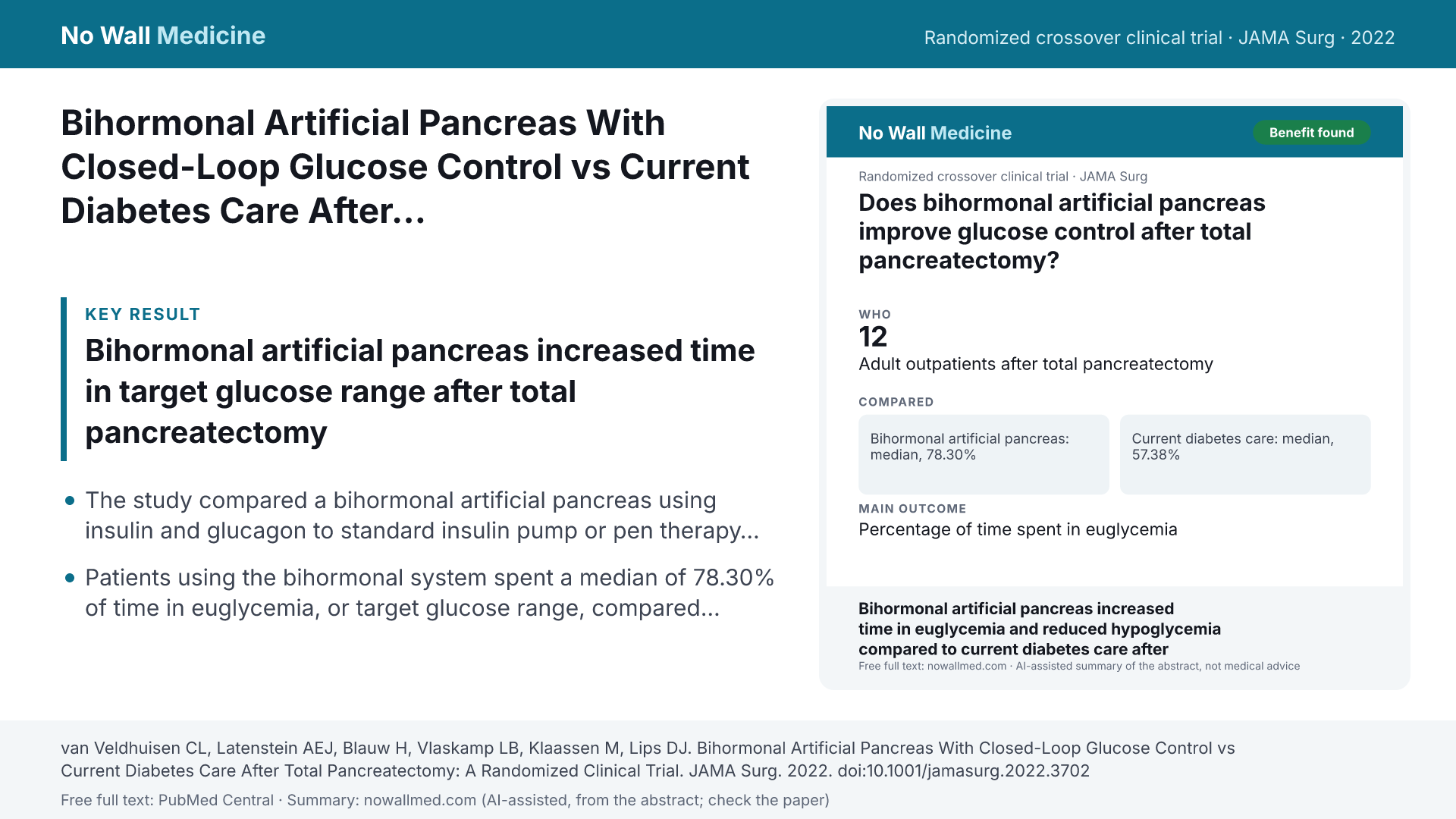
Bihormonal Artificial Pancreas With Closed-Loop Glucose Control vs Current Diabetes Care After Total Pancreatectomy: A Randomized Clinical Trial
Key result: Bihormonal artificial pancreas increased time in target glucose range after total pancreatectomy
Key points
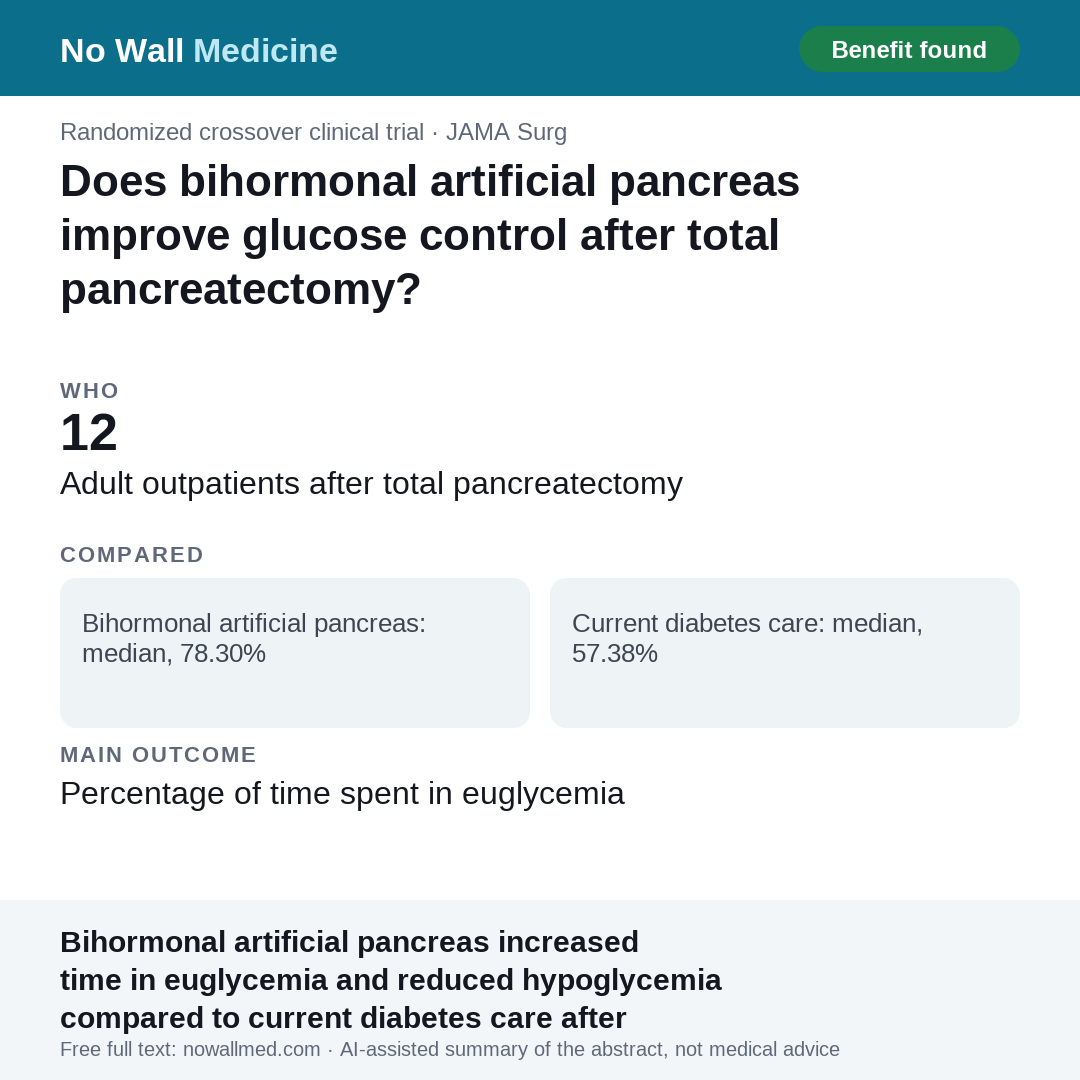
- The study compared a bihormonal artificial pancreas using insulin and glucagon to standard insulin pump or pen therapy in 12 adult outpatients after total pancreatectomy.
- Patients using the bihormonal system spent a median of 78.30% of time in euglycemia, or target glucose range, compared to 57.38% with current diabetes care.
- The bihormonal device was associated with a lower median time in hypoglycemia of 0.00% compared to 1.61% for current diabetes care.
Why it matters: Glucose control is difficult after total pancreatectomy due to the complete absence of alpha and beta cells, and the efficacy of a bihormonal artificial pancreas in this setting is unknown.
Discussion prompts
- Would these patients look like yours? Who was left out?
- Is the main outcome one that matters to patients?
- Is the difference large enough to change what you do?
Cite: van Veldhuisen CL, Latenstein AEJ, Blauw H, Vlaskamp LB, Klaassen M, Lips DJ. Bihormonal Artificial Pancreas With Closed-Loop Glucose Control vs Current Diabetes Care After Total Pancreatectomy: A Randomized Clinical Trial. JAMA Surg. 2022. doi:10.1001/jamasurg.2022.3702
Free full text: PubMed Central · Summary and visual abstract: nowallmed.com/a/bihormonal-artificial-pancreas-with-closed-loop-glucose-control-vs-6pk0ab/ (AI-assisted from the abstract; check the paper before relying on it).