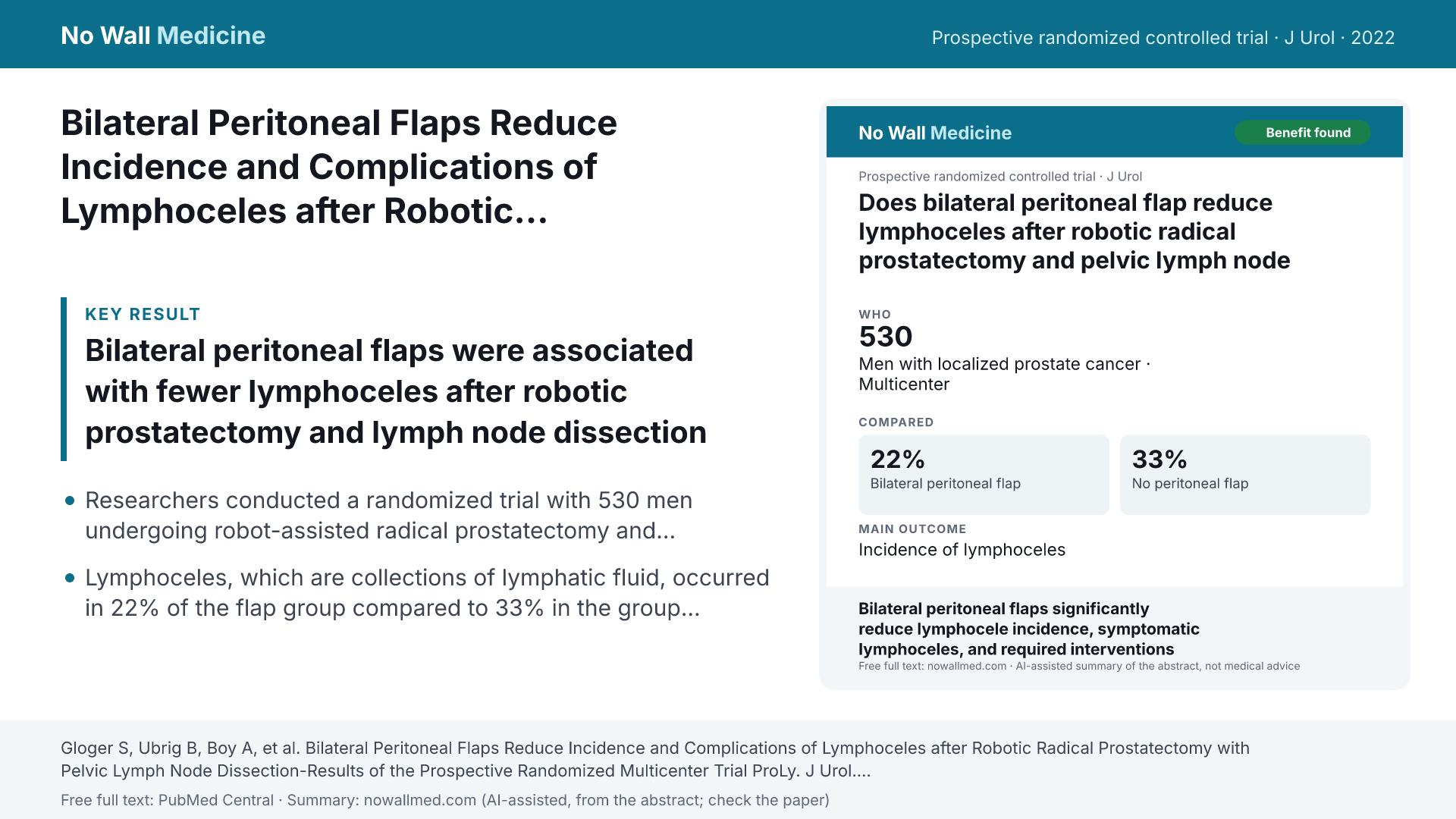
Bilateral peritoneal flaps were associated with fewer lymphoceles after robotic prostatectomy and lymph node dissection
Bilateral Peritoneal Flaps Reduce Incidence and Complications of Lymphoceles after Robotic Radical Prostatectomy with Pelvic Lymph Node Dissection-Results of the Prospective Randomized Multicenter Trial ProLy
Prospective randomized controlled trialBenefit found
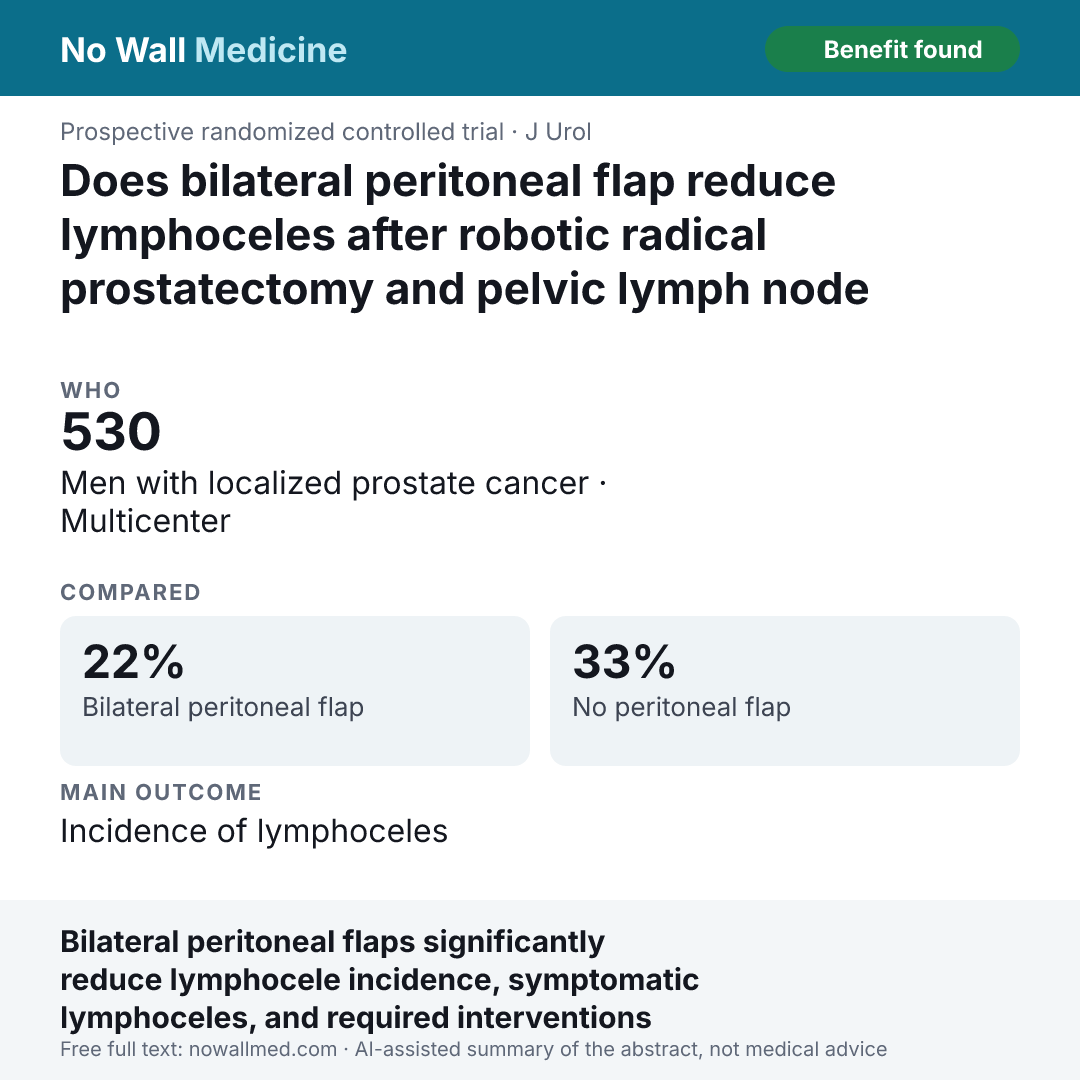
Does bilateral peritoneal flap reduce lymphoceles after robotic radical prostatectomy and pelvic lymph node dissection?
Who
530
Men with localized prostate cancer · Multicenter
Compared
22%Bilateral peritoneal flap
33%No peritoneal flap
Main outcome
Incidence of lymphoceles
Bottom line: Bilateral peritoneal flaps significantly reduce lymphocele incidence, symptomatic lymphoceles, and required interventions after robotic prostatectomy.
J Urol · 2022-04-15 · Save PNG
Clinical question: Does bilateral peritoneal flap reduce lymphoceles after robotic radical prostatectomy and pelvic lymph node dissection?
Key points
- Researchers conducted a randomized trial with 530 men undergoing robot-assisted radical prostatectomy and pelvic lymph node dissection, comparing those receiving bilateral peritoneal flaps to those who did not.
- Lymphoceles, which are collections of lymphatic fluid, occurred in 22% of the flap group compared to 33% in the group without flaps.
- Symptomatic lymphoceles occurred in 3.3% of the flap group versus 8.1% in the control group, and interventions were required in 1.3% of the flap group versus 6.8% in the control group.
Headline and key points written with AI from the paper’s abstract, with every number checked against it. Read the paper before relying on them.
Was this summary helpful?
Subject terms
Headline, design, result, key points, caveat and citation as plain text.
Cite this article
Gloger S, Ubrig B, Boy A, et al. Bilateral Peritoneal Flaps Reduce Incidence and Complications of Lymphoceles after Robotic Radical Prostatectomy with Pelvic Lymph Node Dissection-Results of the Prospective Randomized Multicenter Trial ProLy. J Urol. 2022;208(2):333-340. doi:10.1097/JU.0000000000002693
Spotted a mistake? Suggest a correction