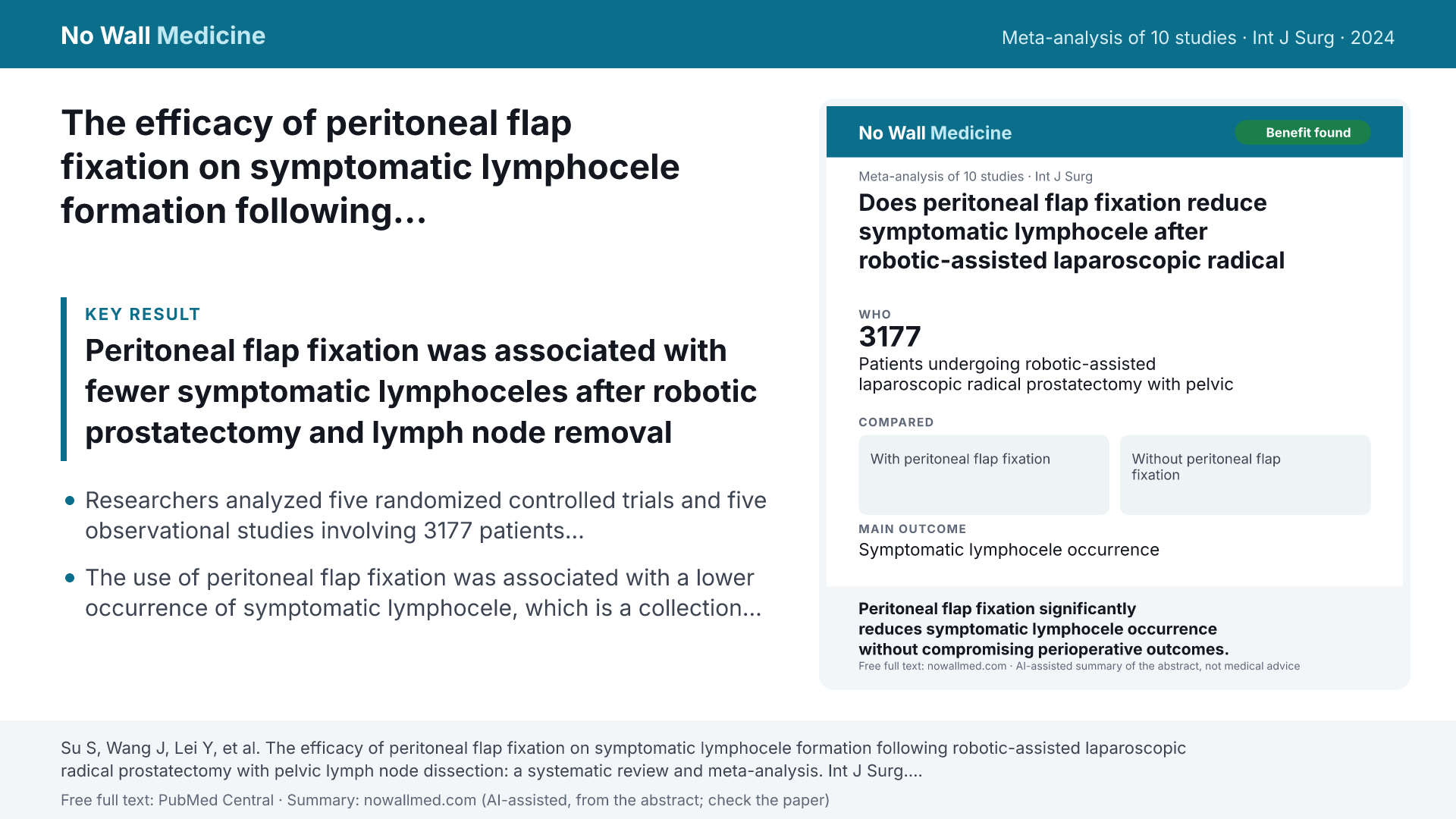
Peritoneal flap fixation was associated with fewer symptomatic lymphoceles after robotic prostatectomy and lymph node removal
The efficacy of peritoneal flap fixation on symptomatic lymphocele formation following robotic-assisted laparoscopic radical prostatectomy with pelvic lymph node dissection: a systematic review and meta-analysis
Meta-analysis of 10 studiesBenefit found
Does peritoneal flap fixation reduce symptomatic lymphocele after robotic-assisted laparoscopic radical prostatectomy?
Who
3177
Patients undergoing robotic-assisted laparoscopic radical prostatectomy with pelvic lymph node dissection
Compared
With peritoneal flap fixation
Without peritoneal flap fixation
Main outcome
Symptomatic lymphocele occurrence
Result: risk ratio 0.35 (95% CI: 0.24-0.50)
Bottom line: Peritoneal flap fixation significantly reduces symptomatic lymphocele occurrence without compromising perioperative outcomes.
Int J Surg · 2024-02-01Download image
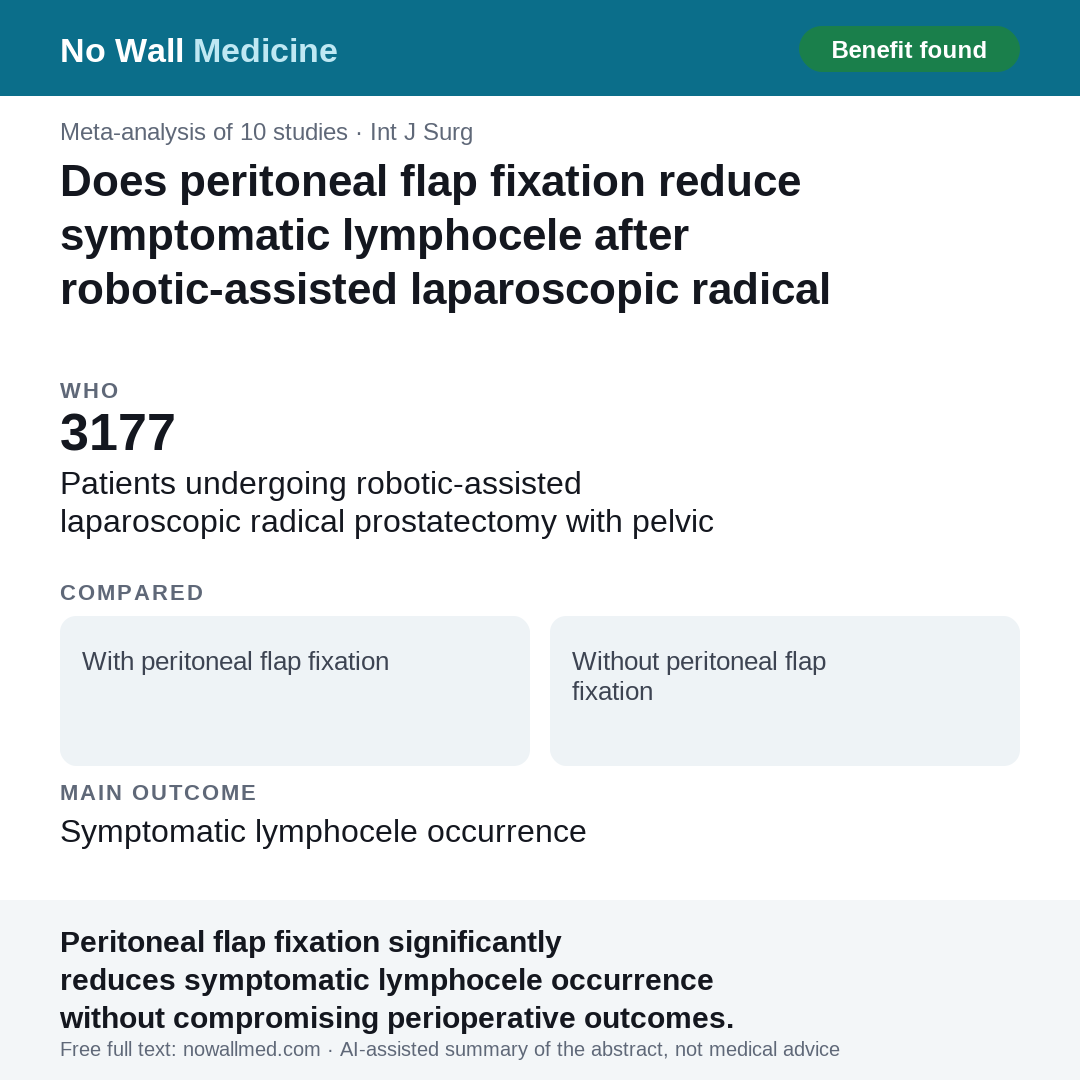
Clinical question: Does peritoneal flap fixation reduce symptomatic lymphocele after robotic-assisted laparoscopic radical prostatectomy?
Why it matters: Clinical evidence regarding whether peritoneal flap fixation reduces symptomatic lymphocele formation after robotic prostatectomy and pelvic lymph node dissection has lacked consistency.
Key points
- Researchers analyzed five randomized controlled trials and five observational studies involving 3177 patients undergoing robotic-assisted laparoscopic radical prostatectomy with pelvic lymph node dissection.
- The use of peritoneal flap fixation was associated with a lower occurrence of symptomatic lymphocele, which is a collection of lymphatic fluid, with a risk ratio of 0.35 (95% CI: 0.24-0.50).
- Peritoneal flap fixation was not associated with changes in blood loss, operative time, or major complications unrelated to lymphoceles.
Headline and key points written with AI from the paper’s abstract, with every number checked against it. Read the paper before relying on them.
Was this summary helpful?
Subject terms
Headline, design, result, key points, caveat and citation as plain text.
Cite this article
Su S, Wang J, Lei Y, et al. The efficacy of peritoneal flap fixation on symptomatic lymphocele formation following robotic-assisted laparoscopic radical prostatectomy with pelvic lymph node dissection: a systematic review and meta-analysis. Int J Surg. 2024. doi:10.1097/JS9.0000000000000893
Spotted a mistake? Suggest a correction