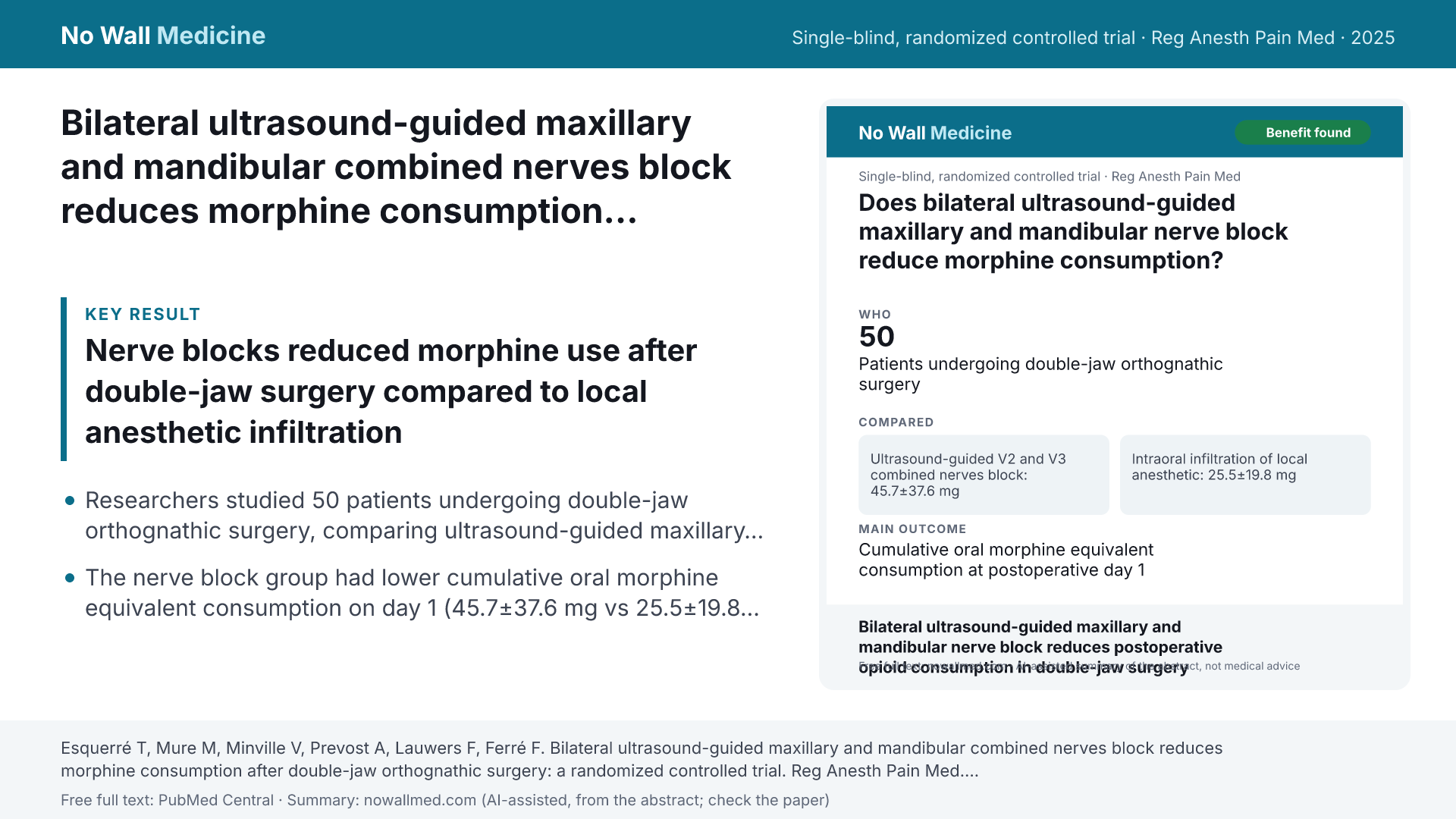
Bilateral ultrasound-guided maxillary and mandibular combined nerves block reduces morphine consumption after double-jaw orthognathic surgery: a randomized controlled trial
Key result: Nerve blocks reduced morphine use after double-jaw surgery compared to local anesthetic infiltration
Key points
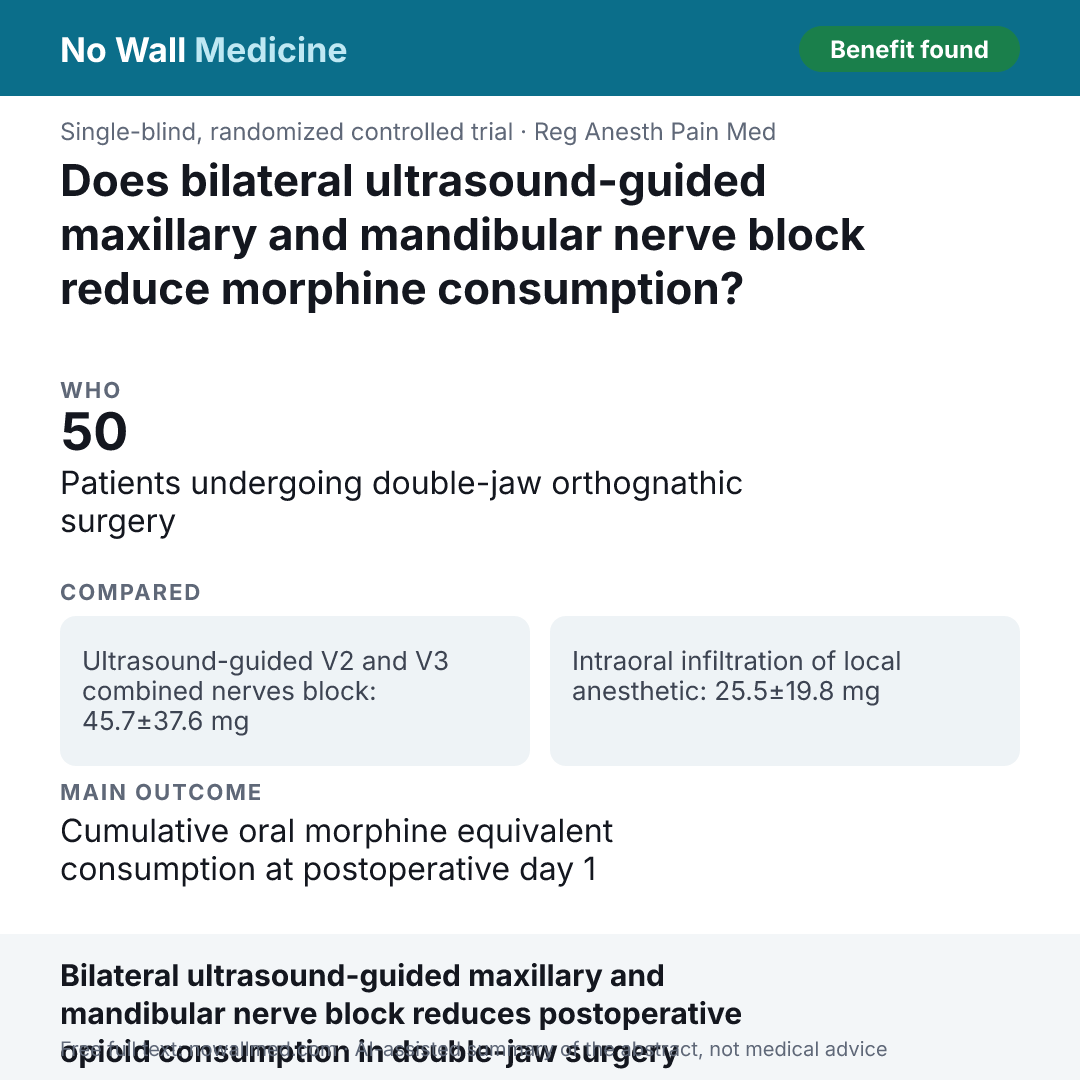
- Researchers studied 50 patients undergoing double-jaw orthognathic surgery, comparing ultrasound-guided maxillary and mandibular nerve blocks to intraoral infiltration of local anesthetic.
- The nerve block group had lower cumulative oral morphine equivalent consumption on day 1 (45.7±37.6 mg vs 25.5±19.8 mg) and day 2 (64.5±60 mg vs 35.8±30.2 mg).
- Higher preoperative anxiety scores were positively correlated with worse pain scores and higher morphine consumption on postoperative day 2.
Why it matters: Double-jaw surgeries are painful and require opioids, but it is unclear if combined maxillary and mandibular nerve blocks provide adequate pain management.
Discussion prompts
- Would these patients look like yours? Who was left out?
- Is the main outcome one that matters to patients?
- Is the difference large enough to change what you do?
Cite: Esquerré T, Mure M, Minville V, Prevost A, Lauwers F, Ferré F. Bilateral ultrasound-guided maxillary and mandibular combined nerves block reduces morphine consumption after double-jaw orthognathic surgery: a randomized controlled trial. Reg Anesth Pain Med. 2025;50(7):575-580. doi:10.1136/rapm-2024-105497
Free full text: PubMed Central · Summary and visual abstract: nowallmed.com/a/bilateral-ultrasound-guided-maxillary-and-mandibular-combined-nerves-15jb2km/ (AI-assisted from the abstract; check the paper before relying on it).