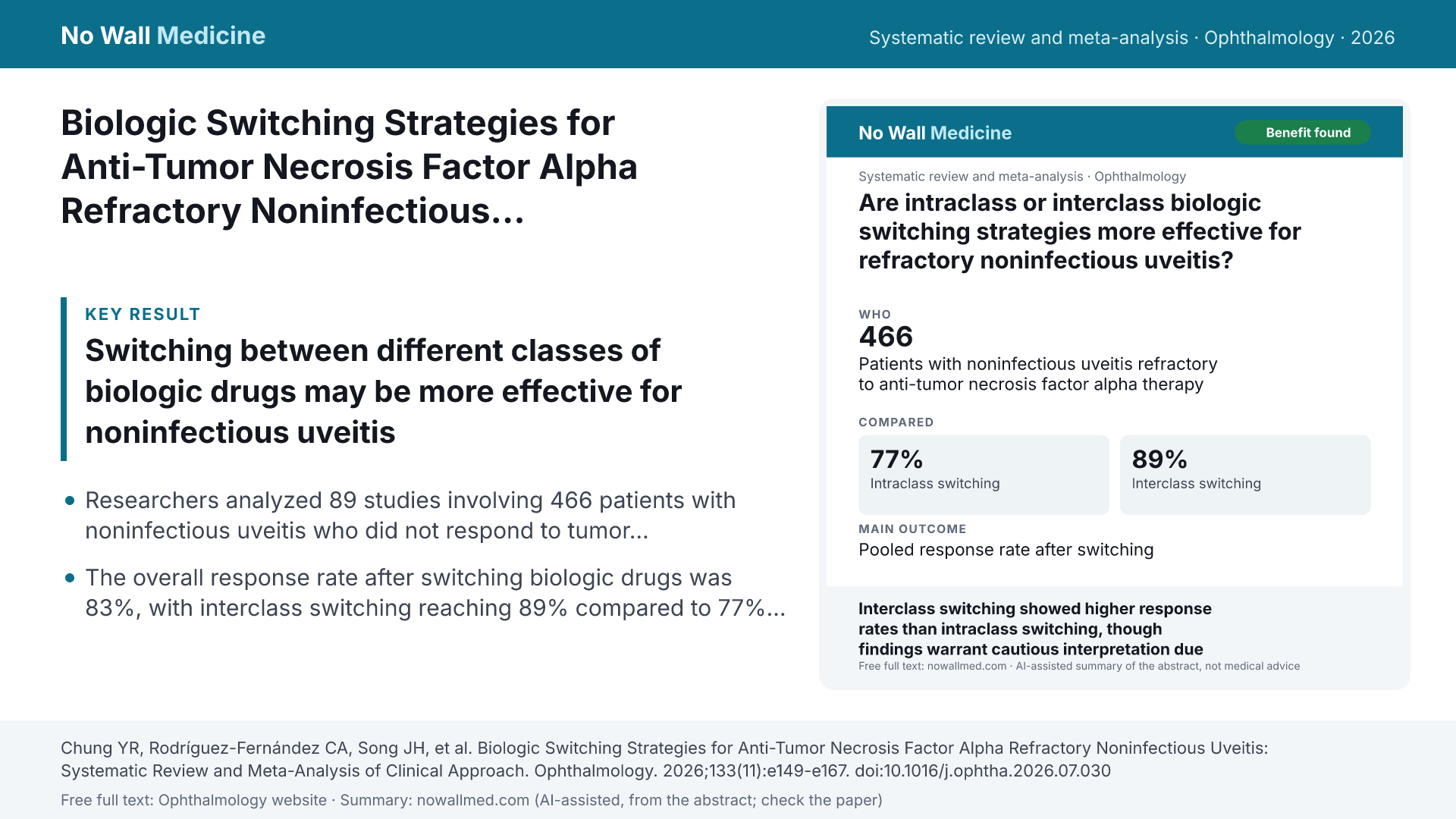
Switching between different classes of biologic drugs may be more effective for noninfectious uveitis
Biologic Switching Strategies for Anti-Tumor Necrosis Factor Alpha Refractory Noninfectious Uveitis: Systematic Review and Meta-Analysis of Clinical Approach
Systematic review and meta-analysisBenefit found
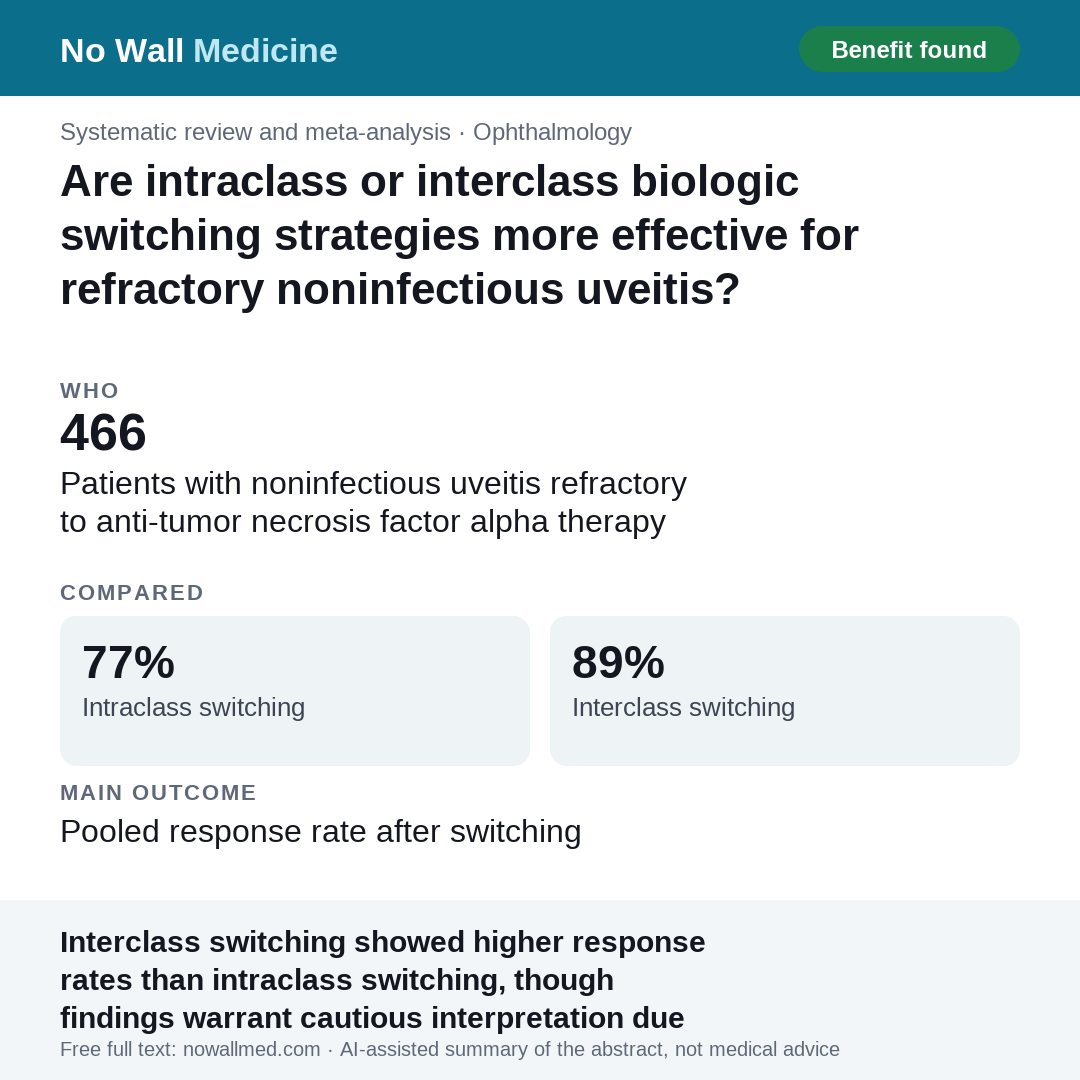
Are intraclass or interclass biologic switching strategies more effective for refractory noninfectious uveitis?
Who
466
Patients with noninfectious uveitis refractory to anti-tumor necrosis factor alpha therapy
Compared
77%Intraclass switching (95% CI: 65%-87%)
89%Interclass switching (95% CI: 80%-96%)
Main outcome
Pooled response rate after switching
Result: P = 0.0995
Bottom line: Interclass switching showed higher response rates than intraclass switching, though findings warrant cautious interpretation due to low certainty.
Limitation: The certainty of evidence was graded as low for the overall pooled response rate.
Ophthalmology · 2026-09-15Download image
Clinical question: Are intraclass or interclass biologic switching strategies more effective for refractory noninfectious uveitis?
Why it matters: Up to one-third of patients with noninfectious uveitis do not respond adequately to first-line tumor necrosis factor alpha inhibitor biologic therapies.
Key points
- Researchers analyzed 89 studies involving 466 patients with noninfectious uveitis who did not respond to tumor necrosis factor alpha inhibitors.
- The overall response rate after switching biologic drugs was 83%, with interclass switching reaching 89% compared to 77% for intraclass switching.
- While interclass switching showed a higher response rate, the difference was not statistically significant in the primary analysis (P = 0.0995).
Limitation the authors note: The certainty of evidence for the overall pooled response rate after switching was graded as low.
Headline and key points written with AI from the paper’s abstract, with every number checked against it. Read the paper before relying on them.
Was this summary helpful?
Subject terms
Headline, design, result, key points, caveat and citation as plain text.
Cite this article
Chung YR, Rodríguez-Fernández CA, Song JH, et al. Biologic Switching Strategies for Anti-Tumor Necrosis Factor Alpha Refractory Noninfectious Uveitis: Systematic Review and Meta-Analysis of Clinical Approach. Ophthalmology. 2026;133(11):e149-e167. doi:10.1016/j.ophtha.2026.07.030
Spotted a mistake? Suggest a correction