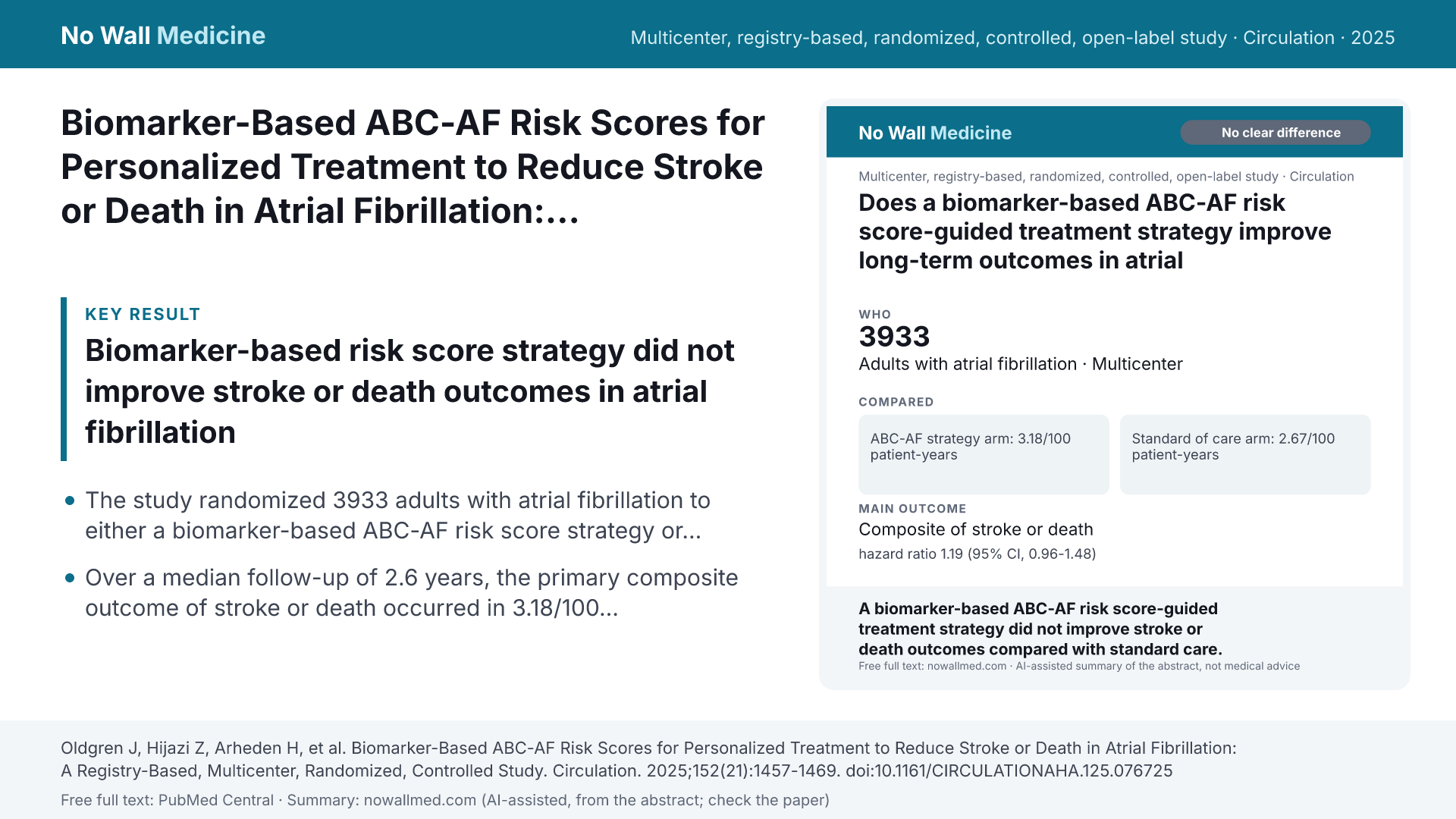
Biomarker-based risk score strategy did not improve stroke or death outcomes in atrial fibrillation
Biomarker-Based ABC-AF Risk Scores for Personalized Treatment to Reduce Stroke or Death in Atrial Fibrillation: A Registry-Based, Multicenter, Randomized, Controlled Study
Multicenter, registry-based, randomized, controlled, open-label studyNo clear difference
Does a biomarker-based ABC-AF risk score-guided treatment strategy improve long-term outcomes in atrial fibrillation?
Who
3933
Adults with atrial fibrillation · Multicenter
Compared
ABC-AF strategy arm: 3.18/100 patient-years
Standard of care arm: 2.67/100 patient-years
Main outcome
Composite of stroke or death
Result: hazard ratio 1.19 (95% CI, 0.96-1.48)
Bottom line: A biomarker-based ABC-AF risk score-guided treatment strategy did not improve stroke or death outcomes compared with standard care.
Circulation · 2025-08-30Download image
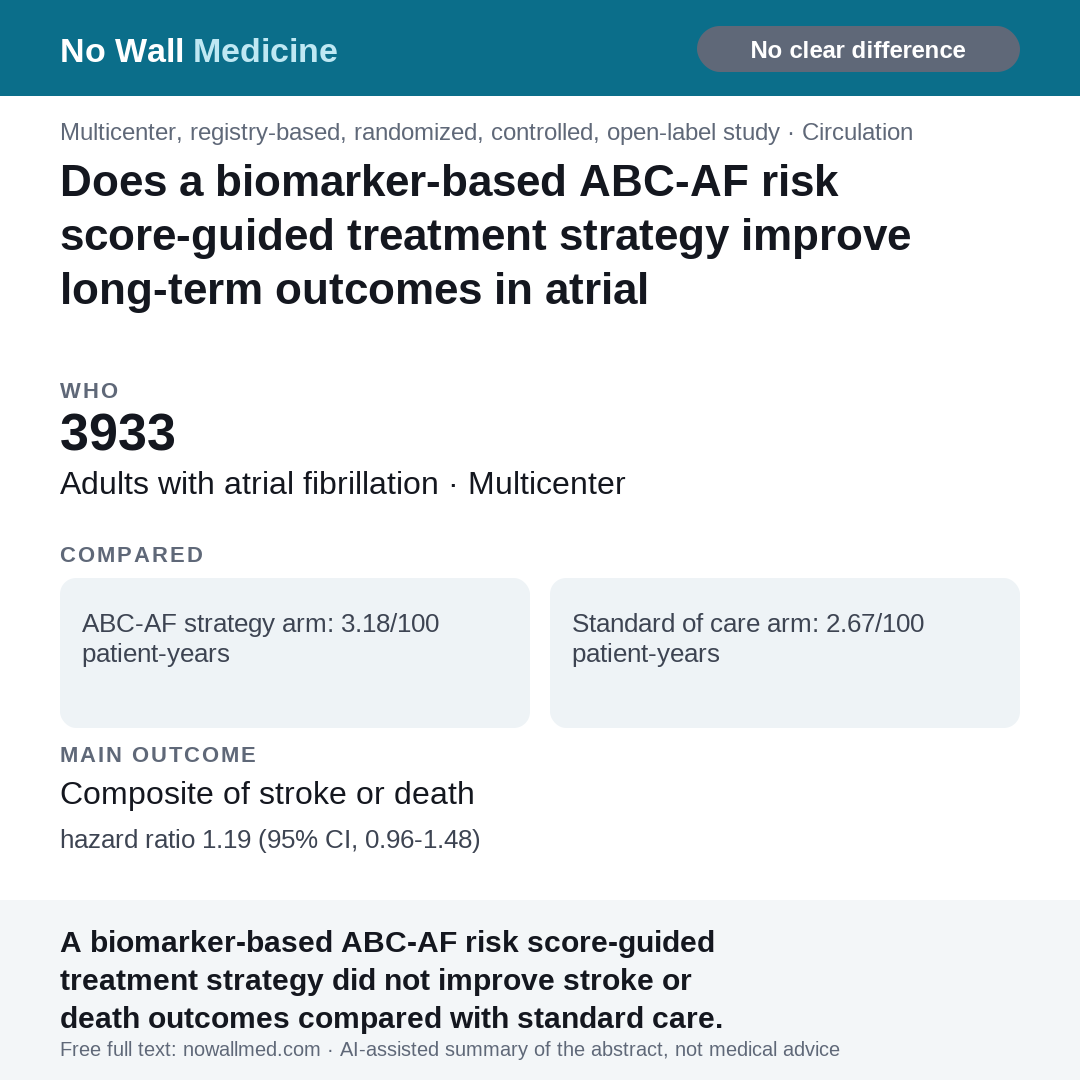
Clinical question: Does a biomarker-based ABC-AF risk score-guided treatment strategy improve long-term outcomes in atrial fibrillation?
Why it matters: The clinical use of risk scores to guide treatment decisions and improve outcomes in patients with atrial fibrillation has rarely been prospectively evaluated.
Key points
- The study randomized 3933 adults with atrial fibrillation to either a biomarker-based ABC-AF risk score strategy or standard of care.
- Over a median follow-up of 2.6 years, the primary composite outcome of stroke or death occurred in 3.18/100 patient-years in the ABC-AF group and 2.67/100 patient-years in the standard care group.
- No statistically significant differences were found for stroke, death, major bleeding, or the composite of stroke, death, or major bleeding.
Headline and key points written with AI from the paper’s abstract, with every number checked against it. Read the paper before relying on them.
Was this summary helpful?
Subject terms
Cite this article
Oldgren J, Hijazi Z, Arheden H, Björkenheim A, Frykman V, Janzon M. Biomarker-Based ABC-AF Risk Scores for Personalized Treatment to Reduce Stroke or Death in Atrial Fibrillation: A Registry-Based, Multicenter, Randomized, Controlled Study. Circulation. 2025. doi:10.1161/CIRCULATIONAHA.125.076725
Spotted a mistake? Suggest a correction