Biomarker-Based ABC-AF Risk Scores for Personalized Treatment to Reduce Stroke or Death in Atrial Fibrillation: A Registry-Based, Multicenter, Randomized, Controlled Study
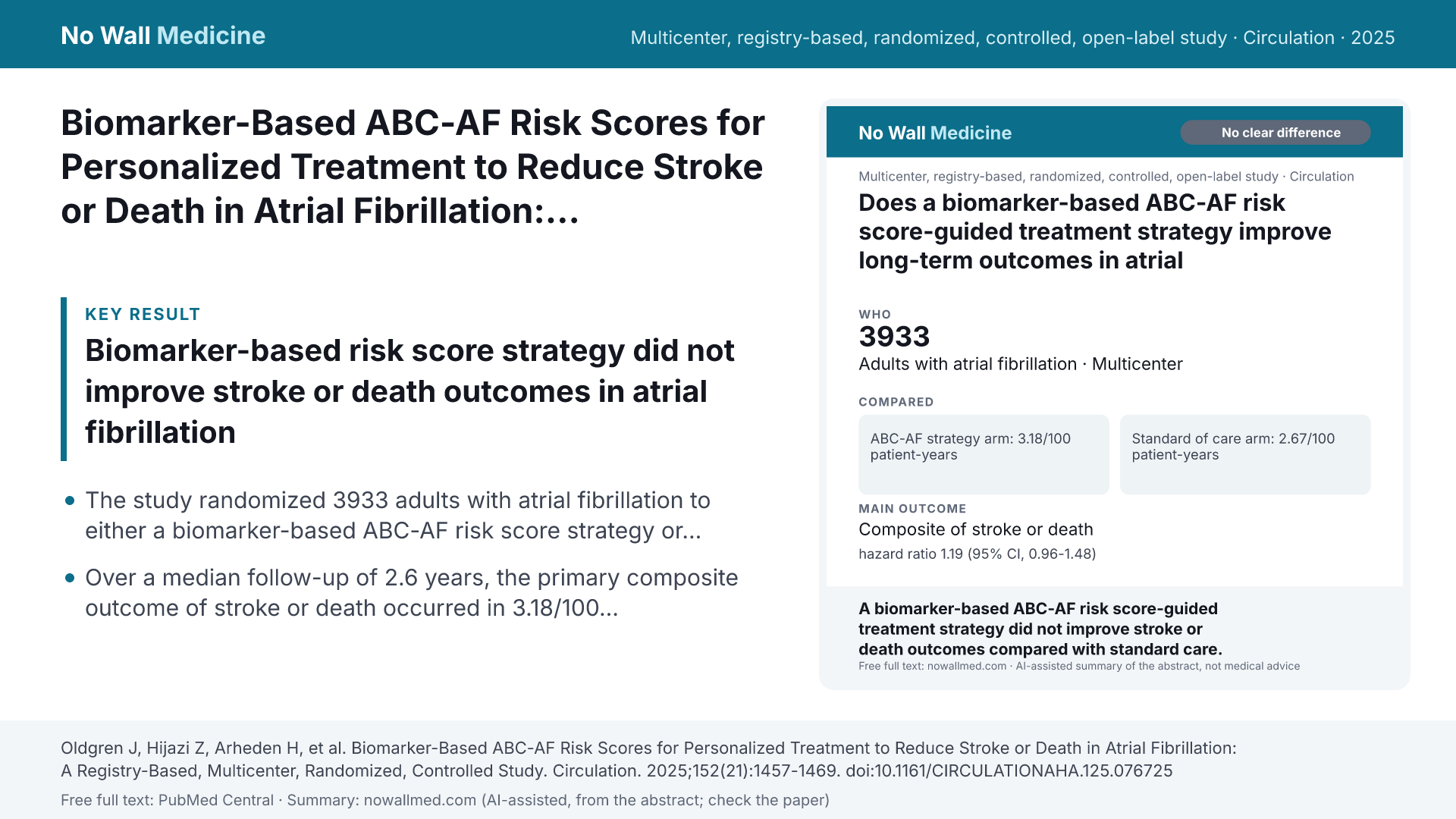
Key result: Biomarker-based risk score strategy did not improve stroke or death outcomes in atrial fibrillation
Key points
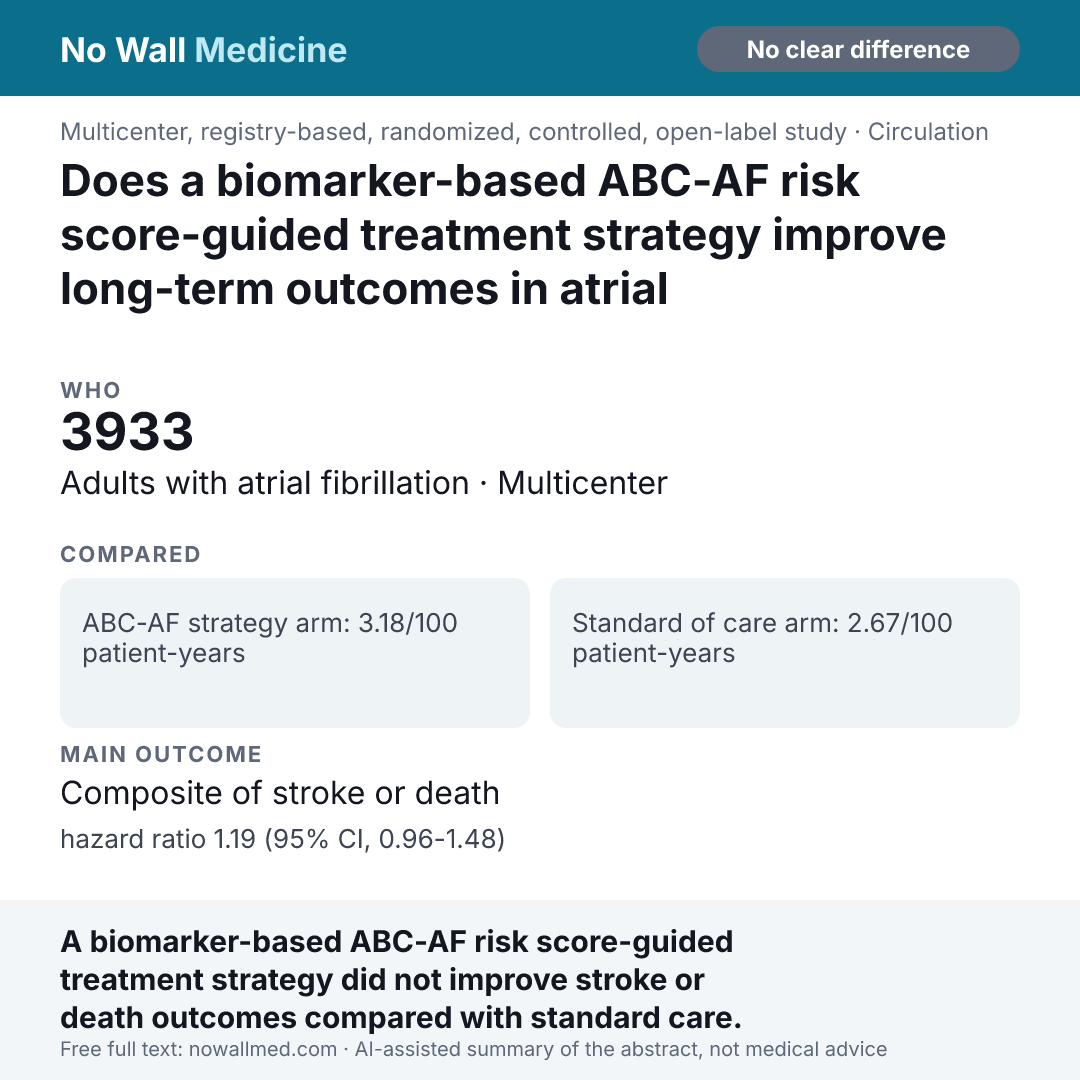
- The study randomized 3933 adults with atrial fibrillation to either a biomarker-based ABC-AF risk score strategy or standard of care.
- Over a median follow-up of 2.6 years, the primary composite outcome of stroke or death occurred in 3.18/100 patient-years in the ABC-AF group and 2.67/100 patient-years in the standard care group.
- No statistically significant differences were found for stroke, death, major bleeding, or the composite of stroke, death, or major bleeding.
Why it matters: The clinical use of risk scores to guide treatment decisions and improve outcomes in patients with atrial fibrillation has rarely been prospectively evaluated.
Discussion prompts
- Would these patients look like yours? Who was left out?
- Is the main outcome one that matters to patients?
- Is the difference large enough to change what you do?
Cite: Oldgren J, Hijazi Z, Arheden H, et al. Biomarker-Based ABC-AF Risk Scores for Personalized Treatment to Reduce Stroke or Death in Atrial Fibrillation: A Registry-Based, Multicenter, Randomized, Controlled Study. Circulation. 2025;152(21):1457-1469. doi:10.1161/CIRCULATIONAHA.125.076725
Free full text: PubMed Central · Summary and visual abstract: nowallmed.com/a/biomarker-based-abc-af-risk-scores-for-personalized-treatment-to-15l2be0/ (AI-assisted from the abstract; check the paper before relying on it).