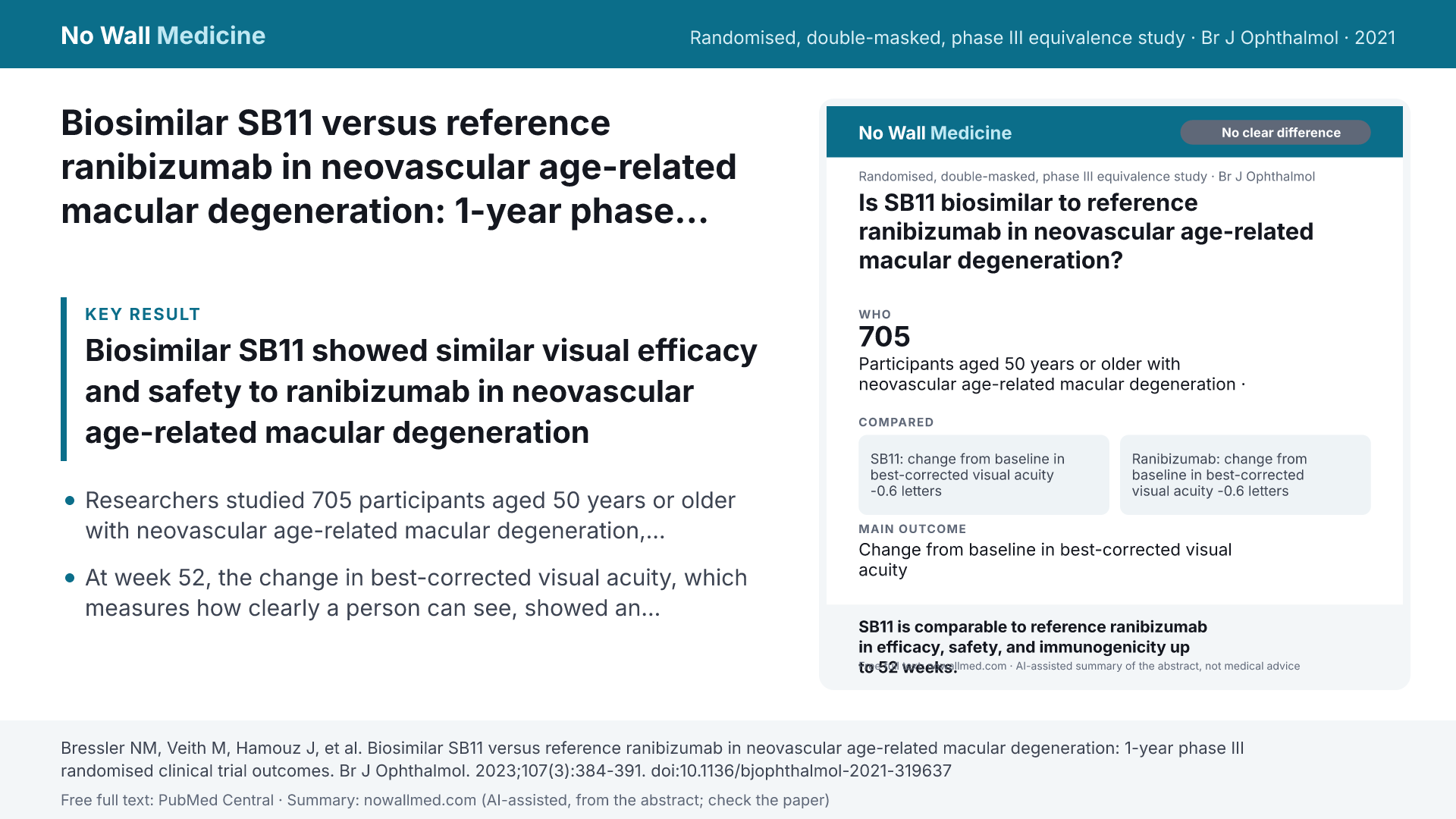
Biosimilar SB11 versus reference ranibizumab in neovascular age-related macular degeneration: 1-year phase III randomised clinical trial outcomes
Key result: Biosimilar SB11 showed similar visual efficacy and safety to ranibizumab in neovascular age-related macular degeneration
Key points
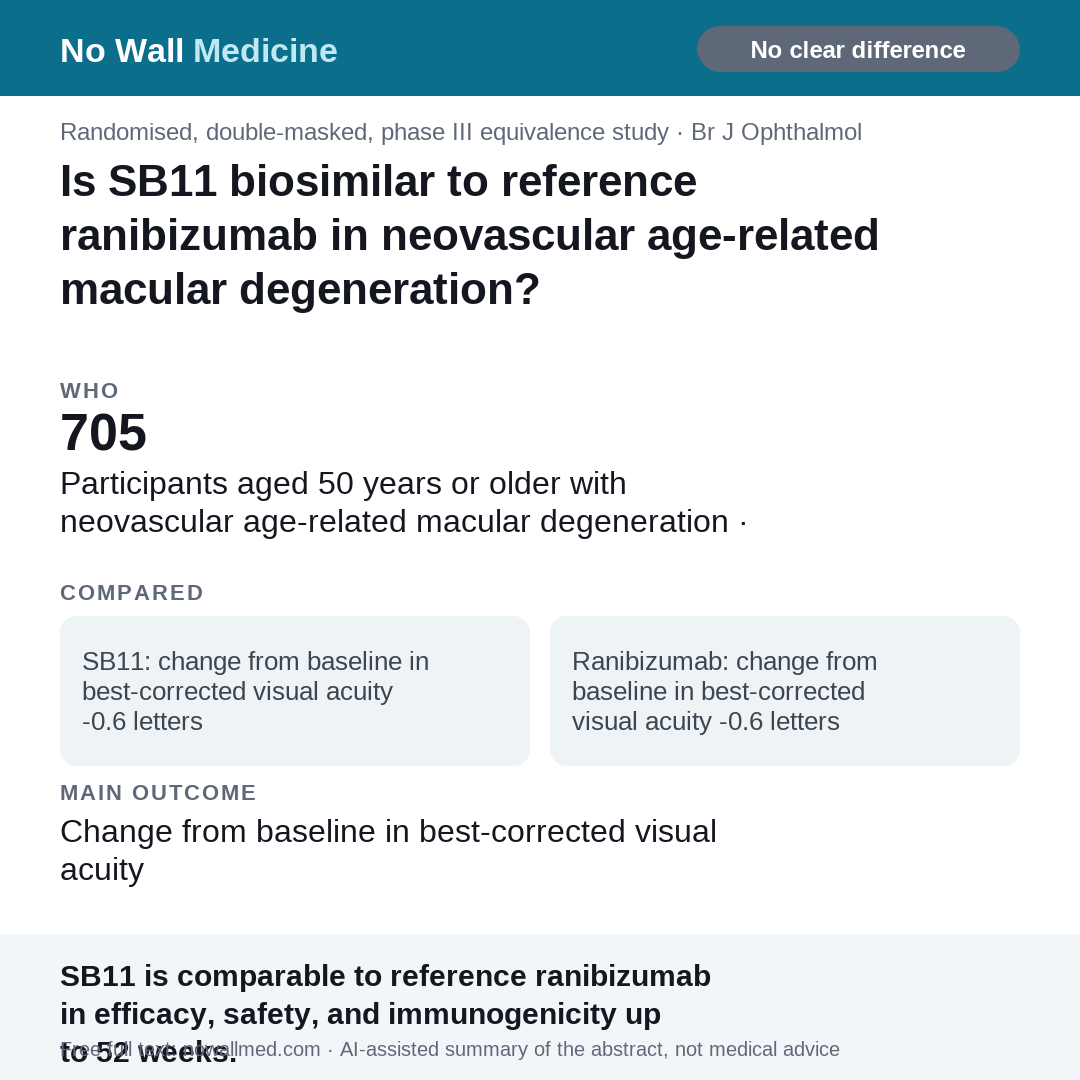
- Researchers studied 705 participants aged 50 years or older with neovascular age-related macular degeneration, comparing monthly injections of SB11 to the reference drug ranibizumab.
- At week 52, the change in best-corrected visual acuity, which measures how clearly a person can see, showed an adjusted treatment difference of -0.6 letters.
- Ocular treatment-emergent adverse events occurred in 32.0% of the SB11 group and 29.7% of the ranibizumab group, while serious ocular events occurred in 2.9% and 2.3% respectively.
Why it matters: Longer-term data on the efficacy, safety, and how the body processes the drug were needed to support the biosimilarity of SB11 compared to ranibizumab.
Discussion prompts
- Would these patients look like yours? Who was left out?
- Is the main outcome one that matters to patients?
- Is the difference large enough to change what you do?
Cite: Bressler NM, Veith M, Hamouz J, et al. Biosimilar SB11 versus reference ranibizumab in neovascular age-related macular degeneration: 1-year phase III randomised clinical trial outcomes. Br J Ophthalmol. 2021. doi:10.1136/bjophthalmol-2021-319637
Free full text: PubMed Central · Summary and visual abstract: nowallmed.com/a/biosimilar-sb11-versus-reference-ranibizumab-in-neovascular-age-1h9lxhs/ (AI-assisted from the abstract; check the paper before relying on it).