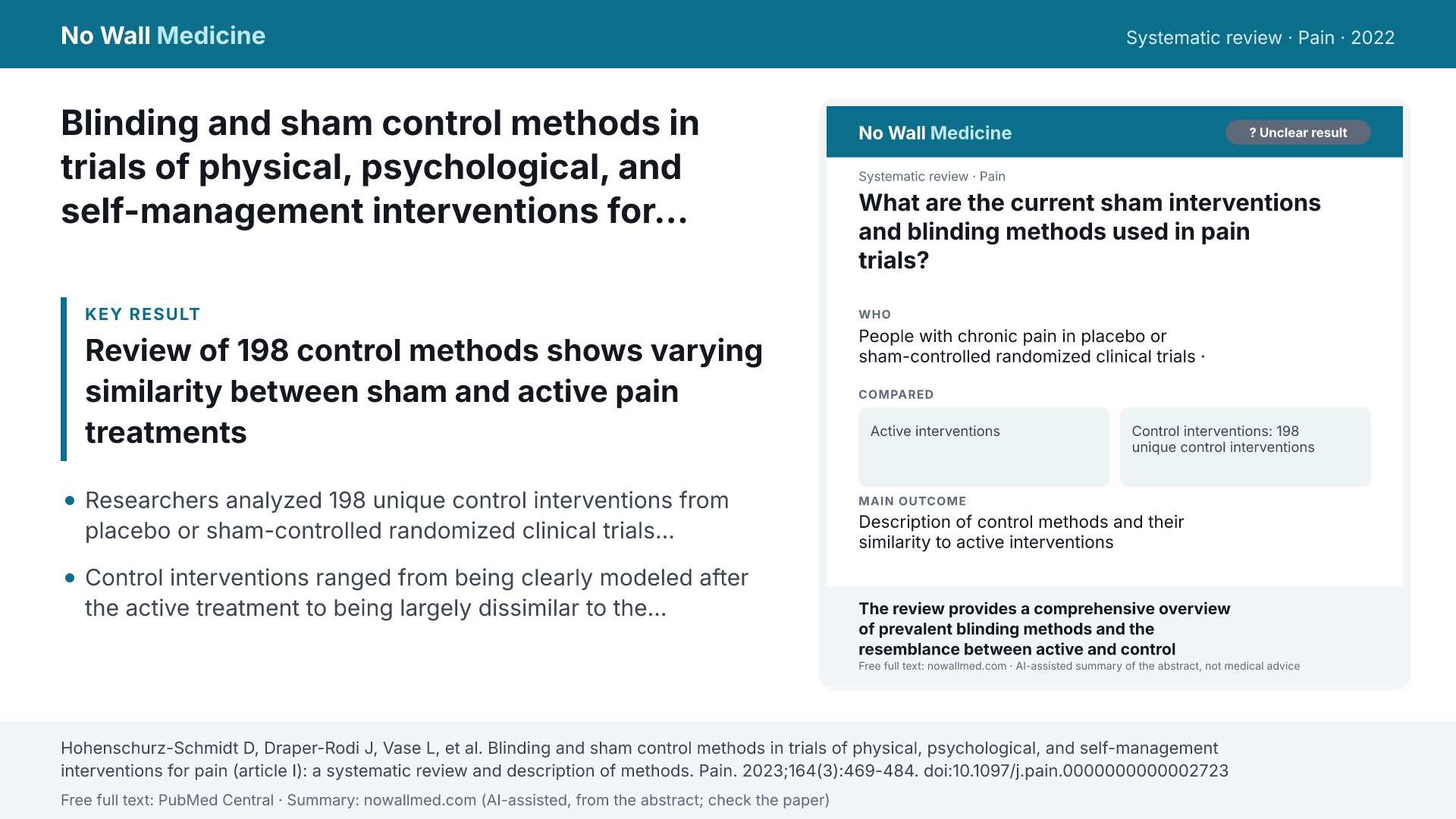
Review of 198 control methods shows varying similarity between sham and active pain treatments
Blinding and sham control methods in trials of physical, psychological, and self-management interventions for pain (article I): a systematic review and description of methods
Systematic reviewUnclear result
What are the current sham interventions and blinding methods used in pain trials?
Who
People with chronic pain in placebo or sham-controlled randomized clinical trials · Twelve databases
Compared
Active interventions
Control interventions: 198 unique control interventions
Main outcome
Description of control methods and their similarity to active interventions
Bottom line: The review provides a comprehensive overview of prevalent blinding methods and the resemblance between active and control interventions.
Pain · 2022-07-11 · Save PNG
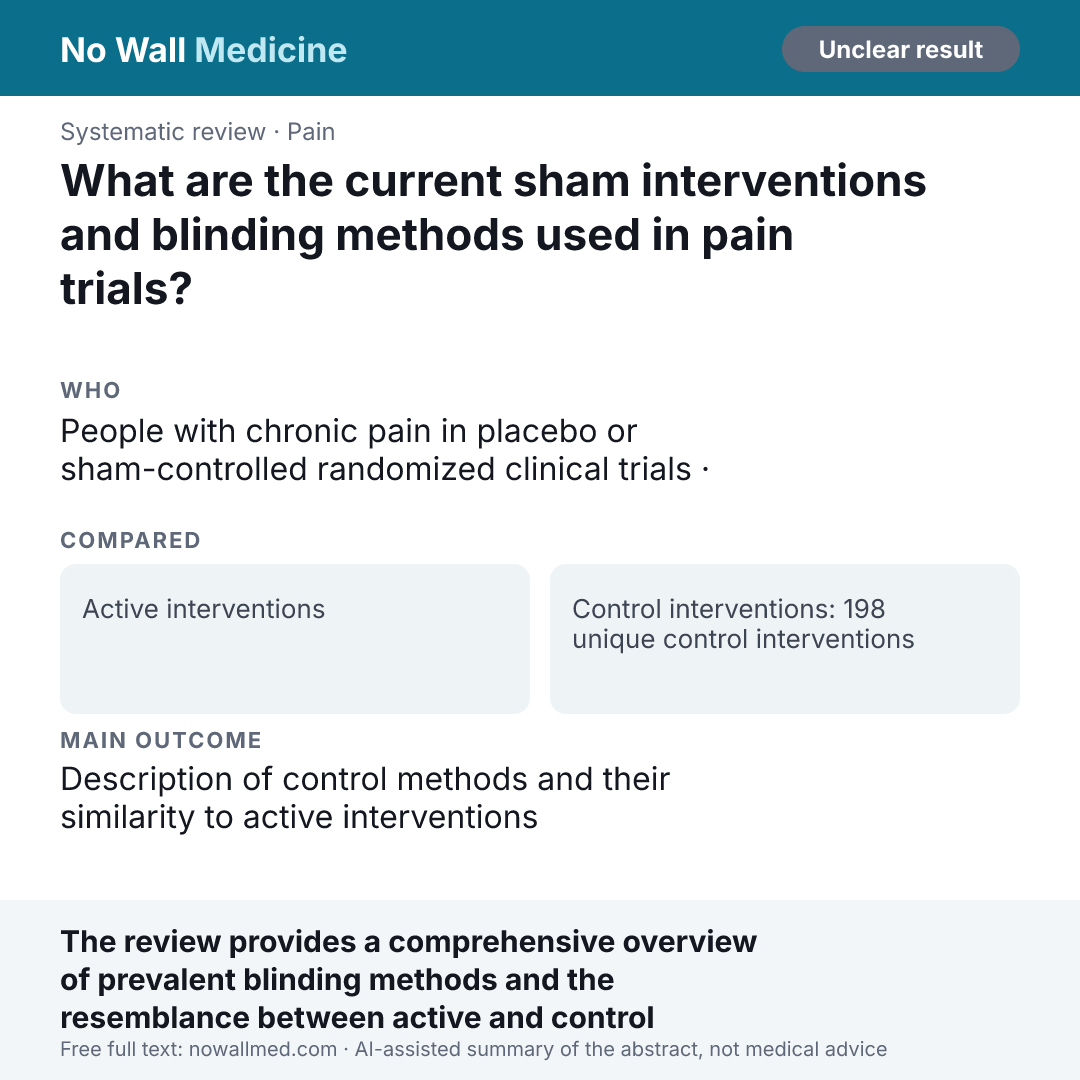
Clinical question: What are the current sham interventions and blinding methods used in pain trials?
Why it matters: Standards for the design, implementation, and reporting of control interventions in efficacy and mechanistic trials for pain therapies are currently lacking.
Key points
- Researchers analyzed 198 unique control interventions from placebo or sham-controlled randomized clinical trials published between 2008 and December 2021.
- Control interventions ranged from being clearly modeled after the active treatment to being largely dissimilar to the active treatment.
- Similarity between control and active interventions was more frequent for treatment duration and frequency than for physical procedures or patient sensory experiences.
Headline and key points written with AI from the paper’s abstract, with every number checked against it. Read the paper before relying on them.
Was this summary helpful?
Subject terms
Headline, design, result, key points, caveat and citation as plain text.
Cite this article
Hohenschurz-Schmidt D, Draper-Rodi J, Vase L, et al. Blinding and sham control methods in trials of physical, psychological, and self-management interventions for pain (article I): a systematic review and description of methods. Pain. 2023;164(3):469-484. doi:10.1097/j.pain.0000000000002723
Spotted a mistake? Suggest a correction