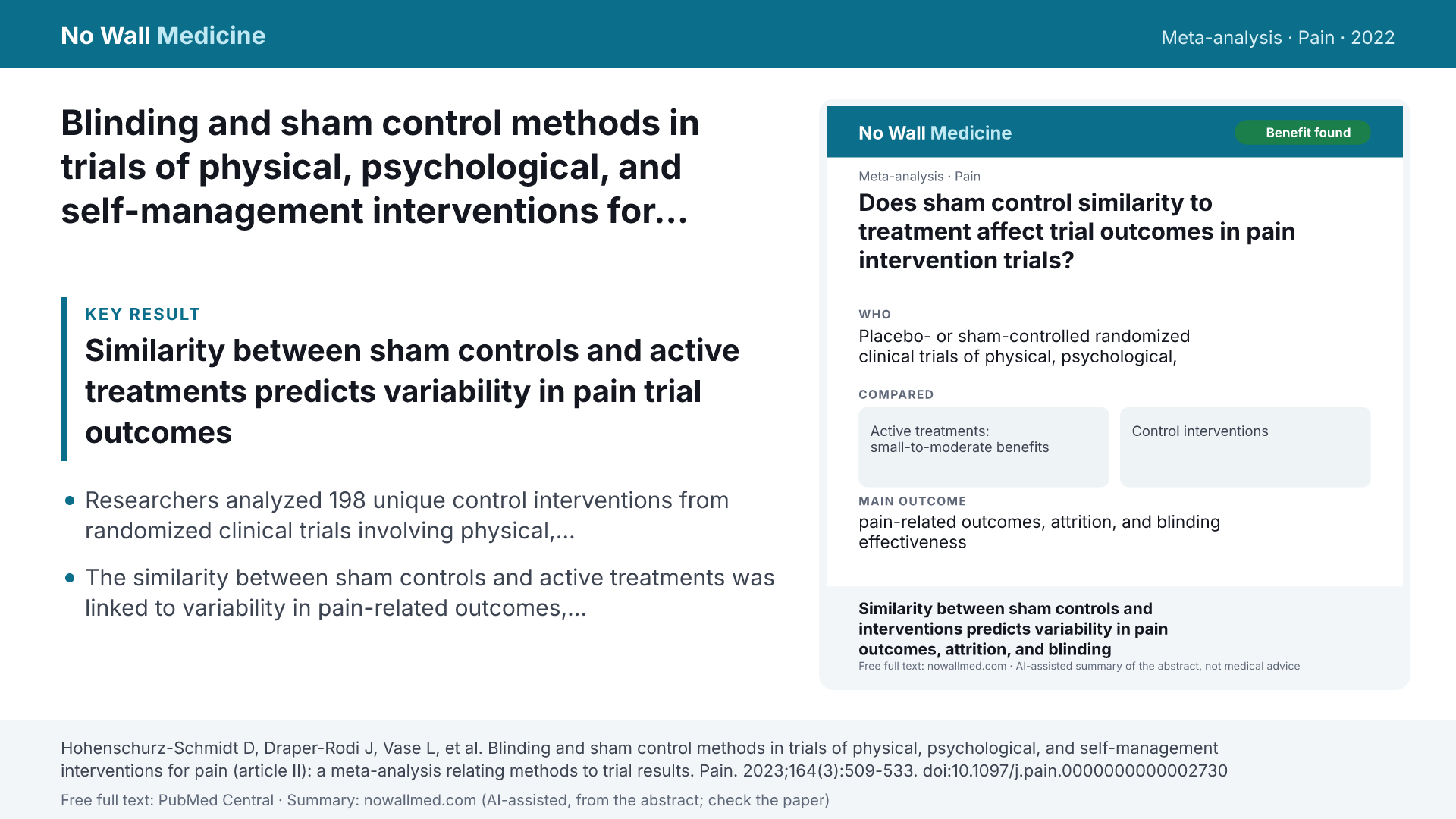
Similarity between sham controls and active treatments predicts variability in pain trial outcomes
Blinding and sham control methods in trials of physical, psychological, and self-management interventions for pain (article II): a meta-analysis relating methods to trial results
Meta-analysisBenefit found
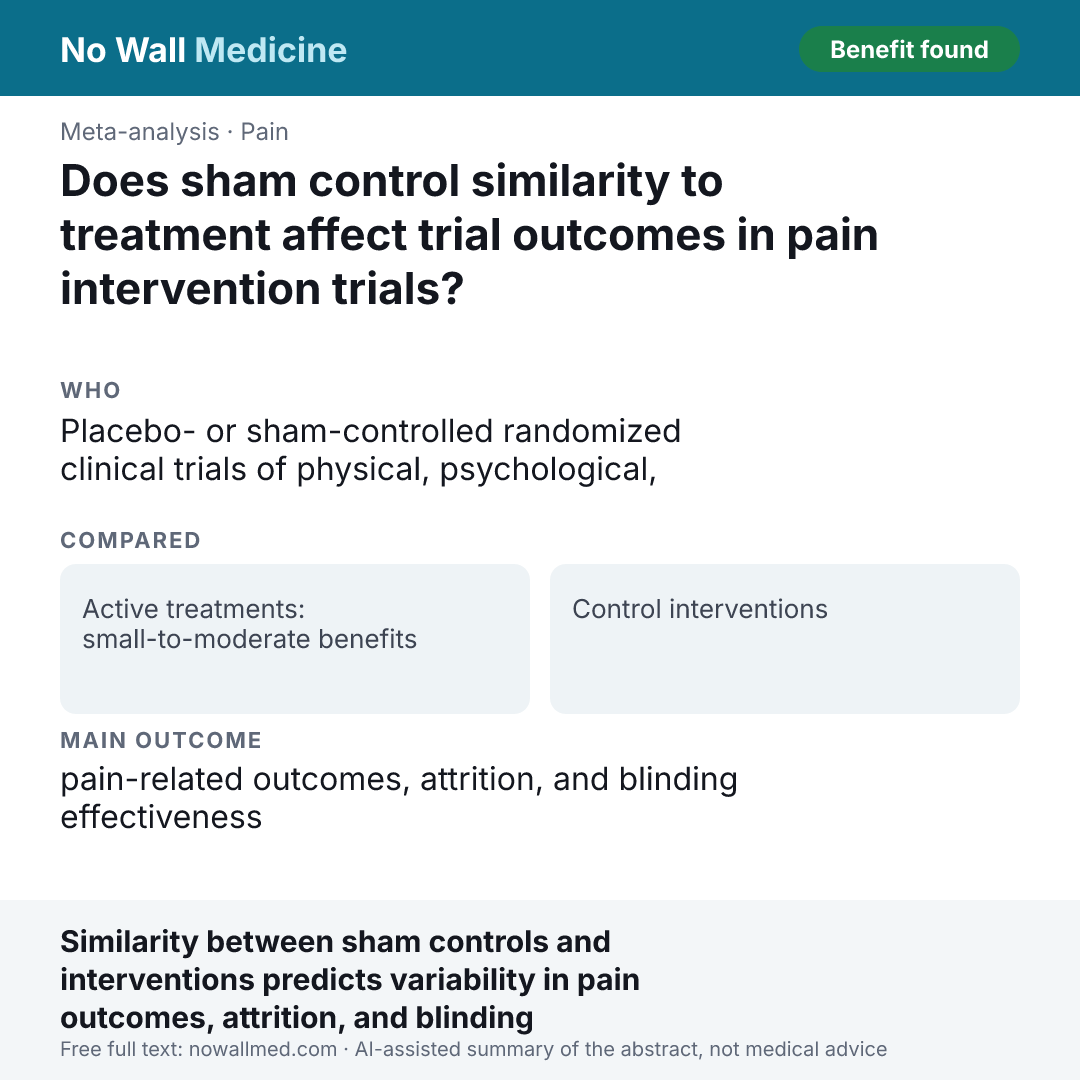
Does sham control similarity to treatment affect trial outcomes in pain intervention trials?
Who
Placebo- or sham-controlled randomized clinical trials of physical, psychological, and self-management therapies · 12 databases
Compared
Active treatments: small-to-moderate benefits
Control interventions
Main outcome
pain-related outcomes, attrition, and blinding effectiveness
Bottom line: Similarity between sham controls and interventions predicts variability in pain outcomes, attrition, and blinding effectiveness.
Limitation: Challenges to effective blinding are complex and often difficult to discern from trial reports.
Pain · 2022-07-11 · Save PNG
Clinical question: Does sham control similarity to treatment affect trial outcomes in pain intervention trials?
Why it matters: It was not formally tested whether how much a sham control resembles the actual treatment consistently affects trial outcomes like effect sizes and blinding effectiveness.
Key points
- Researchers analyzed 198 unique control interventions from randomized clinical trials involving physical, psychological, and self-management therapies for pain.
- The similarity between sham controls and active treatments was linked to variability in pain-related outcomes, participant dropout rates, and the effectiveness of blinding.
- Differences in intervention exposure, participant experience, and treatment environments were identified as influential variables in these relationships.
Limitation the authors note: Challenges to effective blinding are complex and often difficult to discern from trial reports.
Headline and key points written with AI from the paper’s abstract, with every number checked against it. Read the paper before relying on them.
Was this summary helpful?
Subject terms
Headline, design, result, key points, caveat and citation as plain text.
Cite this article
Hohenschurz-Schmidt D, Draper-Rodi J, Vase L, et al. Blinding and sham control methods in trials of physical, psychological, and self-management interventions for pain (article II): a meta-analysis relating methods to trial results. Pain. 2023;164(3):509-533. doi:10.1097/j.pain.0000000000002730
Spotted a mistake? Suggest a correction