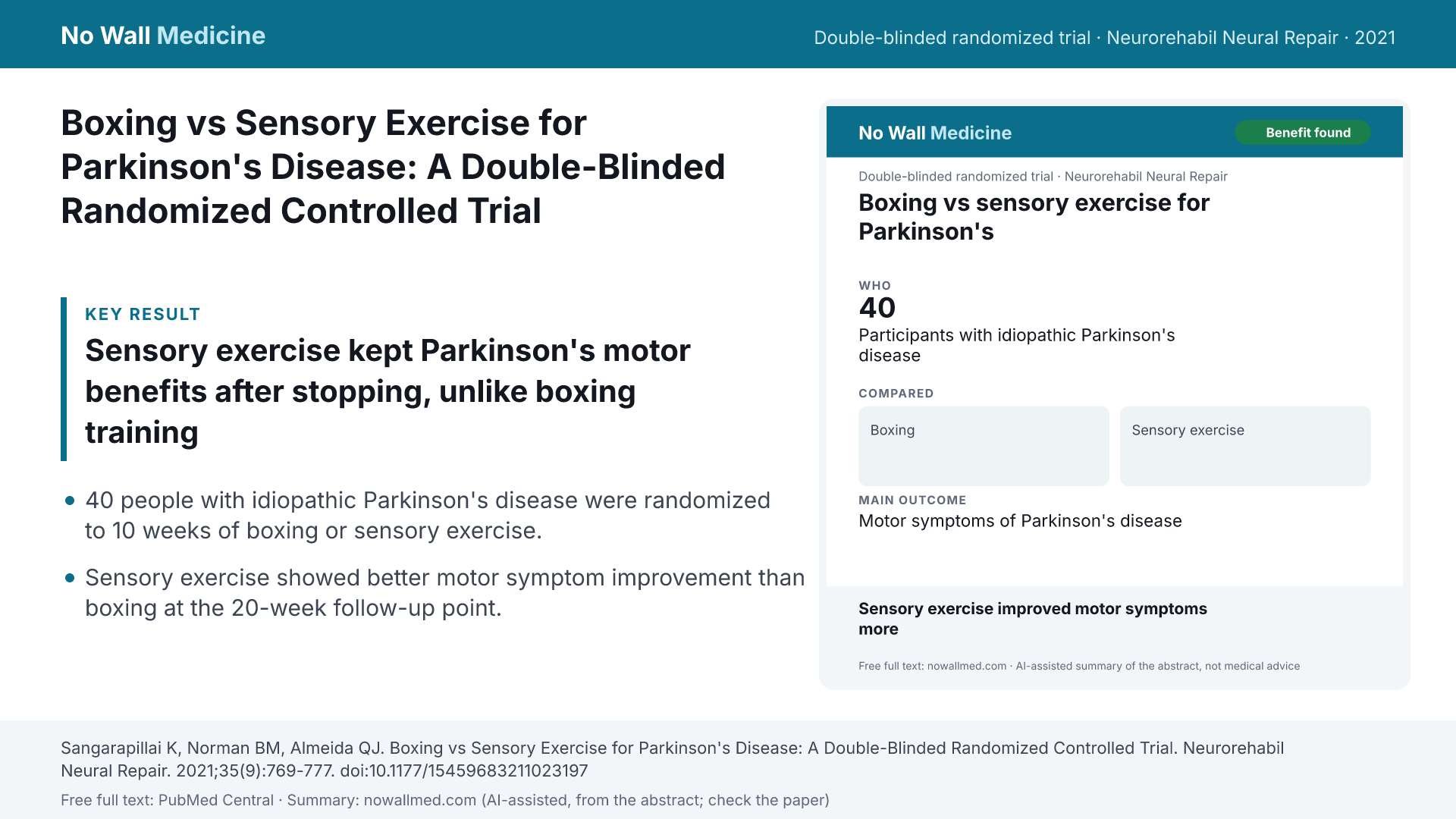
Boxing vs Sensory Exercise for Parkinson's Disease: A Double-Blinded Randomized Controlled Trial
Double-blinded randomized trialBenefit found
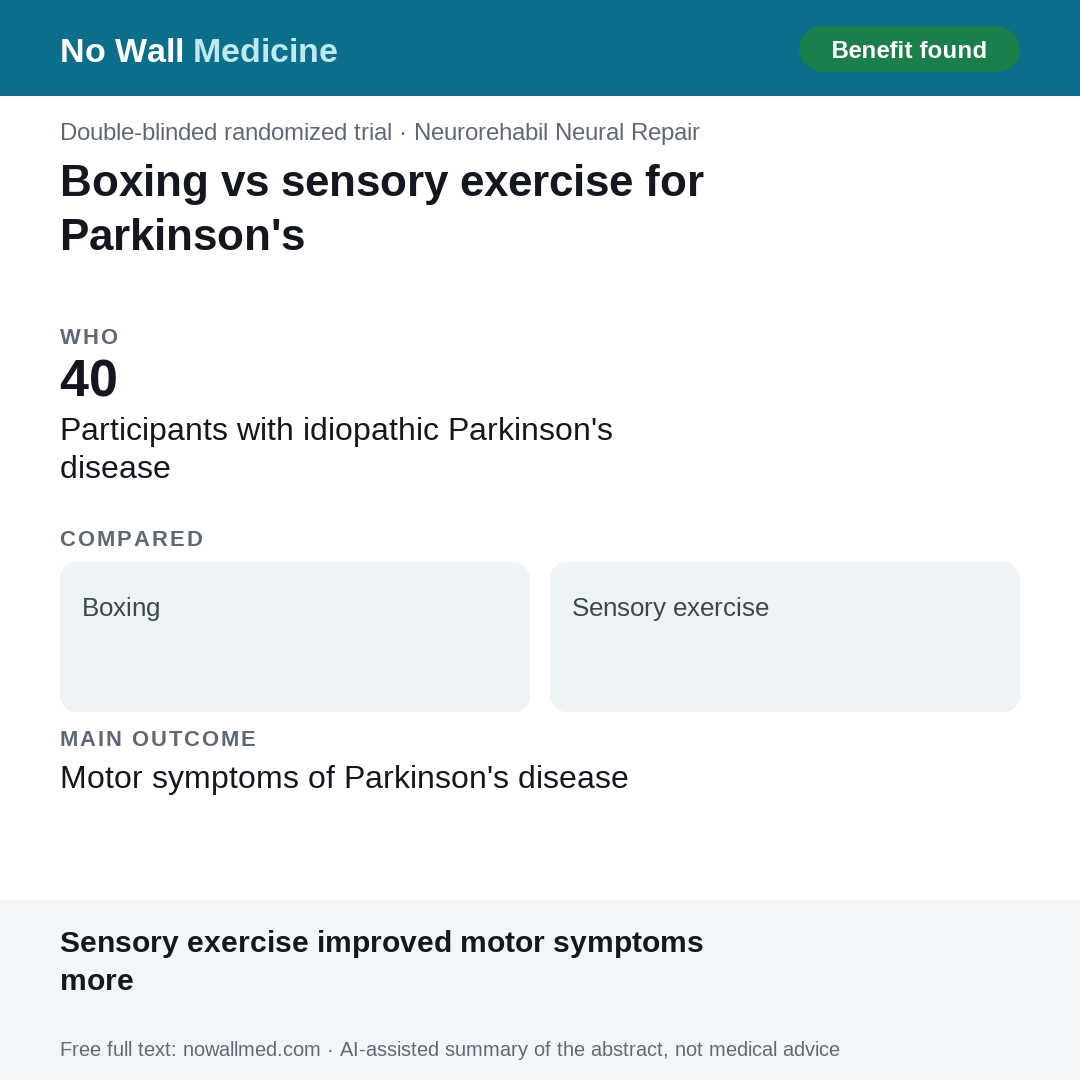
Boxing vs sensory exercise for Parkinson's
Who
40
Participants with idiopathic Parkinson's disease
Compared
Boxing
Sensory exercise
Main outcome
Motor symptoms of Parkinson's disease
Bottom line: Sensory exercise improved motor symptoms more
Neurorehabil Neural Repair · 2021-06-13Download image
Abstract
Background. Exercise is increasingly becoming recognized as an important adjunct to medications in the clinical management of Parkinson's disease (PD). Boxing and sensory exercise have shown immediate benefits, but whether they continue beyond program completion is unknown. This study aimed to investigate the effects of boxing and sensory training on motor symptoms of PD, and whether these benefits remain upon completion of the intervention. Methods. In this 20-week double-blinded randomized controlled trial, 40 participants with idiopathic PD were randomized into 2 treatment groups, (n = 20) boxing or (n = 20) sensory exercise. Participants completed 10 weeks of intervention. Motor symptoms were assessed at (week 0, 10, and 20) using the Unified Parkinson's Disease Rating Scale (UPDRS-III). Data were analyzed using SPSS, and repeated-measures ANOVA was conducted. Results. A significant interaction effect between groups and time were observed F(1, 39) = 4.566, P = .036, where the sensory group improved in comparison to the boxing group. Post hoc analysis revealed that in comparison to boxing, the effects of exercise did not wear off at washout (week 20) P < .006. Conclusion. Future rehabilitation research should incorporate similar measures to explore whether effects of exercise wear off post intervention.
Subject terms
Cite this article
Sangarapillai K, Norman BM, Almeida QJ. Boxing vs Sensory Exercise for Parkinson's Disease: A Double-Blinded Randomized Controlled Trial. Neurorehabil Neural Repair. 2021. doi:10.1177/15459683211023197
Spotted a mistake? Suggest a correction