Caloric restriction altered specific blood proteins linked to cellular aging in adults with obesity
Caloric Restriction Intervention Alters Specific Circulating Biomarkers of the Senescence-Associated Secretome in Middle-Aged and Older Adults With Obesity and Prediabetes in an 18-Week Randomized Controlled Trial
Randomized controlled trialBenefit found
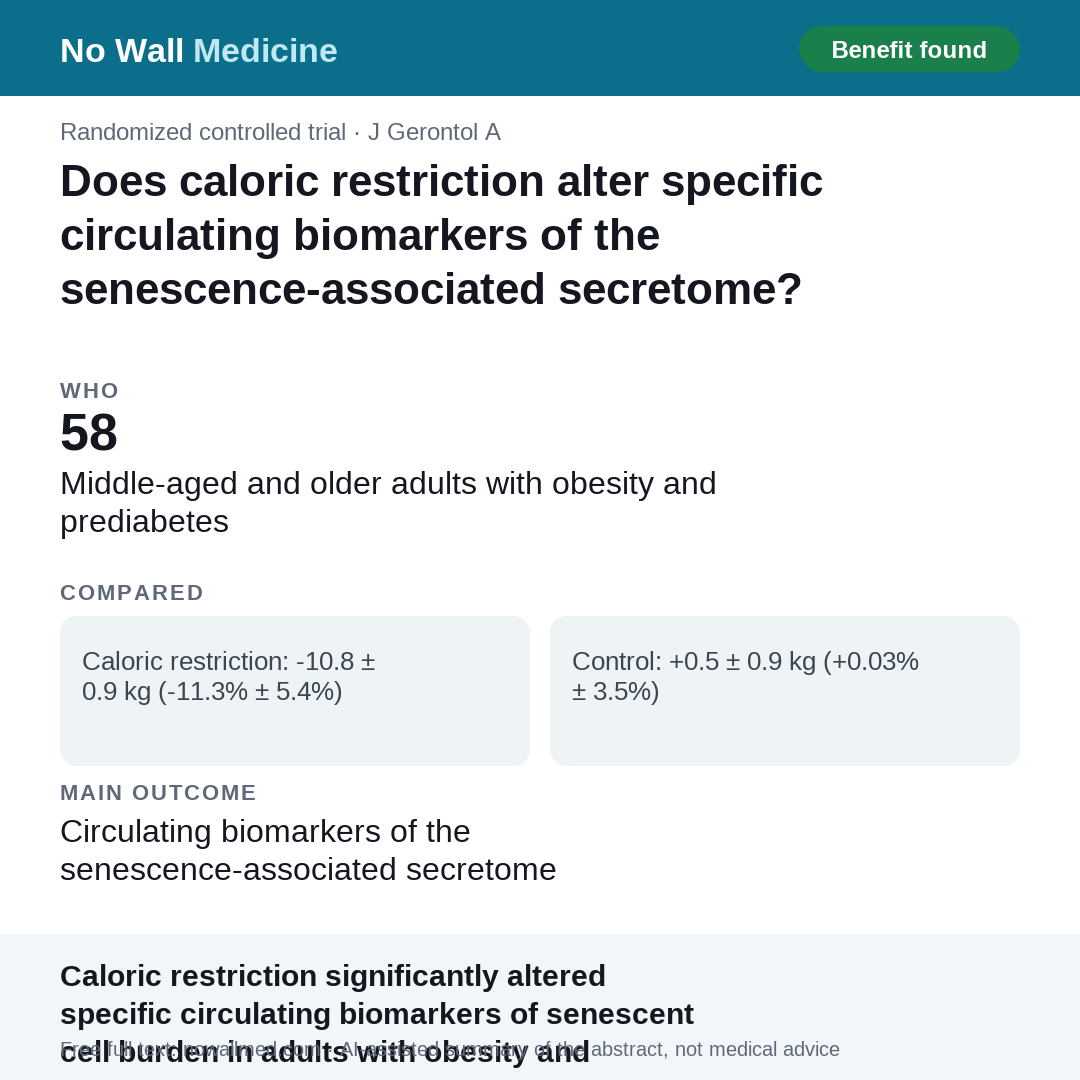
Does caloric restriction alter specific circulating biomarkers of the senescence-associated secretome?
Who
58
Middle-aged and older adults with obesity and prediabetes
Compared
Caloric restriction: -10.8 ± 0.9 kg (-11.3% ± 5.4%)
Control: +0.5 ± 0.9 kg (+0.03% ± 3.5%)
Main outcome
Circulating biomarkers of the senescence-associated secretome
Bottom line: Caloric restriction significantly altered specific circulating biomarkers of senescent cell burden in adults with obesity and prediabetes.
J Gerontol A · 2023-09-22Download image
Clinical question: Does caloric restriction alter specific circulating biomarkers of the senescence-associated secretome?
Why it matters: It is unknown if reducing calorie intake changes the senescence-associated secretory phenotype, which is a collection of pro-inflammatory proteins released by aging cells.
Key points
- Researchers studied 58 middle-aged and older adults with obesity and prediabetes who were randomized to either caloric restriction or a control group for 18 weeks.
- The caloric restriction group lost -10.8 ± 0.9 kg (-11.3% ± 5.4%) compared to a gain of +0.5 ± 0.9 kg (+0.03% ± 3.5%) in the control group.
- While T-cell expression of senescence and cell death markers did not differ, specific plasma proteins including TNFRI, TNFRII, uPAR, MMP1, GDF15, OPN, Fas, and MPO were significantly altered.
Headline and key points written with AI from the paper’s abstract, with every number checked against it. Read the paper before relying on them.
Topics
Cite this article
Justice JN, Leng XI, LeBrasseur NK, Tchkonia T, Kirkland JL, Mitin N. Caloric Restriction Intervention Alters Specific Circulating Biomarkers of the Senescence-Associated Secretome in Middle-Aged and Older Adults With Obesity and Prediabetes in an 18-Week Randomized Controlled Trial. J Gerontol A. 2023. doi:10.1093/gerona/glad214
Spotted a mistake? Suggest a correction
Top studies every Monday
The week’s key trials and guidelines in your specialties, plus any topics you follow. By email, free.
Get the weekly digest