Can Molecular Classifications Help Tailor First-line Treatment of Metastatic Renal Cell Carcinoma? A Systematic Review of Available Models
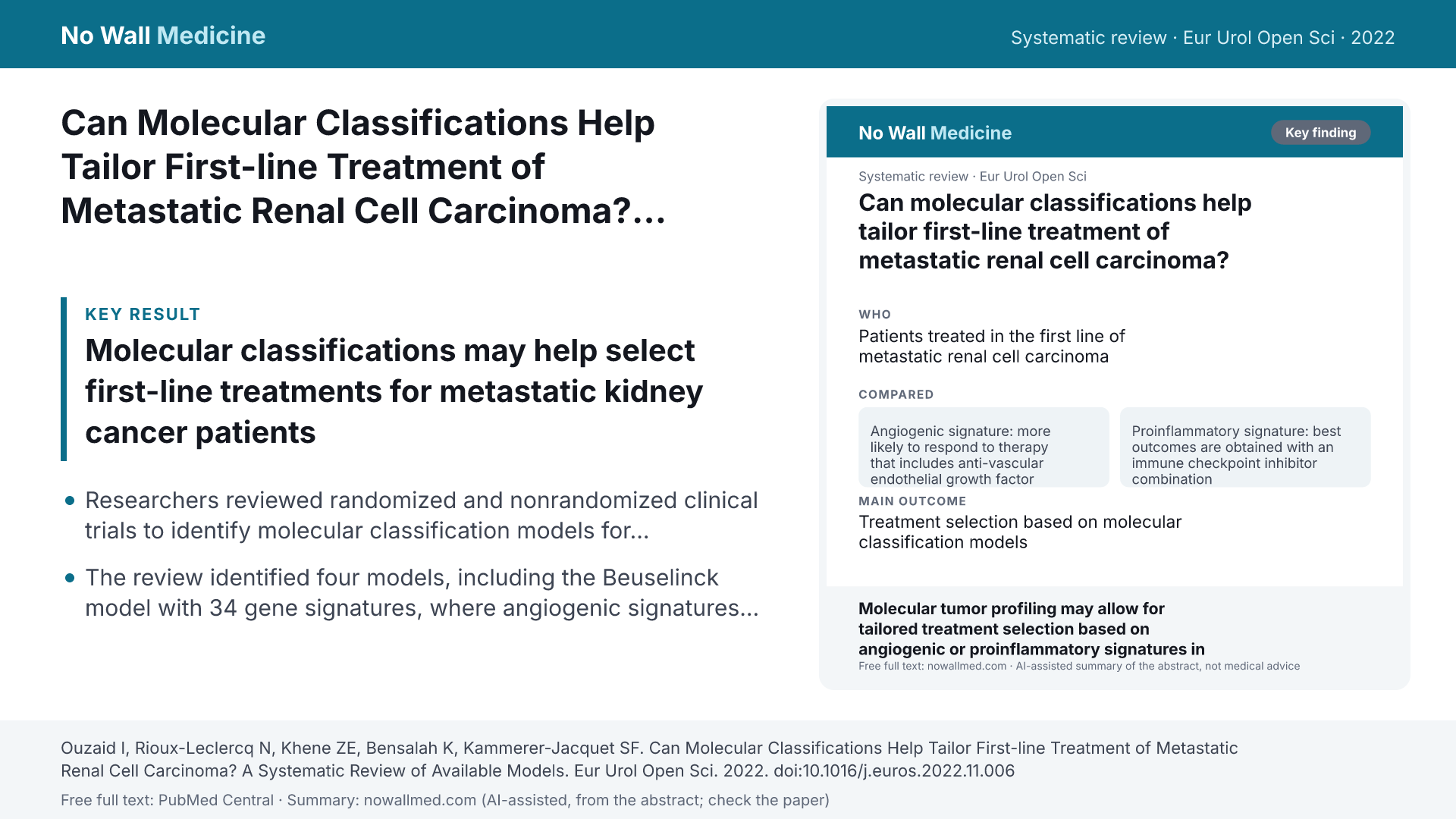
Key result: Molecular classifications may help select first-line treatments for metastatic kidney cancer patients
Key points
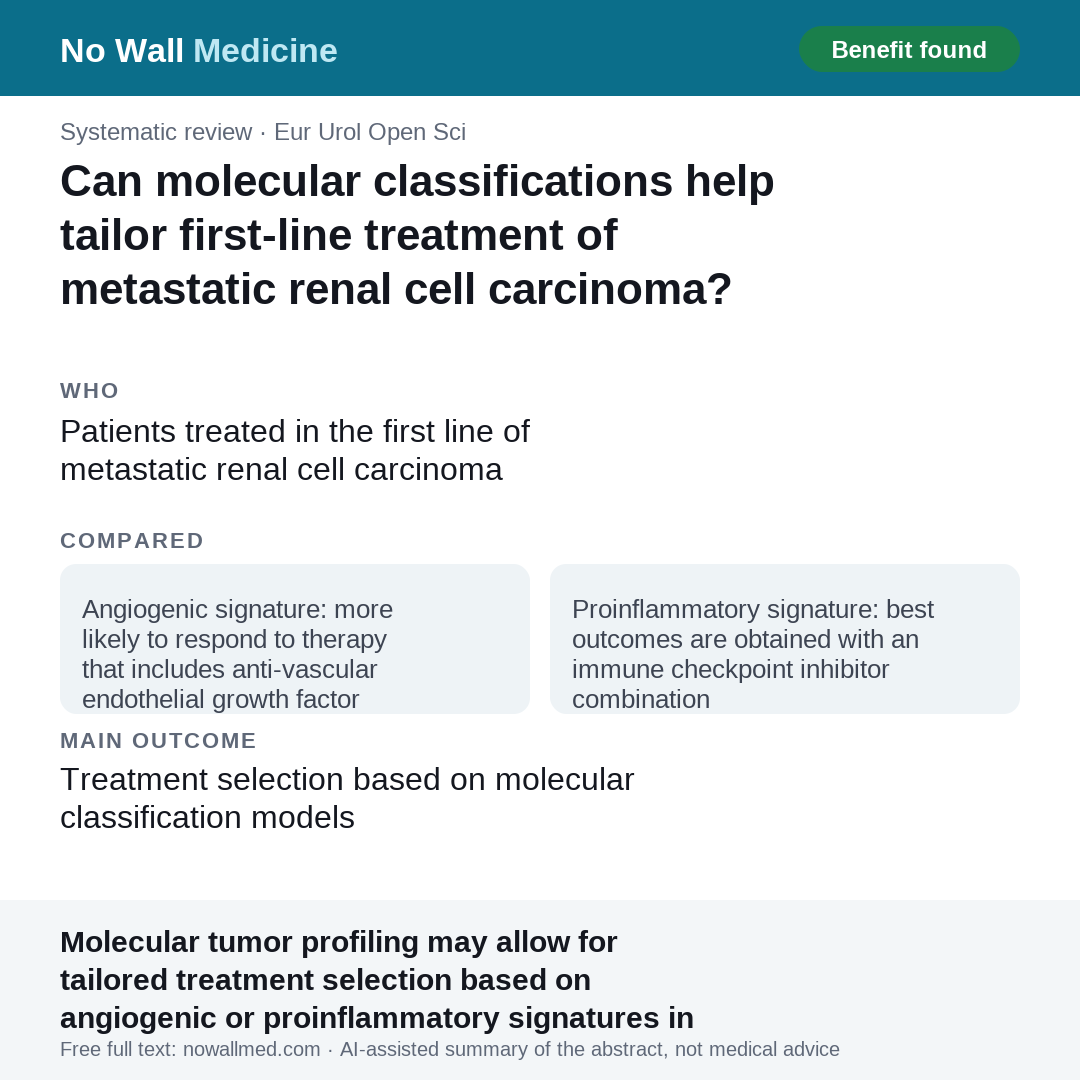
- Researchers reviewed randomized and nonrandomized clinical trials to identify molecular classification models for patients with metastatic renal cell carcinoma treated with immune checkpoint inhibitors or anti-vascular endothelial growth factor therapies.
- The review identified four models, including the Beuselinck model with 34 gene signatures, where angiogenic signatures were linked to responses to anti-vascular endothelial growth factor agents.
- Proinflammatory or immune signatures were associated with the best outcomes when using combinations of immune checkpoint inhibitors.
Why it matters: Current treatment allocation for metastatic renal cell carcinoma is based only on clinical stratification risk models rather than tumor biology.
Discussion prompts
- Would these patients look like yours? Who was left out?
- Is the main outcome one that matters to patients?
- Is the difference large enough to change what you do?
Cite: Ouzaid I, Rioux-Leclercq N, Khene ZE, Bensalah K, Kammerer-Jacquet SF. Can Molecular Classifications Help Tailor First-line Treatment of Metastatic Renal Cell Carcinoma? A Systematic Review of Available Models. Eur Urol Open Sci. 2022. doi:10.1016/j.euros.2022.11.006
Free full text: PubMed Central · Summary and visual abstract: nowallmed.com/a/can-molecular-classifications-help-tailor-first-line-treatment-of-1zaiz9/ (AI-assisted from the abstract; check the paper before relying on it).