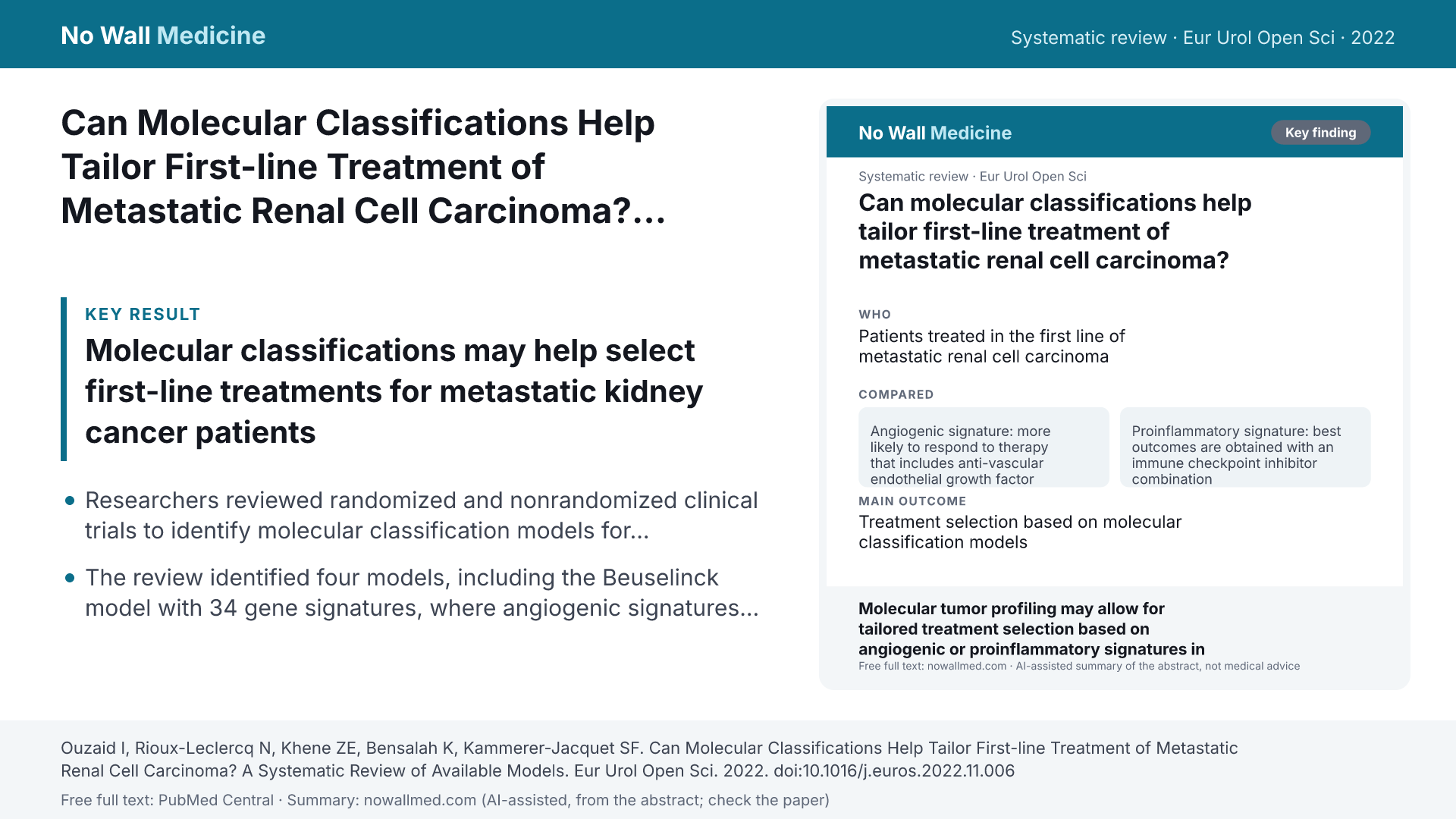
Molecular classifications may help select first-line treatments for metastatic kidney cancer patients
Can Molecular Classifications Help Tailor First-line Treatment of Metastatic Renal Cell Carcinoma? A Systematic Review of Available Models
Systematic reviewBenefit found
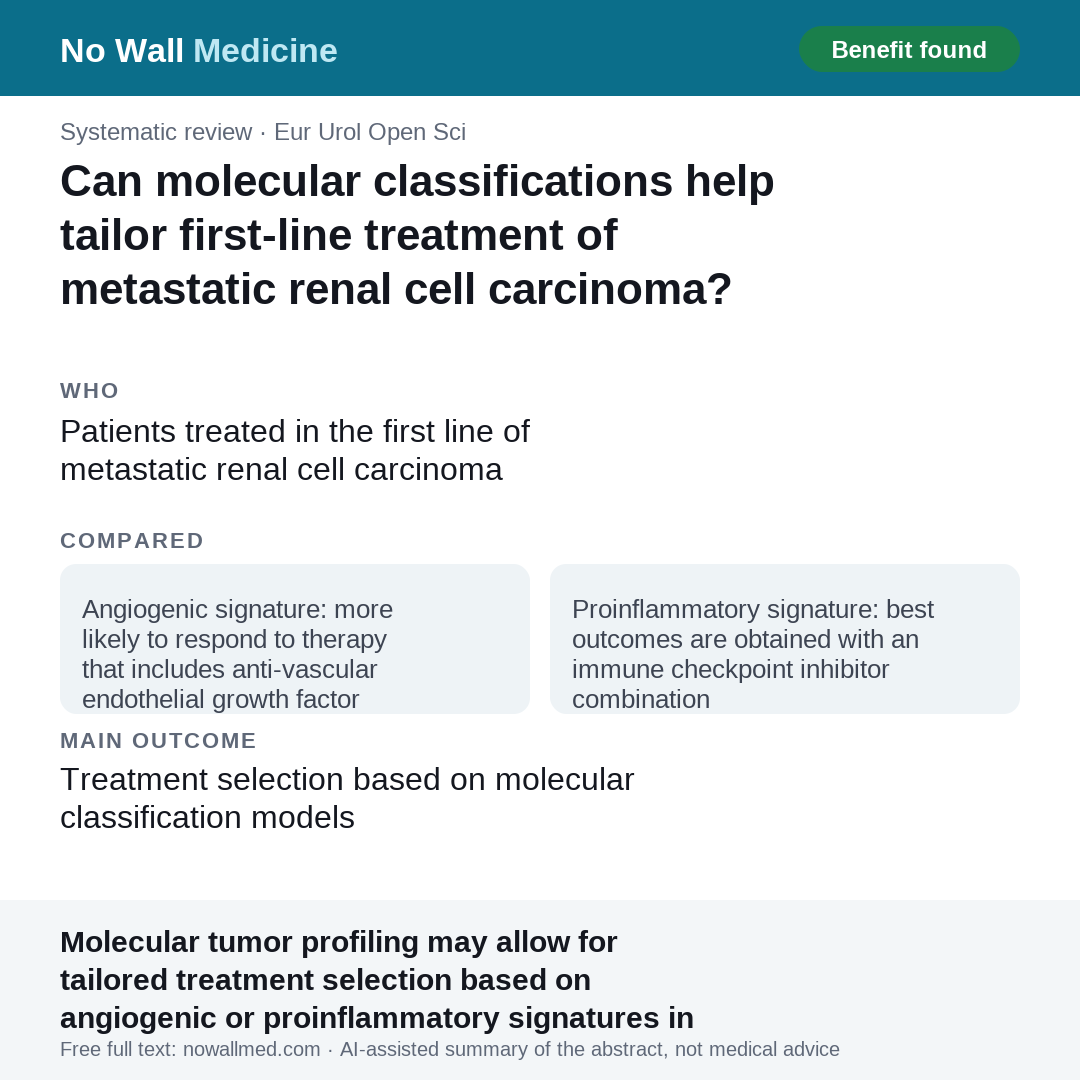
Can molecular classifications help tailor first-line treatment of metastatic renal cell carcinoma?
Who
Patients treated in the first line of metastatic renal cell carcinoma
Compared
Angiogenic signature: more likely to respond to therapy that includes anti-vascular endothelial growth factor agents
Proinflammatory signature: best outcomes are obtained with an immune checkpoint inhibitor combination
Main outcome
Treatment selection based on molecular classification models
Bottom line: Molecular tumor profiling may allow for tailored treatment selection based on angiogenic or proinflammatory signatures in metastatic renal cell carcinoma.
Limitation: Findings were mostly derived from ancillary registered studies of new drugs and need further validation.
Eur Urol Open Sci · 2022-12-15Download image
Clinical question: Can molecular classifications help tailor first-line treatment of metastatic renal cell carcinoma?
Why it matters: Current treatment allocation for metastatic renal cell carcinoma is based only on clinical stratification risk models rather than tumor biology.
Key points
- Researchers reviewed randomized and nonrandomized clinical trials to identify molecular classification models for patients with metastatic renal cell carcinoma treated with immune checkpoint inhibitors or anti-vascular endothelial growth factor therapies.
- The review identified four models, including the Beuselinck model with 34 gene signatures, where angiogenic signatures were linked to responses to anti-vascular endothelial growth factor agents.
- Proinflammatory or immune signatures were associated with the best outcomes when using combinations of immune checkpoint inhibitors.
Headline and key points written with AI from the paper’s abstract, with every number checked against it. Read the paper before relying on them.
Was this summary helpful?
Cite this article
Ouzaid I, Rioux-Leclercq N, Khene ZE, Bensalah K, Kammerer-Jacquet SF. Can Molecular Classifications Help Tailor First-line Treatment of Metastatic Renal Cell Carcinoma? A Systematic Review of Available Models. Eur Urol Open Sci. 2022. doi:10.1016/j.euros.2022.11.006
Spotted a mistake? Suggest a correction
Top studies every Monday
The week’s key trials and guidelines in your specialties, plus any topics you follow. By email, free.
Get the weekly digest