Cardiac resynchronization therapy benefits patients regardless of whether their heart disease is ischemic or nonischemic
Cardiac Resynchronization Therapy in Ischemic Versus Nonischemic Cardiomyopathy: Patient-Level Meta-Analysis of 7 Randomized Clinical Trials
Patient-level meta-analysis of 7 randomized clinical trialsBenefit found
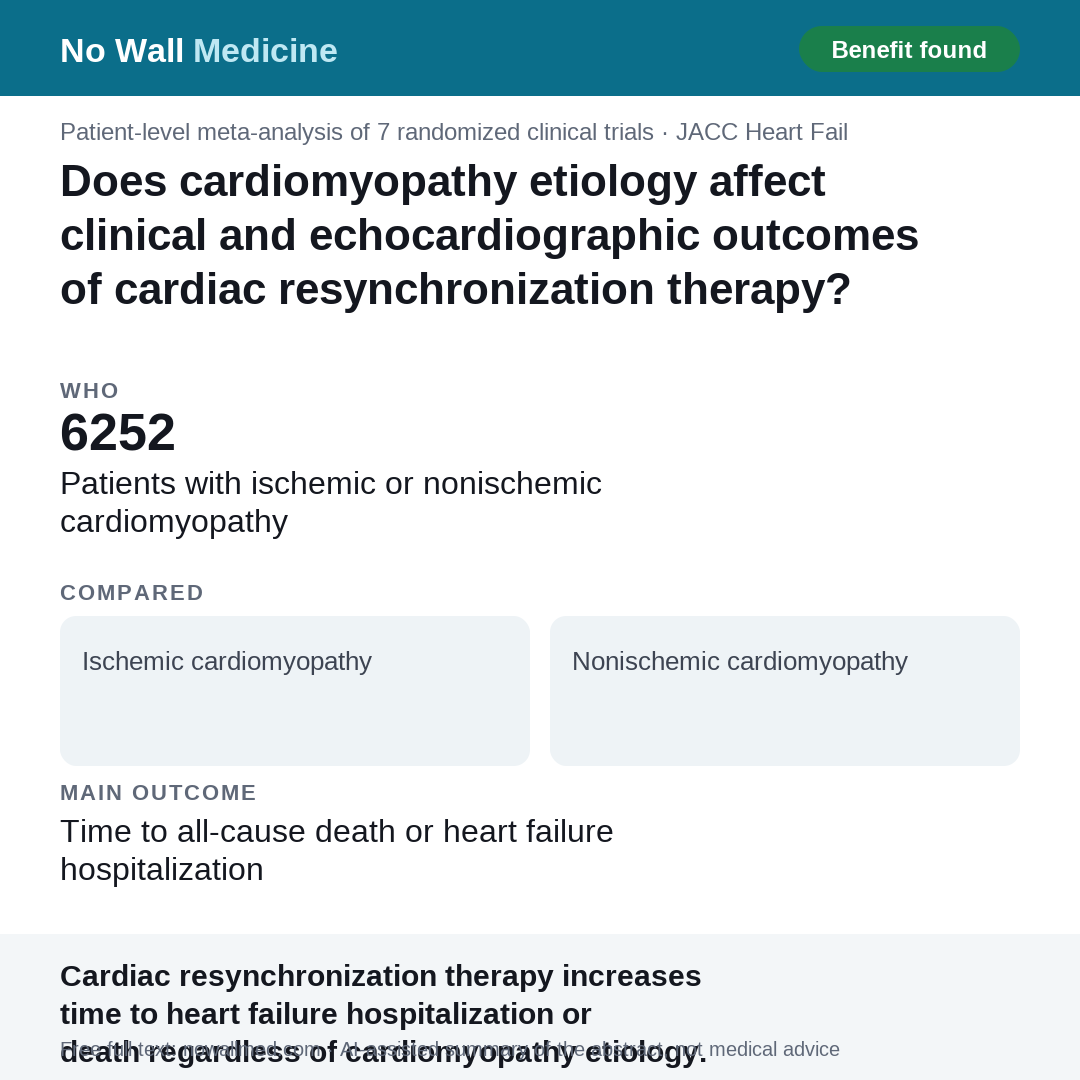
Does cardiomyopathy etiology affect clinical and echocardiographic outcomes of cardiac resynchronization therapy?
Who
6252
Patients with ischemic or nonischemic cardiomyopathy
Compared
Ischemic cardiomyopathy
Nonischemic cardiomyopathy
Main outcome
Time to all-cause death or heart failure hospitalization
Result: hazard ratio 0.67 (95% credible interval 0.56-0.82)
Bottom line: Cardiac resynchronization therapy increases time to heart failure hospitalization or death regardless of cardiomyopathy etiology.
JACC Heart Fail · 2024-10-09Download image
Clinical question: Does cardiomyopathy etiology affect clinical and echocardiographic outcomes of cardiac resynchronization therapy?
Why it matters: Conflicting data exist regarding whether cardiac resynchronization therapy results in better clinical and echocardiographic outcomes in patients with nonischemic cardiomyopathy versus ischemic cardiomyopathy.
Key points
- Researchers analyzed patient-level data from 7 randomized clinical trials involving 6,252 patients to compare outcomes between ischemic and nonischemic cardiomyopathy.
- Cardiac resynchronization therapy increased the time to heart failure hospitalization or all-cause death with no difference found by cardiomyopathy etiology (HR ratio: 1.06 [95% CrI: 0.87-1.29]; P = 0.57).
- For the 2,430 patients with available echocardiographic data, improvements in left ventricular ejection fraction and ventricular dimensions were larger for patients with nonischemic cardiomyopathy.
Headline and key points written with AI from the paper’s abstract, with every number checked against it. Read the paper before relying on them.
Topics
Cite this article
Sudesh S, Abraham WT, Cleland JGF, Curtis AB, Friedman DJ, Gold MR. Cardiac Resynchronization Therapy in Ischemic Versus Nonischemic Cardiomyopathy: Patient-Level Meta-Analysis of 7 Randomized Clinical Trials. JACC Heart Fail. 2024. doi:10.1016/j.jchf.2024.08.010
Spotted a mistake? Suggest a correction
Top studies every Monday
The week’s key trials and guidelines in your specialties, plus any topics you follow. By email, free.
Get the weekly digest