Oxygen-pulse plateau during exercise testing predicts response to coronary artery stenting in patients
Cardiopulmonary exercise testing and efficacy of percutaneous coronary intervention: a substudy of the ORBITA trial
Randomized trial substudyBenefit found
Do cardiopulmonary exercise testing parameters predict the efficacy of percutaneous coronary intervention?
Who
195
Patients with severe single-vessel coronary artery disease
Compared
Percutaneous coronary intervention
Placebo
Main outcome
Placebo-controlled response to percutaneous coronary intervention
Bottom line: Only an oxygen-pulse plateau detects myocardial ischaemia severity and predicts percutaneous coronary intervention efficacy.
Eur Heart J · 2022-06-01Download image
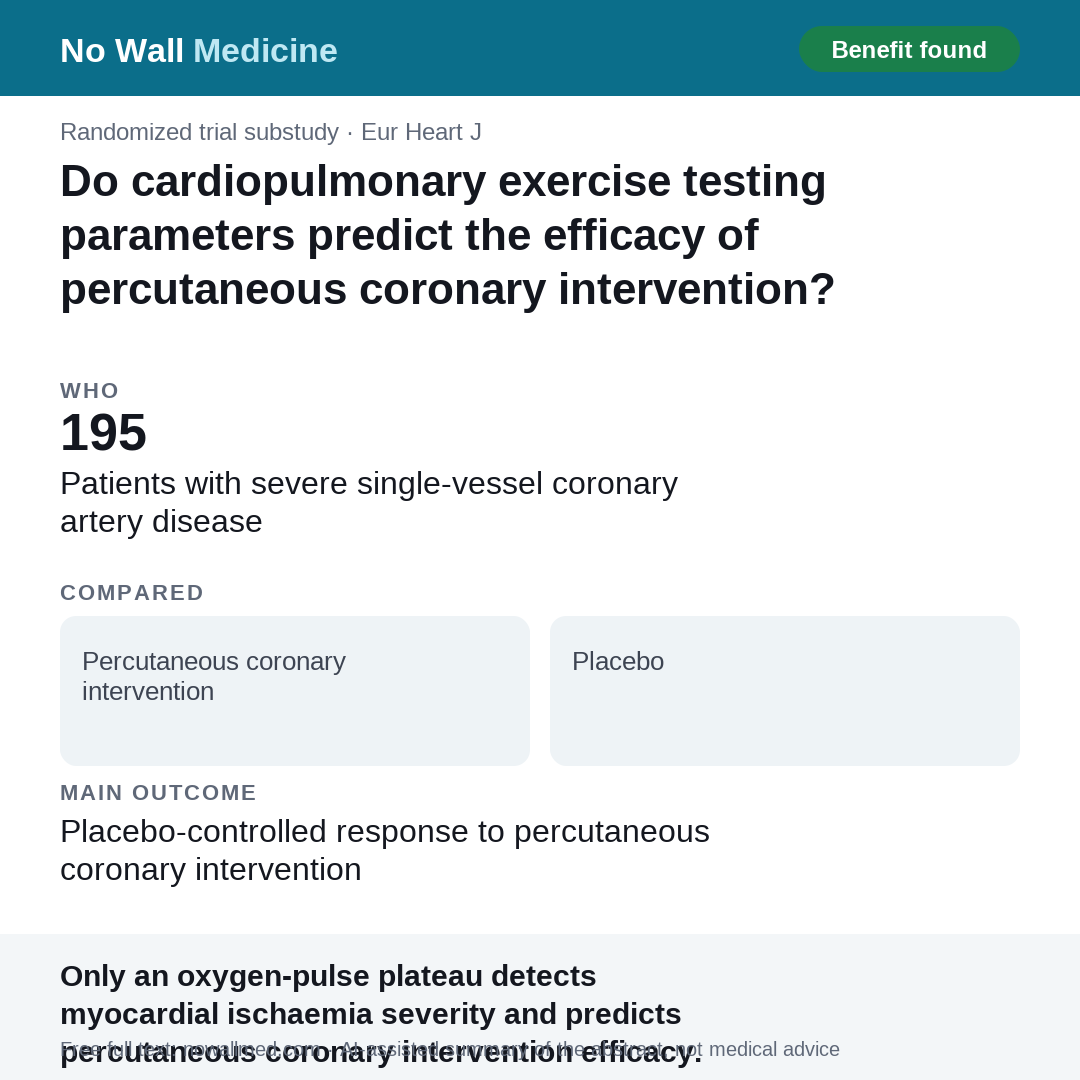
Clinical question: Do cardiopulmonary exercise testing parameters predict the efficacy of percutaneous coronary intervention?
Why it matters: It was unknown if specific parameters from cardiopulmonary exercise testing could predict how patients with chronic coronary syndrome would respond to percutaneous coronary intervention.
Key points
- Researchers analyzed 195 patients with severe single-vessel coronary artery disease randomized to receive either percutaneous coronary intervention (stenting) or a placebo.
- An oxygen-pulse plateau during exercise testing was associated with higher ischemia scores and lower fractional flow reserve, a measure of blood flow through arteries.
- The presence of an oxygen-pulse plateau predicted the placebo-controlled efficacy of stenting on ischemia scores and physical limitation from angina symptoms.
Headline and key points written with AI from the paper’s abstract, with every number checked against it. Read the paper before relying on them.
Was this summary helpful?
Subject terms
Cite this article
Ganesananthan S, Rajkumar CA, Foley M, Thompson D, Nowbar AN, Seligman H. Cardiopulmonary exercise testing and efficacy of percutaneous coronary intervention: a substudy of the ORBITA trial. Eur Heart J. 2022. doi:10.1093/eurheartj/ehac260
Spotted a mistake? Suggest a correction
Top studies every Monday
The week’s key trials and guidelines in your specialties, plus any topics you follow. By email, free.
Get the weekly digest