Recurrent persistent atrial fibrillation is linked to higher healthcare use and lower quality of life
Catheter ablation for persistent atrial fibrillation: patterns of recurrence and impact on quality of life and health care utilization
Post-hoc analysis of a randomized trialMixed results
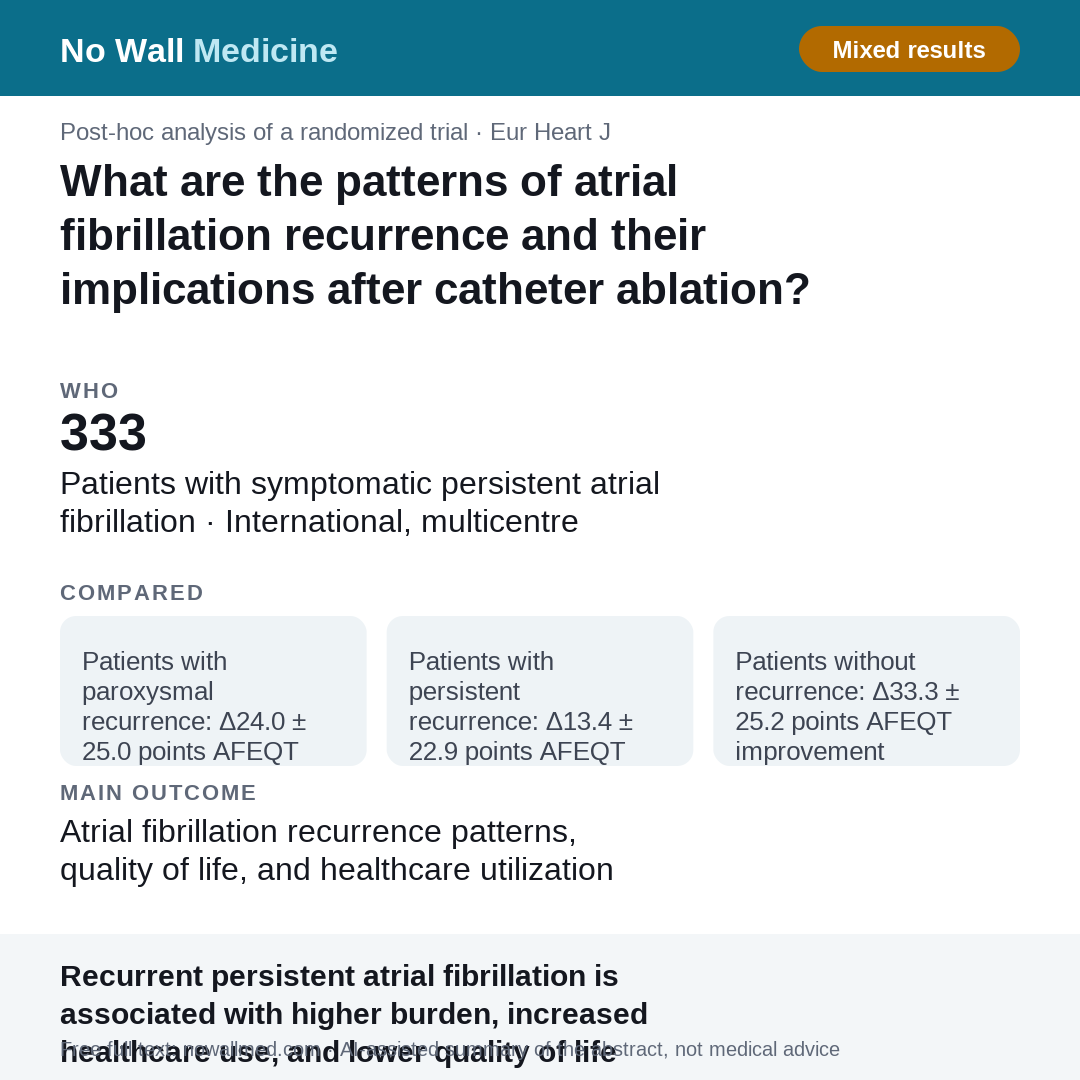
What are the patterns of atrial fibrillation recurrence and their implications after catheter ablation?
Who
333
Patients with symptomatic persistent atrial fibrillation · International, multicentre study
Compared
Patients with paroxysmal recurrence: Δ24.0 ± 25.0 points AFEQT improvement
Patients with persistent recurrence: Δ13.4 ± 22.9 points AFEQT improvement
Patients without recurrence: Δ33.3 ± 25.2 points AFEQT improvement
Main outcome
Atrial fibrillation recurrence patterns, quality of life, and healthcare utilization
Bottom line: Recurrent persistent atrial fibrillation is associated with higher burden, increased healthcare use, and lower quality of life improvements.
Eur Heart J · 2024-05-17Download image
Clinical question: What are the patterns of atrial fibrillation recurrence and their implications after catheter ablation?
Why it matters: The specific patterns of atrial fibrillation recurrence and how different types of recurrence affect healthcare use and quality of life were not well described.
Key points
- Researchers analyzed 333 patients who underwent catheter ablation for persistent atrial fibrillation, a condition where the heart's upper chambers beat irregularly.
- Of the 154 patients with recurrence, 63% experienced paroxysmal (intermittent) recurrence and 37% experienced persistent recurrence.
- Persistent recurrence was associated with higher healthcare utilization, more antiarrhythmic drug use, and smaller improvements in quality of life scores.
Headline and key points written with AI from the paper’s abstract, with every number checked against it. Read the paper before relying on them.
Was this summary helpful?
Subject terms
Cite this article
Crowley R, Chieng D, Sugumar H, Ling LH, Segan L, William J. Catheter ablation for persistent atrial fibrillation: patterns of recurrence and impact on quality of life and health care utilization. Eur Heart J. 2024. doi:10.1093/eurheartj/ehae291
Spotted a mistake? Suggest a correction
Top studies every Monday
The week’s key trials and guidelines in your specialties, plus any topics you follow. By email, free.
Get the weekly digest