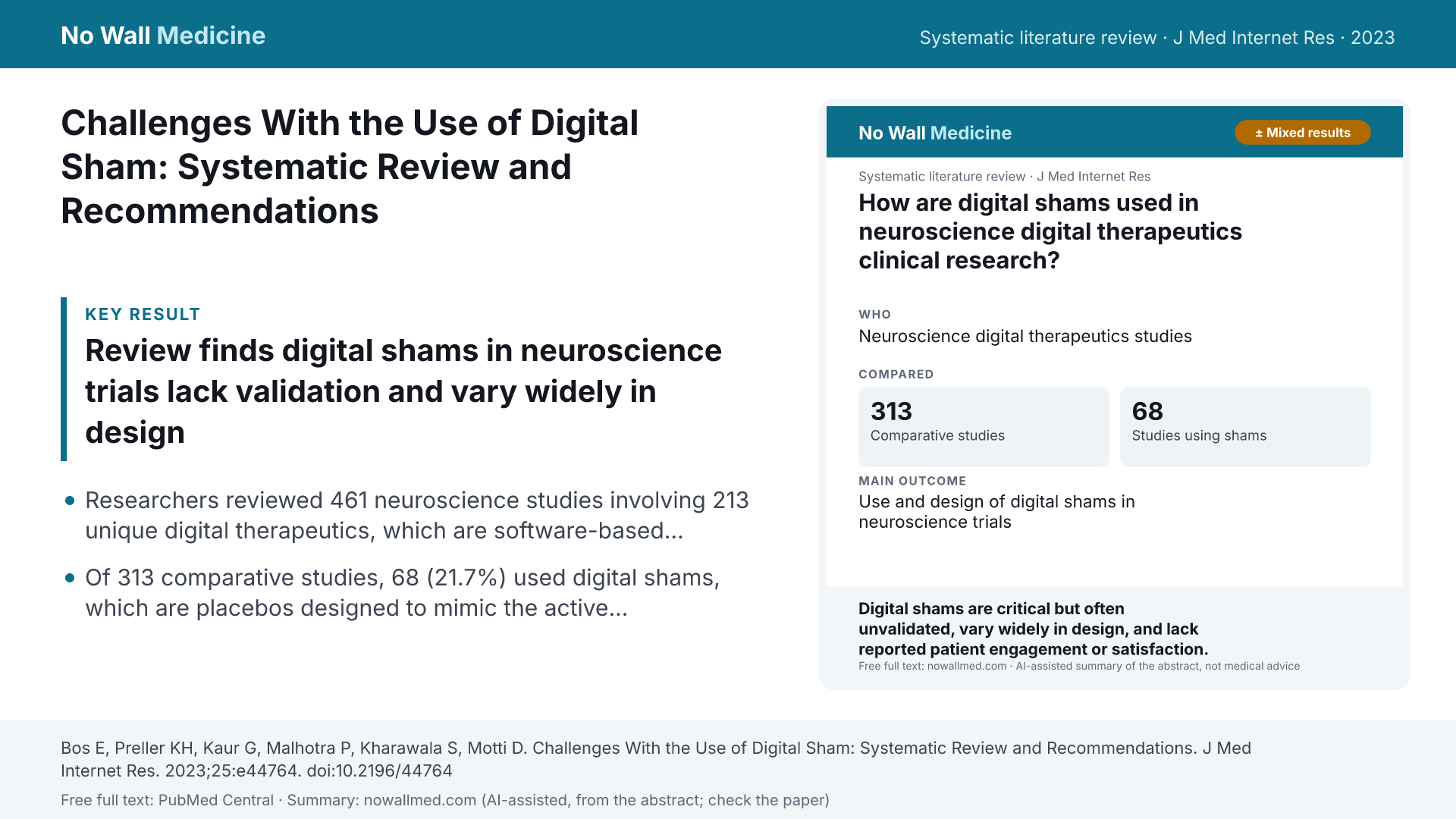
Review finds digital shams in neuroscience trials lack validation and vary widely in design
Challenges With the Use of Digital Sham: Systematic Review and Recommendations
Systematic literature reviewMixed results
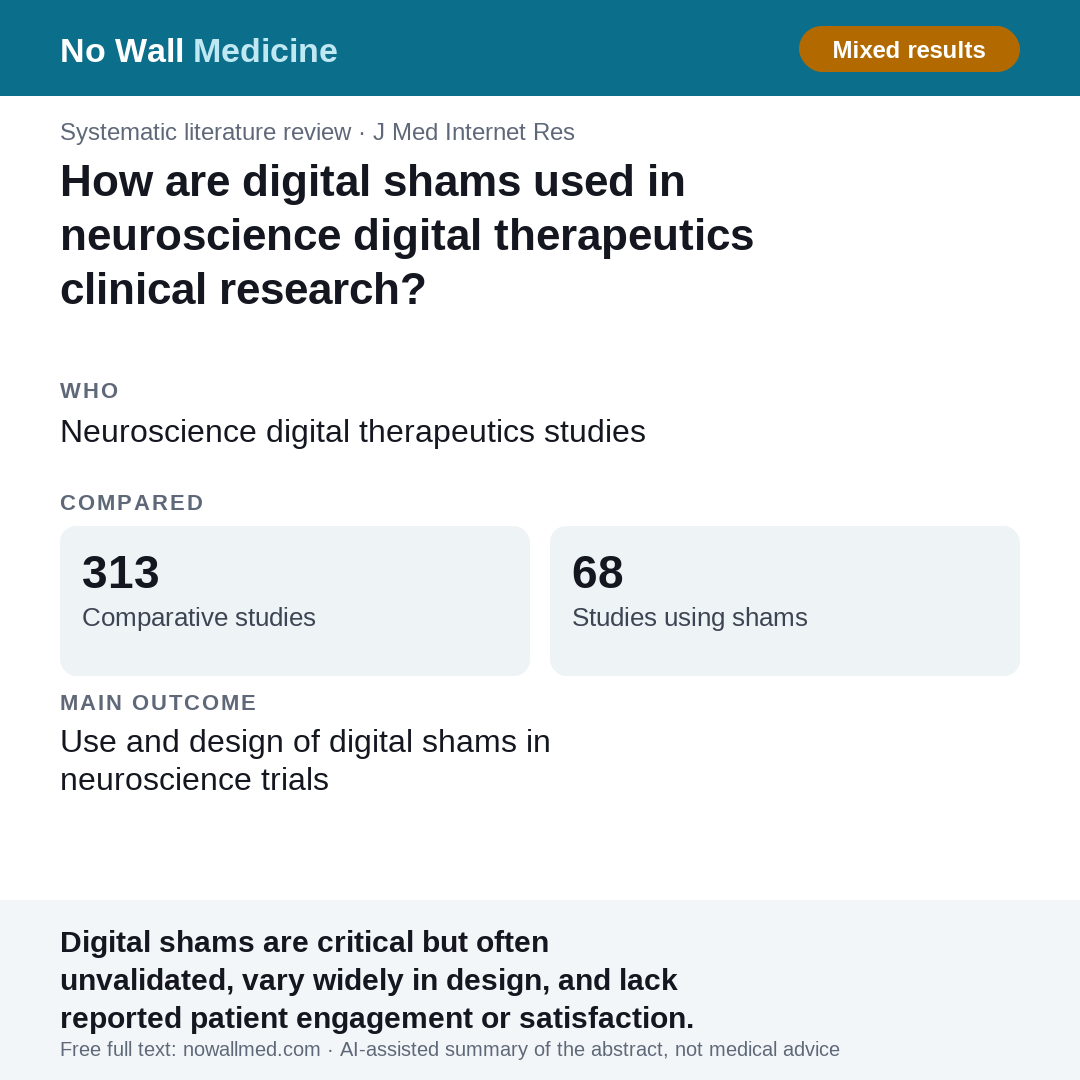
How are digital shams used in neuroscience digital therapeutics clinical research?
Who
Neuroscience digital therapeutics studies
Compared
313Comparative studies
68Studies using shams (21.7%)
Main outcome
Use and design of digital shams in neuroscience trials
Bottom line: Digital shams are critical but often unvalidated, vary widely in design, and lack reported patient engagement or satisfaction.
Limitation: Shams were not validated before use and design varied widely across studies.
J Med Internet Res · 2023-10-24Download image
Clinical question: How are digital shams used in neuroscience digital therapeutics clinical research?
Key points
- Researchers reviewed 461 neuroscience studies involving 213 unique digital therapeutics, which are software-based products delivered via apps or wearable devices.
- Of 313 comparative studies, 68 (21.7%) used digital shams, which are placebos designed to mimic the active treatment without the active component.
- The review found that shams were not validated before use, varied in design, and studies infrequently reported patient engagement or satisfaction with the sham.
Headline and key points written with AI from the paper’s abstract, with every number checked against it. Read the paper before relying on them.
Was this summary helpful?
Subject terms
Cite this article
Bos E, Preller KH, Kaur G, Malhotra P, Kharawala S, Motti D. Challenges With the Use of Digital Sham: Systematic Review and Recommendations. J Med Internet Res. 2023. doi:10.2196/44764
Spotted a mistake? Suggest a correction