Interventions for metabolic dysfunction-associated steatotic liver disease are associated with changes in liver magnetic resonance imaging
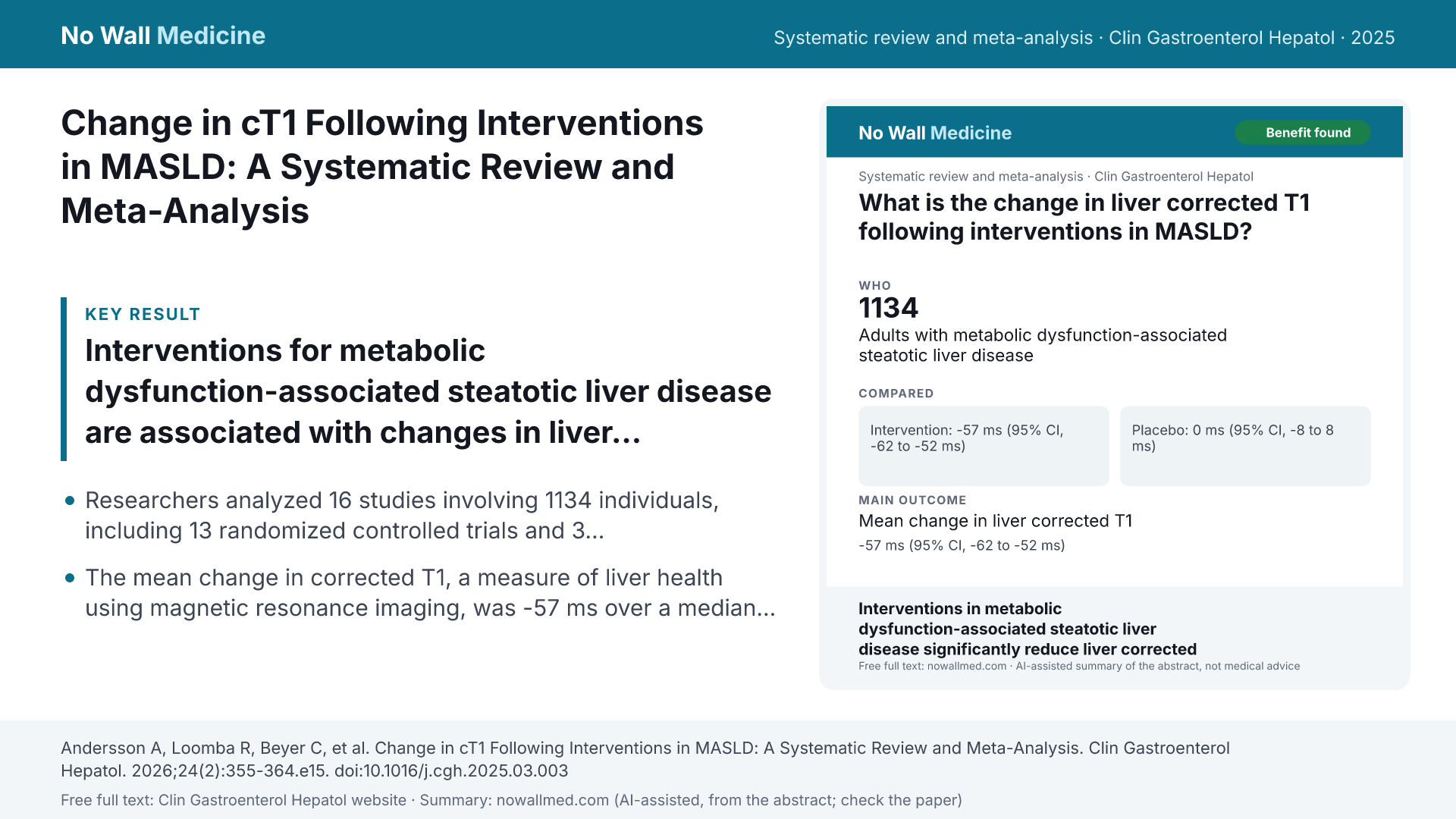
Change in cT1 Following Interventions in MASLD: A Systematic Review and Meta-Analysis
Systematic review and meta-analysisBenefit found
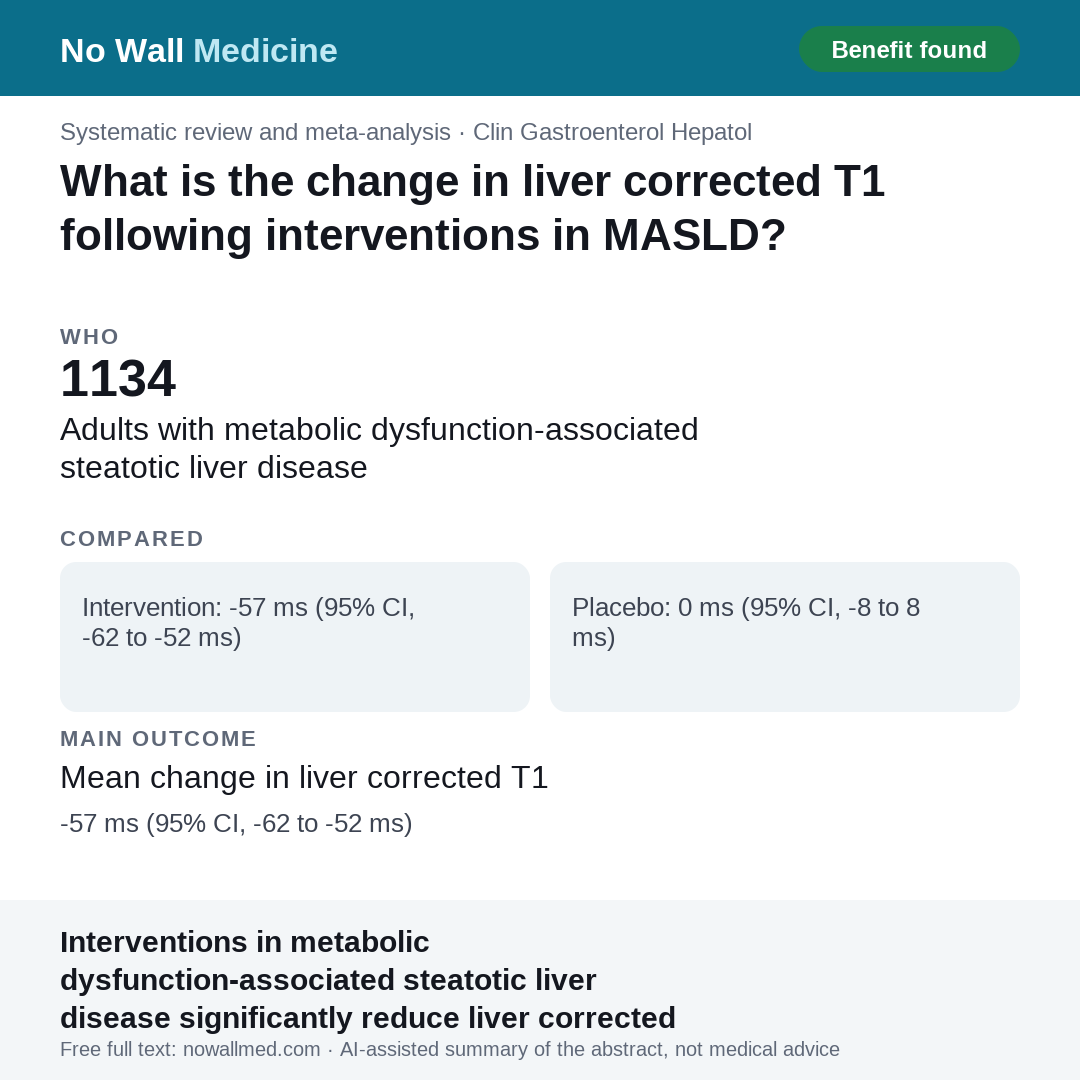
What is the change in liver corrected T1 following interventions in MASLD?
Who
1134
Adults with metabolic dysfunction-associated steatotic liver disease
Compared
Intervention: -57 ms (95% CI, -62 to -52 ms)
Placebo: 0 ms (95% CI, -8 to 8 ms)
Main outcome
Mean change in liver corrected T1
Result: -57 ms (95% CI, -62 to -52 ms)
Bottom line: Interventions in metabolic dysfunction-associated steatotic liver disease significantly reduce liver corrected T1 compared to placebo.
Clin Gastroenterol Hepatol · 2025-04-10Download image
Clinical question: What is the change in liver corrected T1 following interventions in MASLD?
Why it matters: Corrected T1 measured via magnetic resonance imaging is being explored as an alternative to liver biopsy for monitoring disease activity and treatment response.
Key points
- Researchers analyzed 16 studies involving 1134 individuals, including 13 randomized controlled trials and 3 prospective studies on diet, lifestyle, and bariatric surgery.
- The mean change in corrected T1, a measure of liver health using magnetic resonance imaging, was -57 ms over a median of 17 weeks.
- Specific treatments like fibroblast growth factor analogues, glucagon-like peptide-1 receptor agonists, and farnesoid X receptor agonists showed mean changes ranging from -62 ms to -79 ms.
Headline and key points written with AI from the paper’s abstract, with every number checked against it. Read the paper before relying on them.
Was this summary helpful?
Subject terms
Cite this article
Andersson A, Loomba R, Beyer C, Mouchti S, Vuppalanchi R, Harisinghani M. Change in cT1 Following Interventions in MASLD: A Systematic Review and Meta-Analysis. Clin Gastroenterol Hepatol. 2025. doi:10.1016/j.cgh.2025.03.003
Spotted a mistake? Suggest a correction
Top studies every Monday
The week’s key trials and guidelines in your specialties, plus any topics you follow. By email, free.
Get the weekly digest