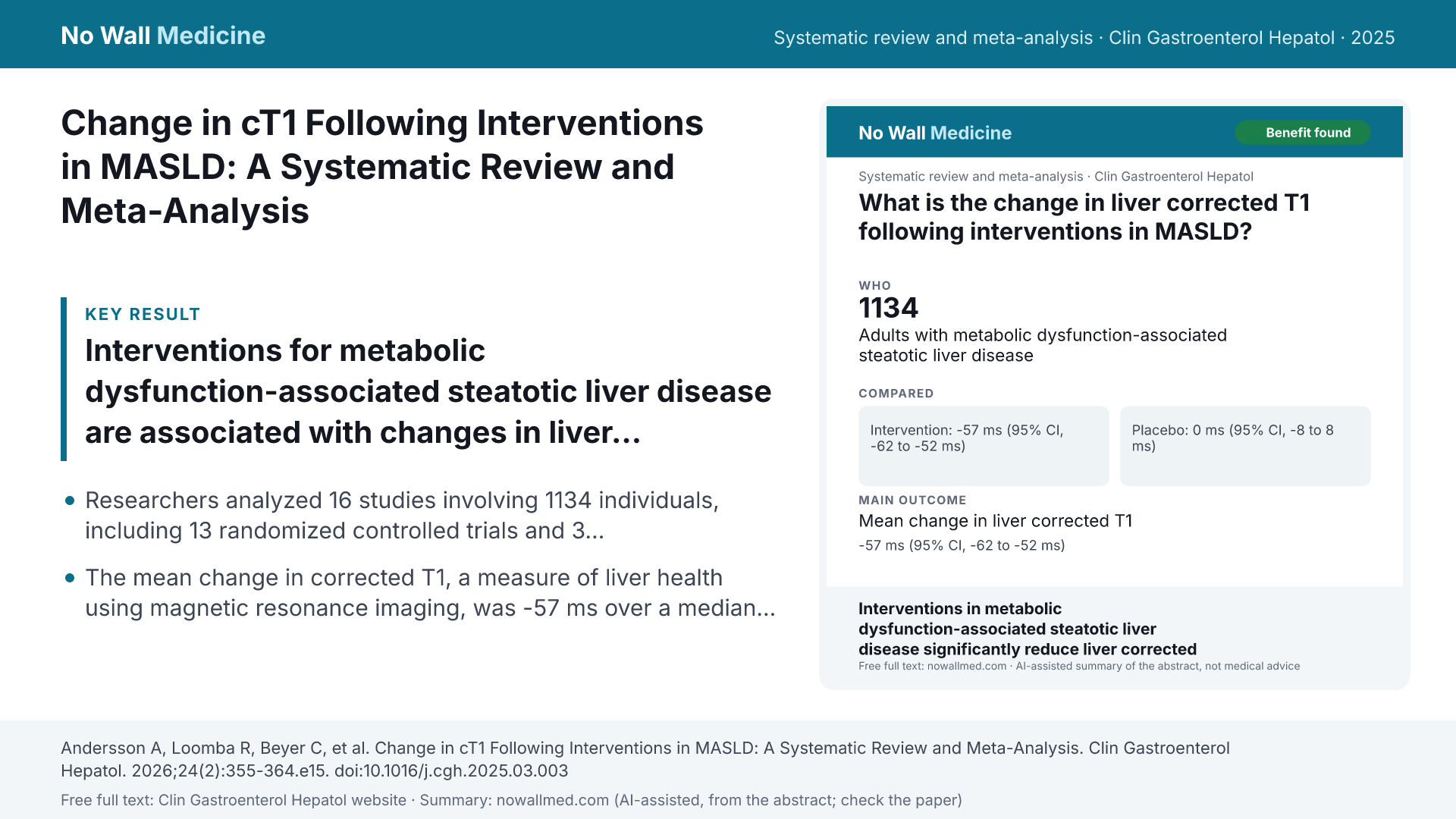
Change in cT1 Following Interventions in MASLD: A Systematic Review and Meta-Analysis
Key result: Interventions for metabolic dysfunction-associated steatotic liver disease are associated with changes in liver magnetic resonance imaging
Key points
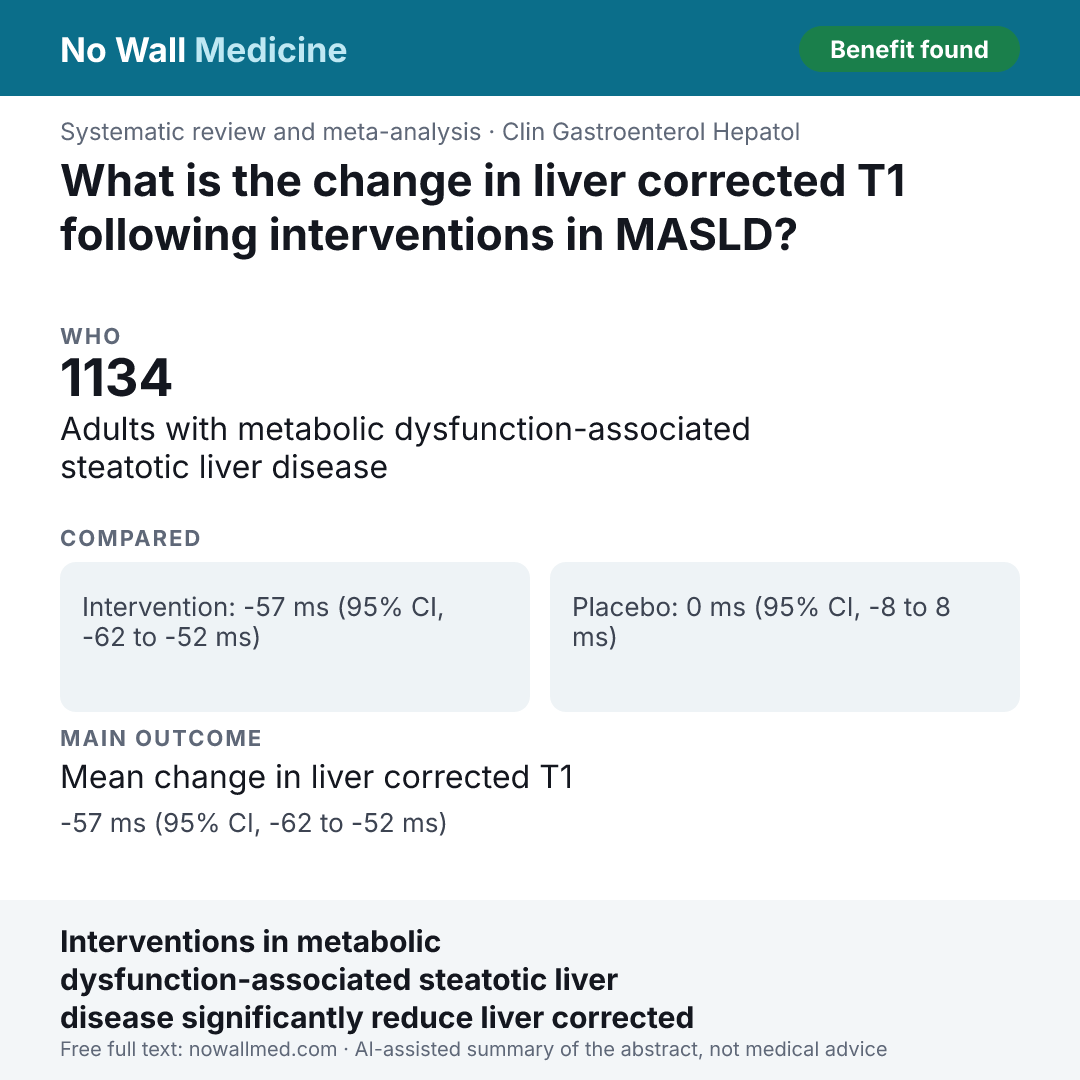
- Researchers analyzed 16 studies involving 1134 individuals, including 13 randomized controlled trials and 3 prospective studies on diet, lifestyle, and bariatric surgery.
- The mean change in corrected T1, a measure of liver health using magnetic resonance imaging, was -57 ms over a median of 17 weeks.
- Specific treatments like fibroblast growth factor analogues, glucagon-like peptide-1 receptor agonists, and farnesoid X receptor agonists showed mean changes ranging from -62 ms to -79 ms.
Why it matters: Corrected T1 measured via magnetic resonance imaging is being explored as an alternative to liver biopsy for monitoring disease activity and treatment response.
Discussion prompts
- Would these patients look like yours? Who was left out?
- Is the main outcome one that matters to patients?
- Is the difference large enough to change what you do?
Cite: Andersson A, Loomba R, Beyer C, et al. Change in cT1 Following Interventions in MASLD: A Systematic Review and Meta-Analysis. Clin Gastroenterol Hepatol. 2026;24(2):355-364.e15. doi:10.1016/j.cgh.2025.03.003
Free full text: Clin Gastroenterol Hepatol website · Summary and visual abstract: nowallmed.com/a/change-in-ct1-following-interventions-in-masld-a-systematic-review-16zo4n2/ (AI-assisted from the abstract; check the paper before relying on it).