Weight loss diet changes in bile acid subtypes were associated with improved lipid profiles and cardiovascular risk
Changes in bile acid subtypes and improvements in lipid metabolism and atherosclerotic cardiovascular disease risk: the Preventing Overweight Using Novel Dietary Strategies (POUNDS Lost) trial
Randomized weight-loss dietary intervention trialBenefit found
Do changes in bile acid subtypes relate to improved lipid profiles and cardiovascular risk?
Who
536
Adults with overweight or obesity
Compared
Decrease in primary bile acids: related to larger reductions in triglycerides and total cholesterol
Decrease in secondary bile acids: β -4.0 (1.1) mg/dL per 1-SD decrease of glycoursodeoxycholate
Main outcome
Lipid profiles and atherosclerotic cardiovascular disease risk estimates
Bottom line: Decreases in specific bile acid subtypes are associated with improved lipid metabolism and cardiovascular risk after weight-loss interventions.
Am J Clin Nutr · 2024-02-28Download image
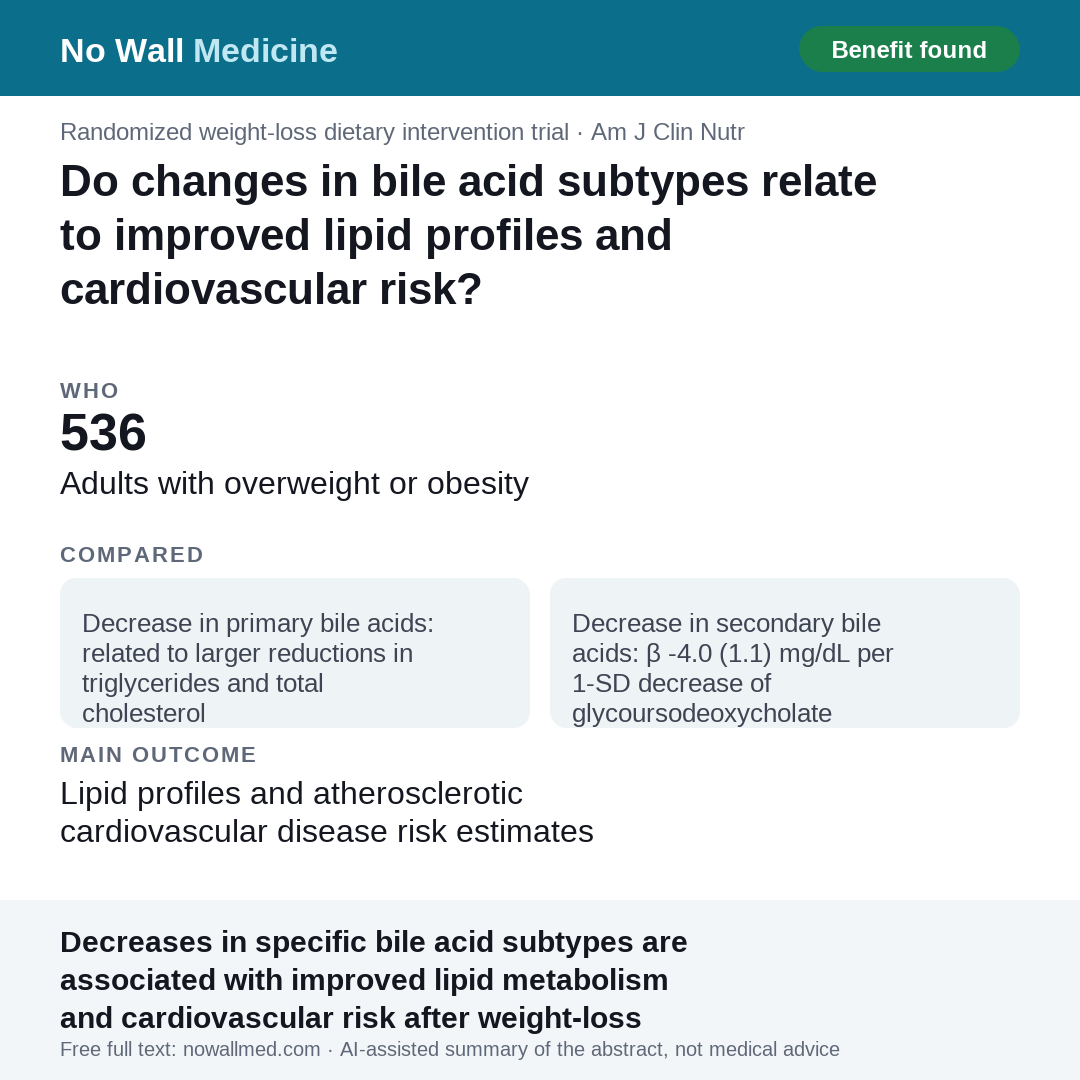
Clinical question: Do changes in bile acid subtypes relate to improved lipid profiles and cardiovascular risk?
Why it matters: It was unknown if changes in specific bile acid subtypes during weight loss are linked to improvements in lipid metabolism and atherosclerotic cardiovascular disease risk.
Key points
- Researchers studied 536 adults with overweight or obesity participating in a randomized weight-loss dietary intervention trial.
- Decreases in primary bile acids were linked to larger reductions in triglycerides and total cholesterol, such as a β -3.8 (1.3) mg/dL change per 1 standard deviation decrease of taurochenodeoxycholate.
- Decreases in specific bile acids were associated with improved atherosclerotic cardiovascular disease risk estimates after consuming a high-fat diet, but not after a low-fat diet.
Headline and key points written with AI from the paper’s abstract, with every number checked against it. Read the paper before relying on them.
Was this summary helpful?
Subject terms
Cite this article
Heianza Y, Xue Q, Rood J, Clish CB, Bray GA, Sacks FM. Changes in bile acid subtypes and improvements in lipid metabolism and atherosclerotic cardiovascular disease risk: the Preventing Overweight Using Novel Dietary Strategies (POUNDS Lost) trial. Am J Clin Nutr. 2024. doi:10.1016/j.ajcnut.2024.02.019
Spotted a mistake? Suggest a correction
Top studies every Monday
The week’s key trials and guidelines in your specialties, plus any topics you follow. By email, free.
Get the weekly digest