Higher body mass index and longer symptom duration were associated with surgical failure in prolapse repair
Characteristics associated with composite surgical failure over 5 years of women in a randomized trial of sacrospinous hysteropexy with graft vs vaginal hysterectomy with uterosacral ligament suspension
Planned secondary analysis of a randomized trialBenefit found
What factors are associated with composite surgical failure over 5 years in transvaginal apical suspensions?
Who
173
Women with symptomatic uterovaginal prolapse undergoing vaginal surgery
Compared
Sacrospinous hysteropexy with graft
Vaginal hysterectomy with uterosacral suspension
Main outcome
Composite surgical failure over 5 years
Result: adjusted hazard ratio 0.6 (95% confidence interval, 0.4-1.0)
Bottom line: Obesity and longer duration of prolapse symptoms are risk factors for surgical failure in transvaginal prolapse repair.
AJOG · 2022-08-02Download image
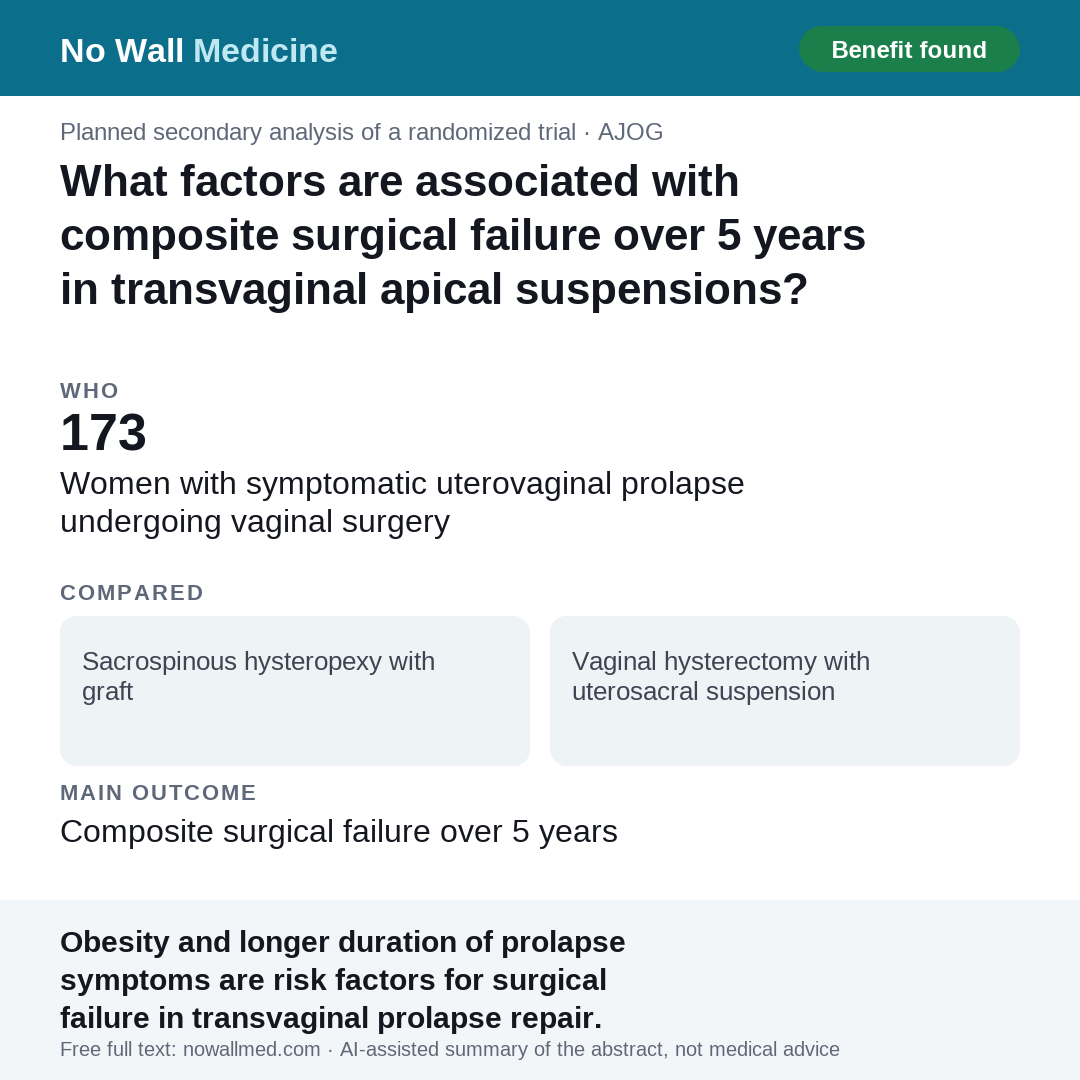
Clinical question: What factors are associated with composite surgical failure over 5 years in transvaginal apical suspensions?
Why it matters: It was unknown which clinical and sociodemographic factors were associated with the rate of surgical failure following these two types of transvaginal apical suspension procedures.
Key points
- Researchers analyzed 173 women from a randomized trial comparing sacrospinous hysteropexy with graft to vaginal hysterectomy with uterosacral ligament suspension for uterine prolapse.
- An increase of 5 kg/m2 in body mass index was associated with a 1.7 adjusted hazard ratio for surgical failure.
- An increase of 1 year in the duration of prolapse symptoms was associated with a 1.1 adjusted hazard ratio for surgical failure.
Headline and key points written with AI from the paper’s abstract, with every number checked against it. Read the paper before relying on them.
Was this summary helpful?
Subject terms
Cite this article
Richter HE, Sridhar A, Nager CW, Komesu YM, Harvie HS, Zyczynski HM. Characteristics associated with composite surgical failure over 5 years of women in a randomized trial of sacrospinous hysteropexy with graft vs vaginal hysterectomy with uterosacral ligament suspension. AJOG. 2022. doi:10.1016/j.ajog.2022.07.048
Spotted a mistake? Suggest a correction
Top studies every Monday
The week’s key trials and guidelines in your specialties, plus any topics you follow. By email, free.
Get the weekly digest