Characteristics of Cardiovascular Disease Prediction Models Considering Mental Disorders: A Systematic Review
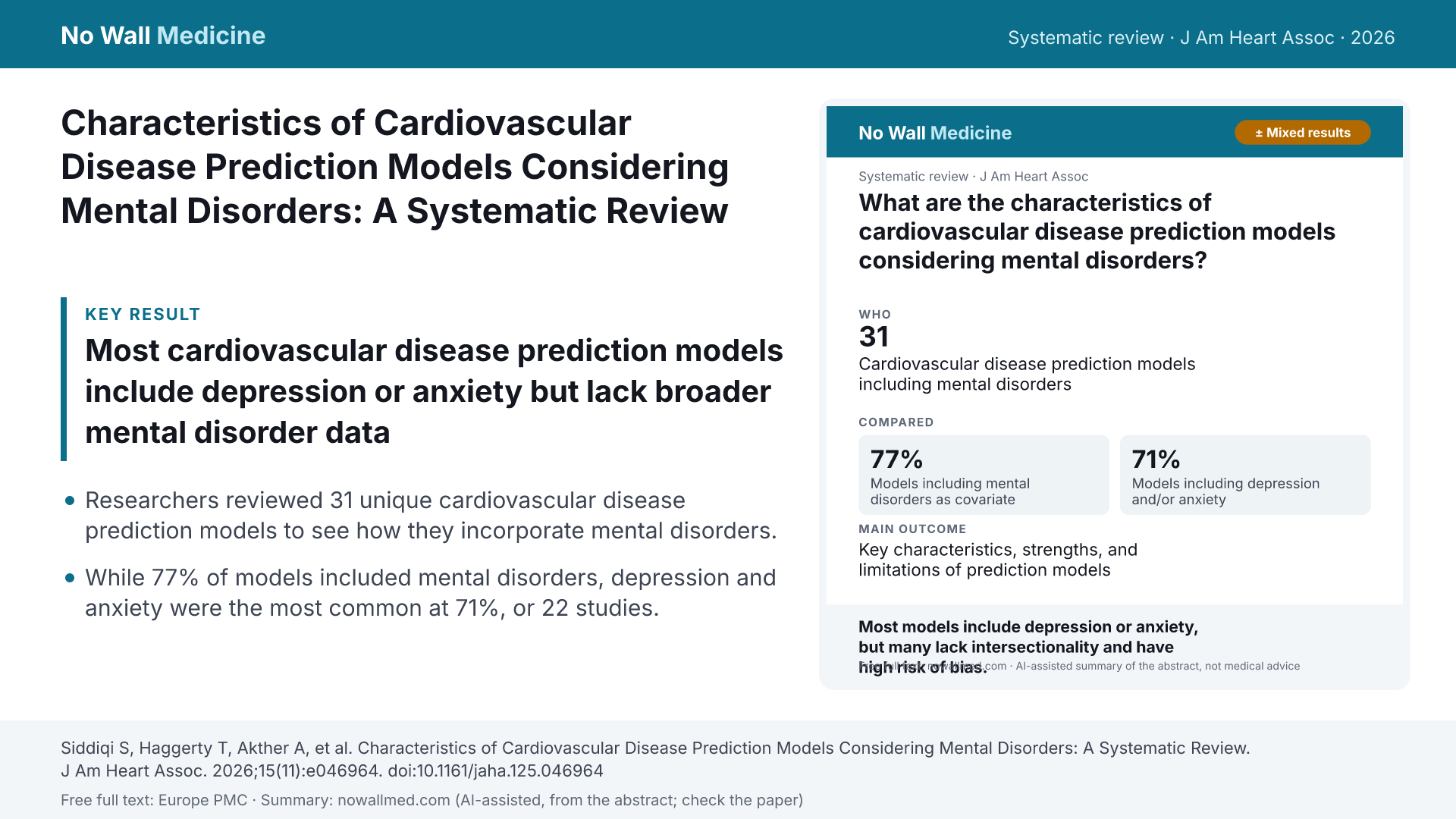
Key result: Most cardiovascular disease prediction models include depression or anxiety but lack broader mental disorder data
Key points
- Researchers reviewed 31 unique cardiovascular disease prediction models to see how they incorporate mental disorders.
- While 77% of models included mental disorders, depression and anxiety were the most common at 71%, or 22 studies.
- Only one study was identified with a low risk of bias, while most models had analytic concerns.
Why it matters: Mental disorders are robust predictors of cardiovascular disease and mortality, yet it is unclear how well current prediction models incorporate them.
Limitation the authors note: The majority of the identified models had analytic concerns and only one study was found to have a low risk of bias.
Discussion prompts
- Would these patients look like yours? Who was left out?
- Is the main outcome one that matters to patients?
- Is the difference large enough to change what you do?
Cite: Siddiqi S, Haggerty T, Akther A, et al. Characteristics of Cardiovascular Disease Prediction Models Considering Mental Disorders: A Systematic Review. J Am Heart Assoc. 2026;15(11):e046964. doi:10.1161/jaha.125.046964
Free full text: Europe PMC · Summary and visual abstract: nowallmed.com/a/characteristics-of-cardiovascular-disease-prediction-models-1hri8c9/ (AI-assisted from the abstract; check the paper before relying on it).